
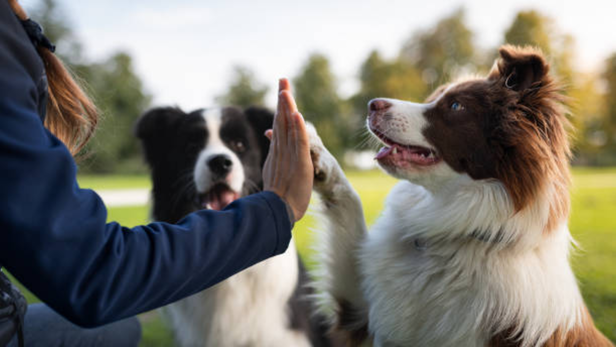
Dog training myths persist because they are easy to believe. But they can create unnecessary stress for both dogs and owners. Dogs aren’t perfect, and neither are owners. But knowing what doesn’t work is the first step toward a happier, healthier relationship.
You can’t teach an old dog new tricks
We’ve all heard it. And some of us even use it as an excuse when our dogs misbehave or don’t pick up a new command fast enough.
Dogs of any age can learn, though older dogs might need more patience and repetition. Every dog has the capacity to understand cues and routines, they just need consistency and the right motivation.
Punishment is the fastest way to train
This one is a classic trap. People yell, spray water, or tug collars thinking fear or discomfort will “teach” their dog. And sure, sometimes the dog stops the behavior… temporarily. But what’s happening underneath is stress, anxiety, and confusion. Dogs don’t connect punishment with behavior the way we think. They associate it with the person, the environment, or even just being alive at that moment. Dogs remember encouragement better than fear.
Dogs misbehave out of spite
Your dog didn’t leave a chewed-up shoe on the floor to annoy you. Dogs aren’t small humans plotting revenge. When they do something unwanted, it’s usually because they’re bored, anxious, scared, or confused. Looking at the root cause, lack of exercise, inconsistent rules, or unclear communication, is far more effective than assuming malice.
You need to dominate your dog
The “alpha” mindset still lingers in dog training advice, and it can be damaging. Wrestling, pinning, or forcing submission doesn’t teach obedience; it teaches fear. Dogs respond to clear signals, structure, and positive reinforcement, not power struggles.
Consistency is overrated
Some owners believe flexibility is fine, sometimes letting their dog jump on the couch, other times scolding. Inconsistent rules confuse dogs. They thrive on predictability.
Ignoring mental stimulation
Many people think training is only about commands and obedience. But dogs need mental exercise as well. Puzzle toys, scent games keep their minds sharp.
So what’s the takeaway?
Dogs aren’t trying to test you. They’re trying to understand you. And when training comes from empathy rather than myths, everyone benefits. The lessons stick, the bond strengthens, and the house stays a little less chewed up along the way.