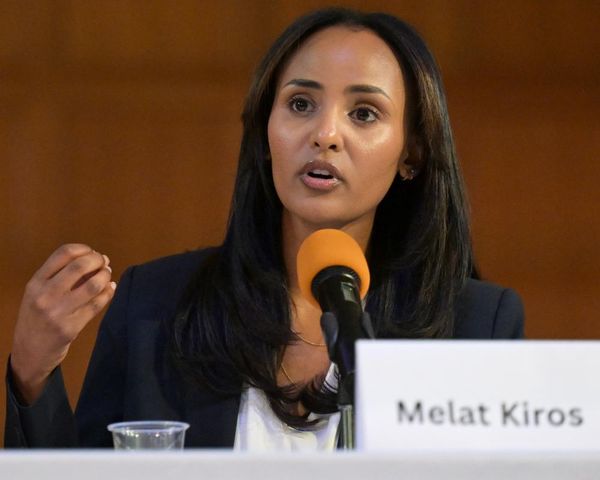
The planned establishment of a national TV streaming platform is far more than the launch of another video application; it is intended to ensure that every Thai can conveniently access all free-to-air television channels through the internet, according to commissioner of the National Broadcasting and Telecommunications Commission (NBTC) Pirongrong Ramasoota.
Mrs Pirongrong, who oversees the broadcasting sector, said this would preserve the principle of universal access to public-interest content, including news, emergency alerts, educational programming, cultural content and nationally significant events.
The national streaming platform also represents critical digital public infrastructure.
The NBTC board on June 22 unanimously approved in principle the draft of the third Digital TV Master Plan, which had been awaiting the board's consideration for the past two years.
In addition, the board gave the nod to a plan to develop the national streaming platform for terrestrial digital TV broadcasters to distribute their content, aiming to address the expiry of their licences in 2029.
The board has yet to approve the digital TV broadcasting roadmap, as it requires further consideration and study by NBTC management over the next 30 days.
Mrs Pirongrong said the platform also represents a strategic attempt to reduce dependence on global digital platforms and a limited number of telecommunications operators that increasingly control how audiences discover and consume audiovisual content.
Changing Behaviour
Mrs Pirongrong said the rationale behind such a platform is reflected in changing audience behaviour.
According to the 2025 Radio and TV Audience Survey conducted jointly by the National Statistical Office and the NBTC, based on interviews with 31,500 respondents aged 18-76 nationwide, 83.7% of Thais continue to watch TV programming.
However, only 39.2% still watched TV programmes directly via the digital terrestrial broadcasting system.
Satellite TV remains the largest distribution platform, accounting for 48.4% of viewing, while internet-based viewing via websites and mobile applications has risen to 46.7%.
The findings suggest audiences have not abandoned TV content, but have migrated to new distribution platforms.
Among viewers under 43, the internet is the primary viewing channel.
Some 90.4% of viewers continue watching TV programmes according to traditional broadcast schedules, although many now do so through smart TVs, websites and streaming apps, instead of rooftop antennas.
Meanwhile, 33.8% watch catch-up content, with smartphones accounting for 87.7% of viewing devices. YouTube dominates this segment, attracting 85.2% of catch-up viewers.
YouTube has evolved from a competitor to a primary distribution platform for TV content, noted the survey.
TV news continues to enjoy strong audience demand, attracting 90% of live TV viewers and 68.9% of online viewers, demonstrating that trusted news remains one of free-to-air broadcasting's strongest competitive advantages.
Connected TVs
Another important trend concerns the rapid adoption of Connected TVs (CTVs).
According to data compiled by NBTC officials, 88% of TV sets sold in Thailand during 2024 were internet-enabled smart TVs, which changes how viewers discover TV services.
CTVs are largely controlled by operating system providers such as Samsung, LG and Google TV. These platform operators increasingly function as digital gatekeepers, determining which applications are available, how content is prioritised, how user data is collected and how targeted advertising is delivered.
Mrs Pirongrong said several markets have already established national television streaming platforms, albeit under different ownership and governance models.
The UK's Freely, launched in 2024, aggregates all public service broadcasters' live and on-demand content within a single electronic programme guide. It is operated by Everyone TV, a joint venture between the BBC, ITV, Channel 4 and Channel 5.
Vietnam has adopted perhaps the most interventionist model through VTVgo, officially designated as the country's national TV streaming platform. Authorities also required smart TV manufacturers, which represent 94% of the domestic market, to pre-install the application, effectively implementing a "must-find" policy through hardware distribution.
These examples demonstrate that national streaming platforms can be operated under various models.
Free Access
Mrs Pirongrong said a Thai national TV platform should be built around free public access, as international experience suggests that a subscription-first strategy is unlikely to succeed.
Ad revenue, public funding or shared industry financing would provide a far more sustainable foundation than subscription fees, particularly given Thai consumers' long-standing expectation that free-to-air TV should remain free, she noted.
Consumers would be the primary beneficiaries of a national platform, said Mrs Pirongrong.
A single application providing seamless access to all free-to-air TV channels would simplify content discovery while preserving universal access as traditional terrestrial viewing gradually declines.
TV operators would gain direct audience access without relying exclusively on global technology companies or telecom platforms, she noted.
A shared platform could also reduce duplicated investment in streaming infrastructure, content delivery networks, user interfaces, advertising technology and audience analytics, creating meaningful economies of scale.
A purely government-operated platform may struggle to compete with commercial streaming services, while an industry-wide partnership involving government, broadcasters, telecommunications operators and civil society could create a more sustainable digital broadcasting ecosystem.
Mrs Pirongrong said the streaming platform is not simply about identifying winners and losers, but rather a strategic policy decision over who should control the digital gateway to trusted public information in the internet era, as well as how Thailand can strike a balance between market competition, public interest, cultural sovereignty and the long-term credibility of its national media system.