WASHINGTON _ The Commerce Department has urged President Donald Trump to consider hefty tariffs and quotas to limit the import of steel and aluminum, after concluding that the rising flow of those foreign-made products is a threat to America's national security.
The recommendations were contained in a report released by Commerce Secretary Wilbur Ross, whose agency used a rarely used provision of U.S. trade law to investigate whether steel and aluminum imports could pose harm to the country's defense or security interests.
Trump has promised to take more aggressive trade actions to protect American manufacturers, and the findings by the Commerce Department give the president wide discretion to curb imports, although he could decide not to take any action. Trump has until mid-April to decide.
Domestic steel and aluminum manufacturers, and lawmakers from big steel-producing states, have pressed Trump to apply stiff measures against foreign producers, particularly China.
The department's recommendations to Trump listed three options for steel: a 24 percent tariff on all imports from all countries; a targeted tariff of at least 53 percent on imports from a dozen trading partners, plus quotas on steel shipments from other nations; or a global quota that equals 63 percent of each country's steel exports to the U.S. in 2017.
Ross also recommended three options on aluminum tariffs and quotas, although they were less restrictive.
Ross would not say which of these options he preferred, noting that Trump would be the "sole judge" of that.
"Now that Secretary Ross' report has been released, the president must act urgently to stop trade cheats from undermining our steel companies and steelworkers," said Sen. Sherrod Brown, D-Ohio, who, with 18 other members of Congress, met with Trump last week to discuss the steel and aluminum cases.
Some lawmakers urged caution. And U.S. metal importers, carmakers and other users of steel and aluminum have warned that tariffs and quotas would lead to higher prices and lost jobs.
"We are concerned that the Department of Commerce's recommendations may have unintended consequences for domestic tire manufacturers and the workers and industries they support," Anne Forristall Luke, president of the U.S. Tire Manufacturers Association, said in a statement. Domestic steel mills are unable to produce the kinds of quality steel necessary to make tires, she said.
Trade analysts worry that severe actions could trigger retaliation from other countries, especially given the controversial nature of justifying trade restrictions based on national security. If Trump levies restrictive tariffs or quotas, the U.S. will almost certainly face challenges before the World Trade Organization, the global arbiter of trade disputes.
In preparing the report, Ross said his department had gone through the usual interagency consultations, but he acknowledged that not everybody in the administration agreed with his conclusion.
Since the Trump administration's early days, there have been signs of deep internal divisions on how aggressively to follow through on the president's promise to change a trade policy that he has said is feeble and harmful to U.S. interests.
Ross announced the launch of the steel investigation in April. There was little doubt that the results would support the case that imports present a threat, given the administration's concern about rising amounts of foreign steel and its broad interpretation of "national security."
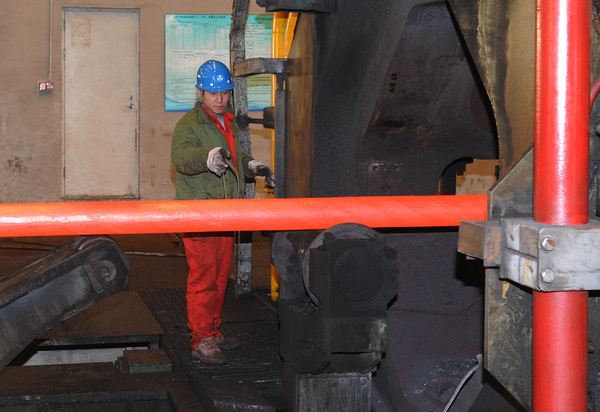
The report said domestic steel production is crucial not just for national defense requirements but also for U.S. infrastructure, which includes transportation systems, the electric power grid and water systems.
Steel imports increased at a double-digit rate in the first 10 months of last year, accounting for more than 30 percent of U.S. consumption, according to the report.
Ross said the goal of any tariffs and quotas would be to increase the domestic production capacity of steel to 80 percent, from the current 73 percent. If that rate of manufacturing capacity were reached, Ross estimated that American steel factory employment would grow by about 10 percent. Domestic steelmakers employ roughly 140,000 people.
China is by far the world's biggest manufacturer of steel, and its mills have been producing well beyond the country's own needs and global demand, putting downward pressure on prices.
At the same time, Chinese steel exports to the U.S. have fallen sharply in recent years, in part because of previously imposed tariffs for dumping and unfair government subsidies. Last year China accounted for only about 2.5 percent of about $29 billion of foreign steel entering the U.S. That put China at No. 11, far behind U.S. steel imports from Canada, Brazil, Russia and Mexico.
Ross said, however, that those numbers did not reflect the harm caused by Chinese steel around the world. Some products are shipped to the U.S. via other countries, he said, and China's huge excess production of steel has had other effects distorting the global market.
Even accounting for so-called trans-shipments, analysts say that Chinese steel entering the United States still amounted to a relatively small amount, and that Beijing would probably respond to tariffs or quotas in a measured way.
The last time a U.S. president imposed global steel sanctions was in March 2002, when President George W. Bush levied tariffs of up to 30 percent on various types of imported steel, making good on a campaign promise to aid beleaguered steel manufacturers and workers as imports surged. U.S. steel prices rose nearly 70 percent by midsummer, but months later the WTO ruled the action illegal and Europe threatened to retaliate with tariffs of its own on Florida citrus, motorcycles made in Wisconsin, and other U.S. goods. Shortly afterward, Bush dropped the tariffs, 16 months earlier than the three-year period they were set to remain in effect.