The commanding officer of a soldier who collapsed and died during training on the hottest day of the year – raising fresh concerns about how the military keeps personnel safe in extreme heat – has expressed devastation at the tragedy.
Cpl Joshua Hoole, 26, described as “superfit” by his family, fell ill after an eight-mile training march in the Brecon Beacons national park. Three SAS candidates suffered fatal heat illness three years ago also in the same area.
Hoole’s family is waiting for the results of a postmortem to find out how he died but they have said they are concerned that he was training in full combat gear on such a hot day.
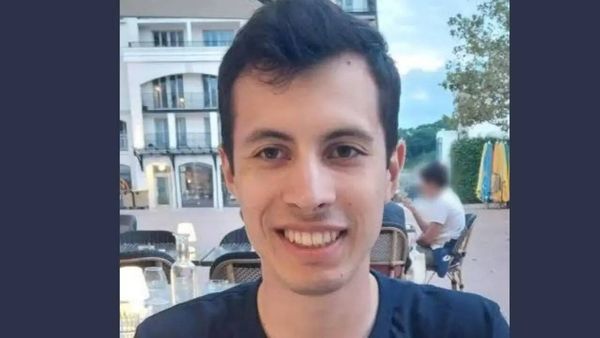
The Ministry of Defence released a photo of Hoole, from Ecclefechan, near Lockerbie in Scotland, and his fiancee, Rachael McKie, whom he was due to marry later this year.
Major Dean Murch, officer commanding the Rifles Company, 1st Infantry Training Battalion, Infantry Training Centre, said: “We are utterly devastated, but our loss is nothing compared with that of his loved ones. His family have lost a son, a brother, a fiance and a very special friend, their grief will be inconsolable.
“Truly the thoughts and prayers of every single rifleman in the regiment and all his colleagues at the Infantry Training Centre are with them in their hour of need, now and in the forthcoming days and beyond.”
Hoole was one of about 20 soldiers who took part in an eight-mile march on lanes around the school of infantry in Brecon on Tuesday. They left at 7am, by which time the temperature in the area was already 17.6C. It had risen to 22.3C when they returned at 9am.
Each soldier was dressed in full combat clothing and boots and they were carrying 25kg rucksacks, but the march was not seen as a difficult one and did not involve severe climbs. The soldiers carried water and there were water stations along the route.
The exercise was organised by Hoole’s own regiment to make sure he and other candidates were fit enough to take part in a demanding platoon sergeants’ battle course, which is run by the school of infantry.
An army source compared the march to an MOT – an annual test to make sure soldiers had a basic level of fitness that is much less gruelling than the SAS test.
Hoole and his colleagues did the march as a squad and it was completed within the stipulated two hours. On their return to the school of infantry, Hoole collapsed. Civilian paramedics were called shortly before 9am but could not save him.
The MoD has refused to speculate about why he may have died and inquiries have been launched by the military, the civilian police and health and safety officials.
Defence chiefs were strongly criticised by a coroner over the SAS tragedy in July 2013 and the MoD was subject to a “crown censure”, the stiffest penalty it could be given.
Lawyer Clare Stevens, who represented the father of one of the men who collapsed during the SAS test, said on Thursday: “It’s concerning that another soldier has died on what was the hottest day of a year in Brecon while on a training exercise.
“We need complete transparency over what happened. What we need to know is whether the risk assessment that was carried out for the exercise in which Cpl Hoole was taking part was adequate. They need to start reassuring the public that they are taking health and safety seriously and that they are learning lessons when tragedies happen. Soldiers shouldn’t be dying in training.”
Speaking to the BBC, Col Richard Kemp, who commanded British forces in Afghanistan, urged people not to jump to conclusions.
He said: “It’s a great tragedy. I feel terribly sorry for his family and comrades. We don’t know whether it was related to heat, we don’t know what the cause was. It might have been a completely independent event. We don’t know.
“I know for a fact the Ministry of Defence and the army have taken into account the tragic deaths during SAS selection. There was fault at the time. There may have been fault in this case. I don’t think we should prejudge it. I think we have to wait and see what happens.
“The reality is that if soldiers don’t train hard in peacetime and during courses such as the one Corp Hoole was on then many, many more soldiers will end up dying in battle. That is why the British army trains in places like Brecon, which is rugged, tough terrain and sometimes in high temperatures.”
Hoole’s grandfather John Craig told the Guardian he suspected dehydration and exhaustion must have been involved. He said: “I know what the Brecon Beacons are like because I worked as an instructor there in the 1950s.”
The incident comes just three months after the defence select committee published a report calling for the MoD to be liable for prosecution for the deaths of armed forces personnel.
The report said that since the start of 2000, 135 military personnel had died while taking part in training exercises – 89 from the army, 24 from the Royal Navy and Royal Marines, and 22 from the RAF.