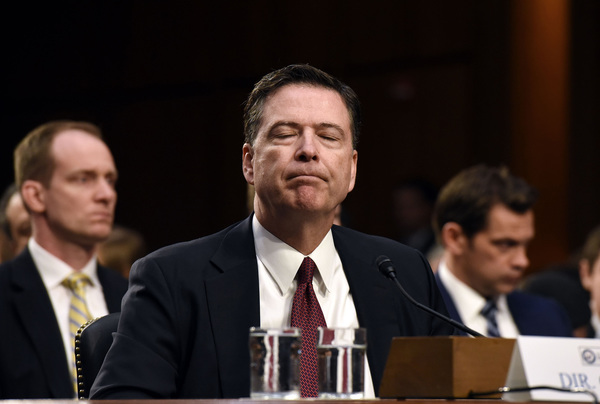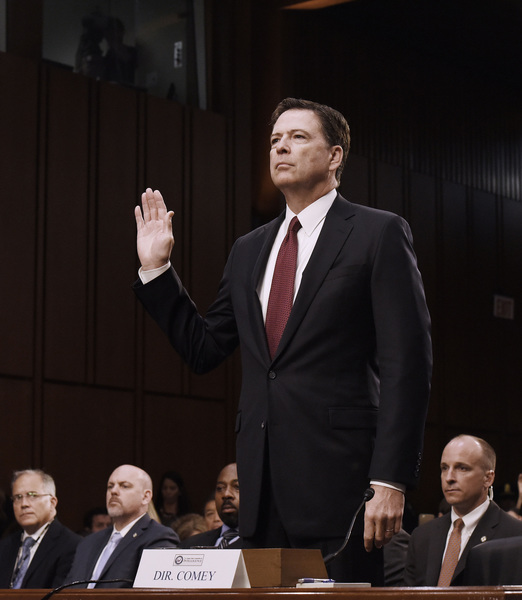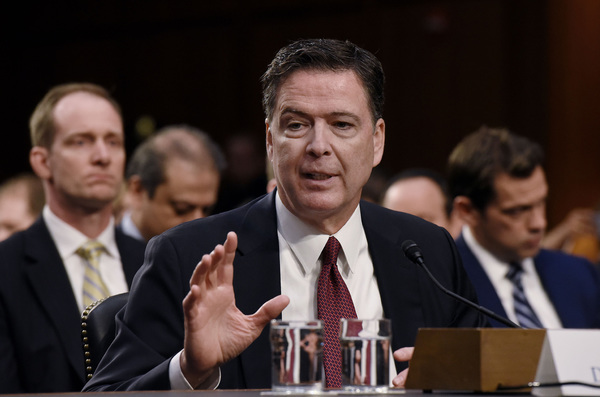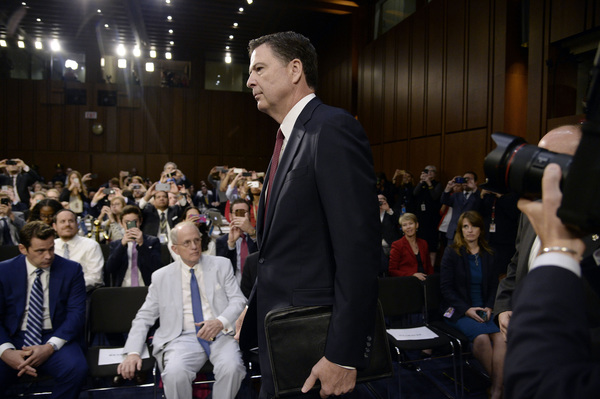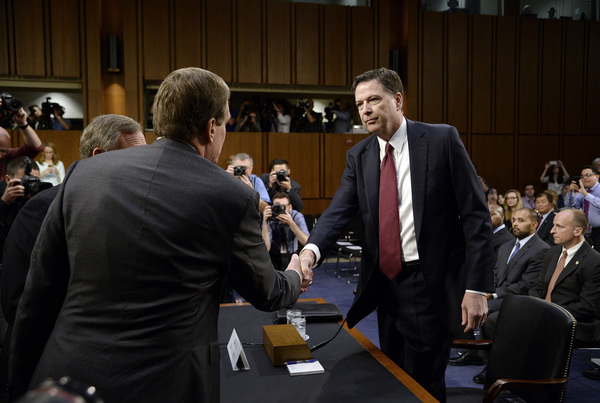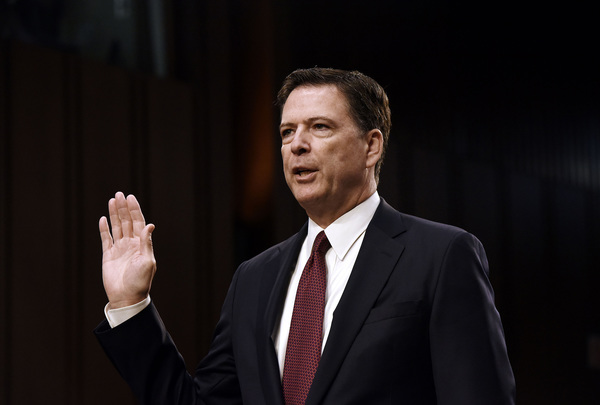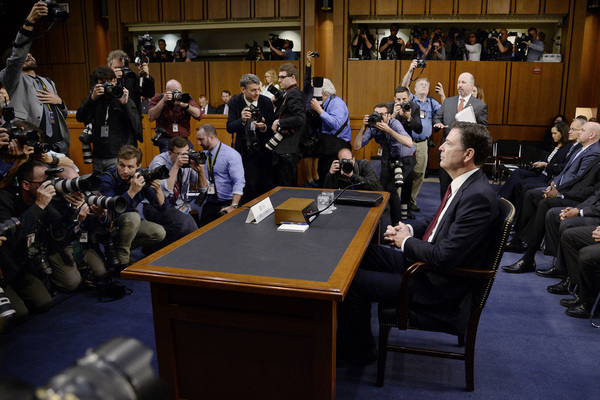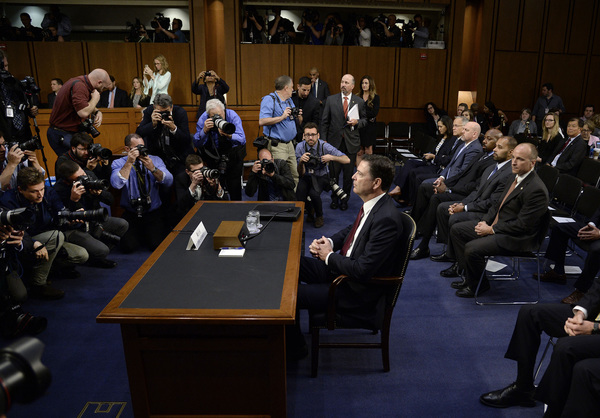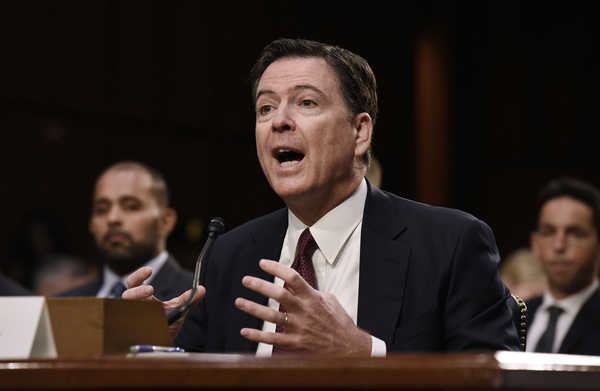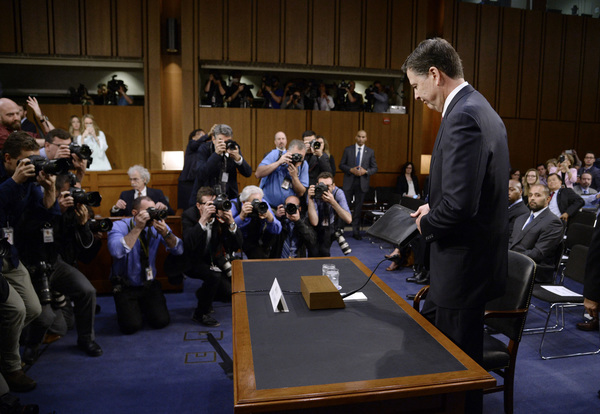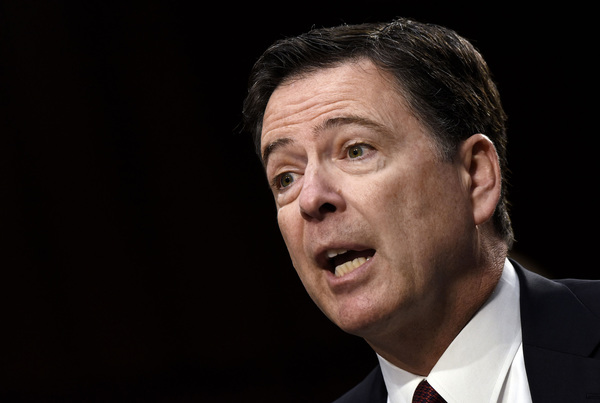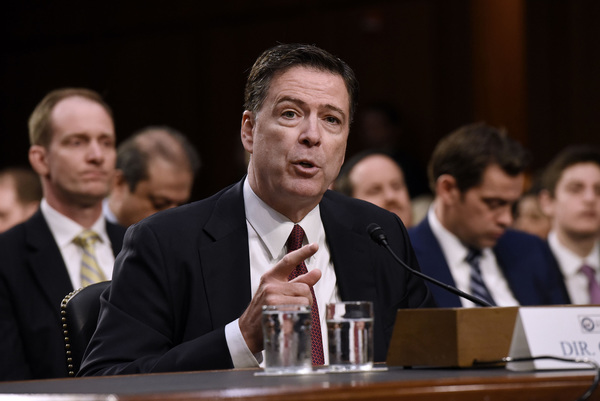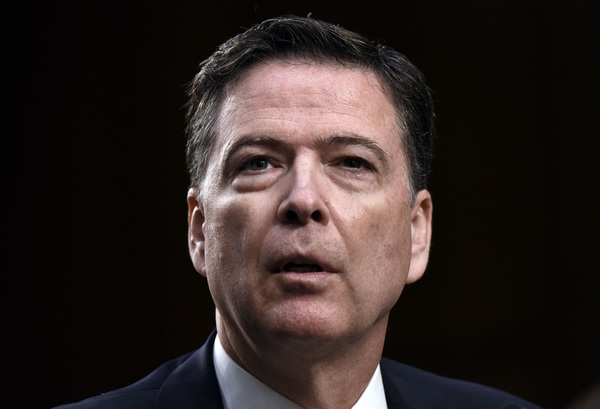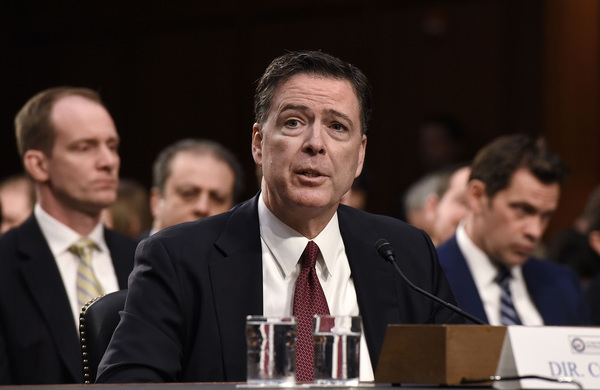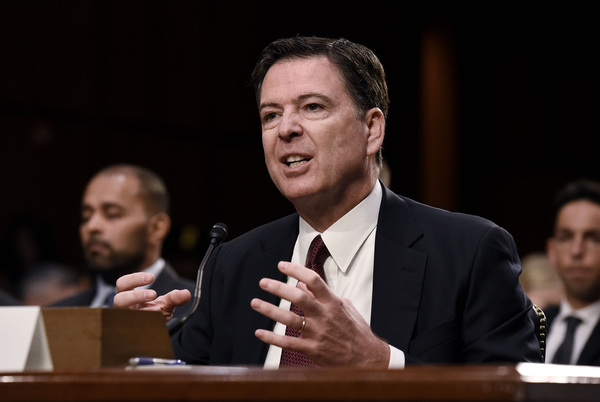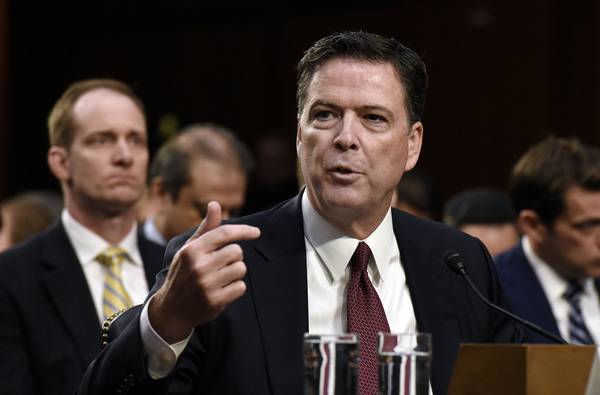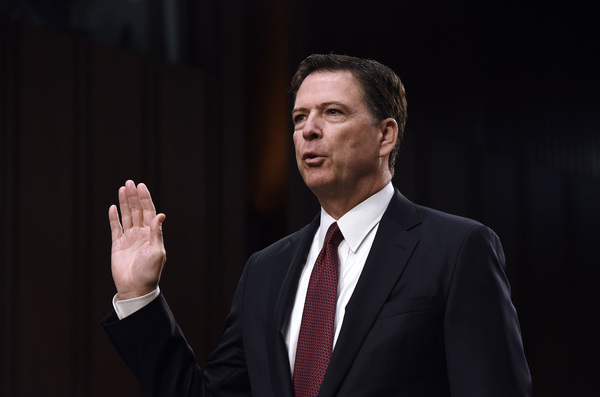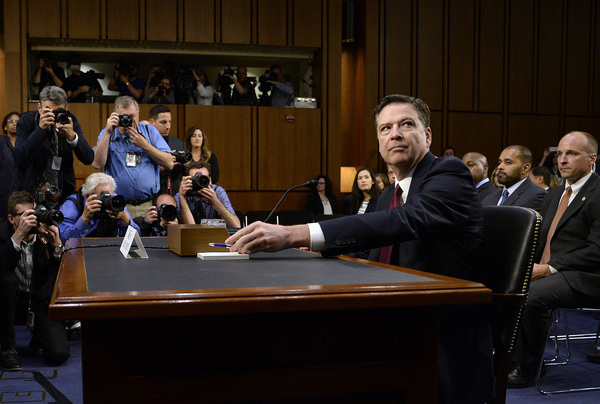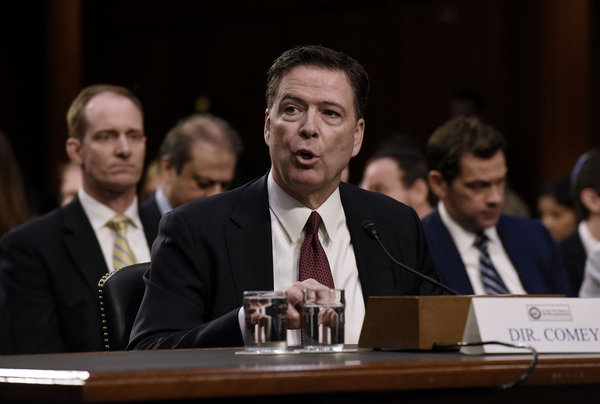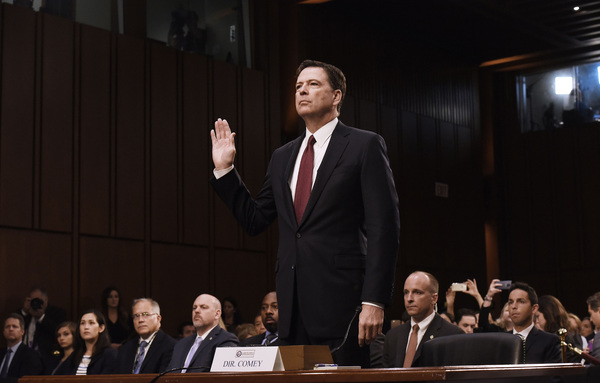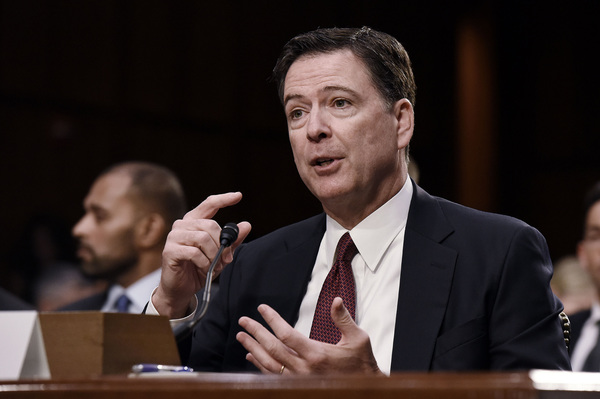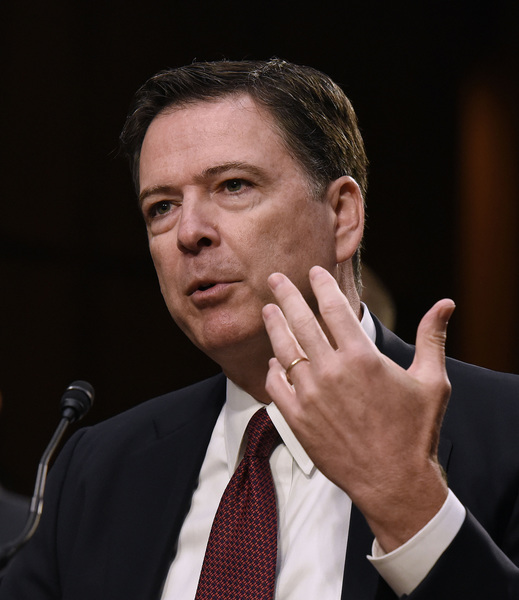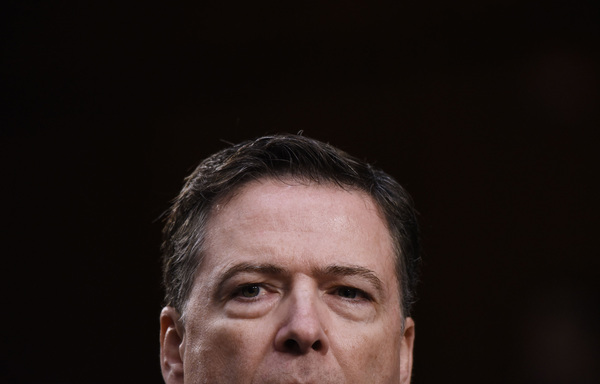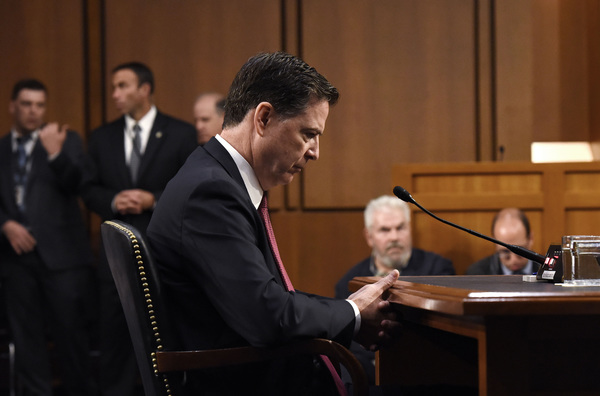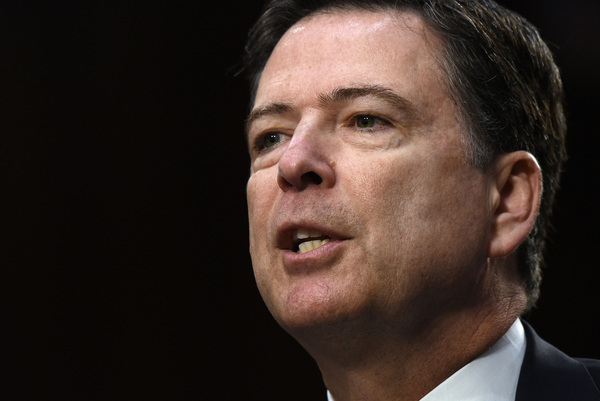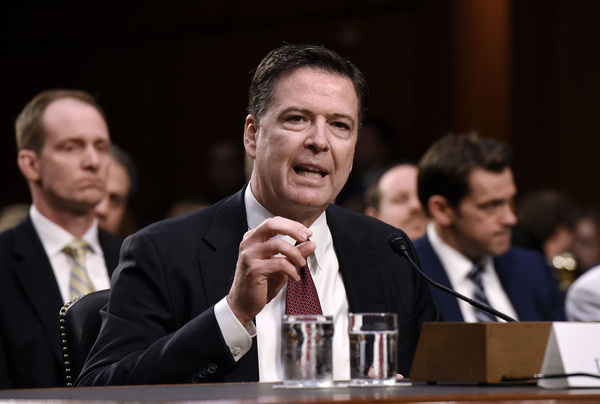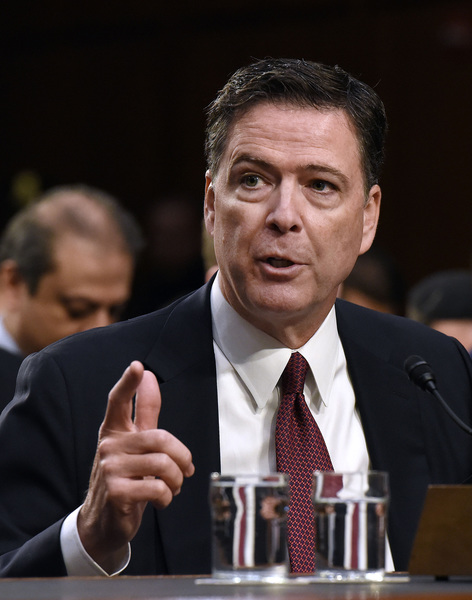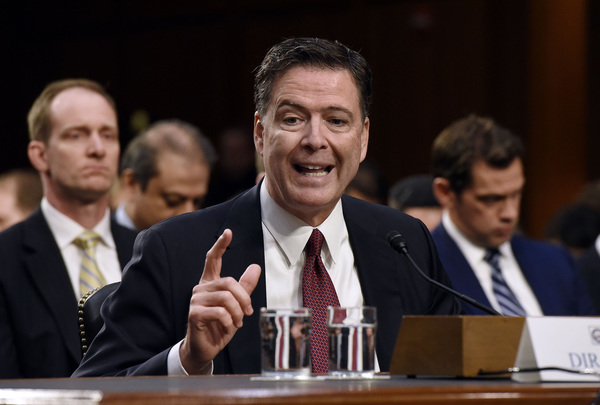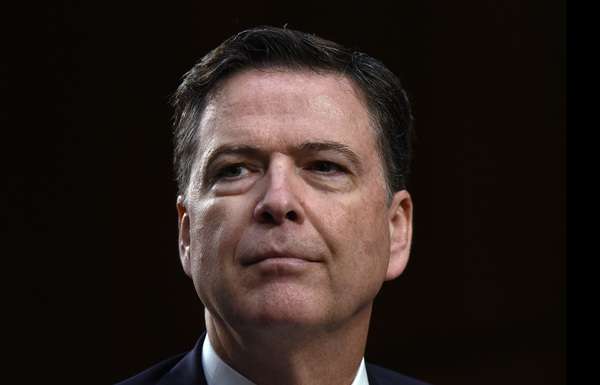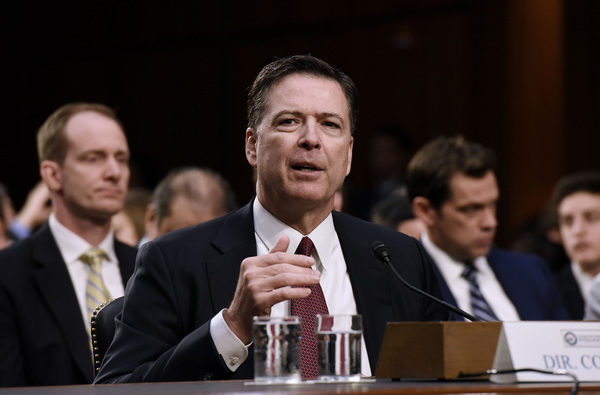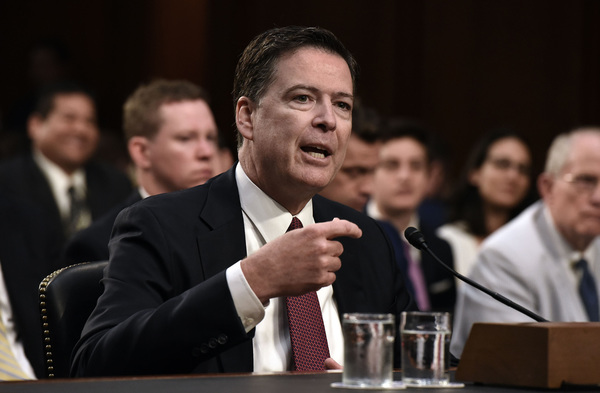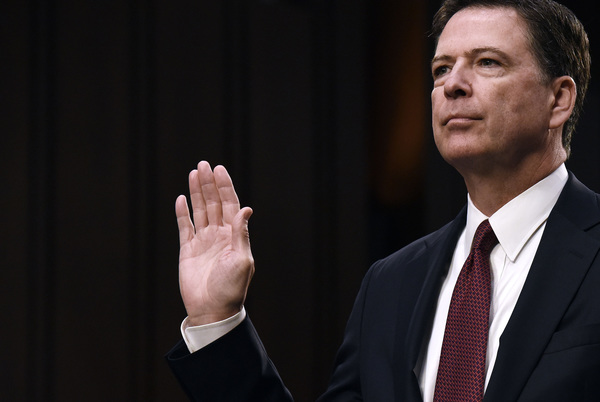
WASHINGTON _ Former FBI Director James B. Comey accused the Trump administration of telling "lies" and trying to "defame me and more importantly the FBI" in the weeks since his firing.
Opening one of the most anticipated congressional hearings since the Watergate era, Comey also confirmed that former national security adviser Michael Flynn was "in legal jeopardy" as a result of his contacts during the transition with Russian officials and his statements about those contacts.
In a seven-page opening statement, submitted to the committee and publicly released Wednesday, Comey said President Trump had asked him to drop the investigation into Flynn and repeatedly pushed Comey to pledge his loyalty � while asking if he still wanted to keep his job.
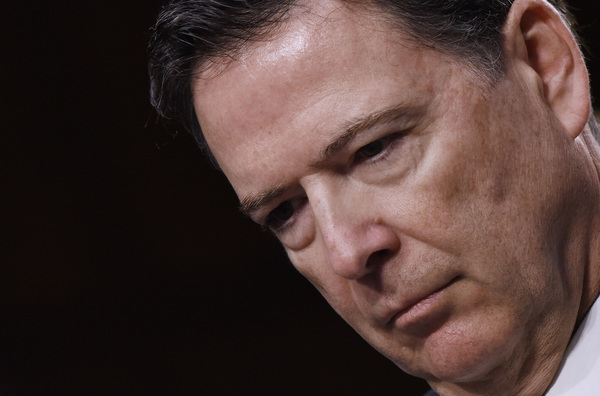
"I hope you can see your way clear to letting this go," Comey quoted Trump as saying.
Comey's statement in Thursday's hearing is the first public confirmation that Flynn may face criminal charges, potentially for false statements to investigators.
From his first meeting with the then-president-elect in early January, Comey said he felt the need to document their conversations.
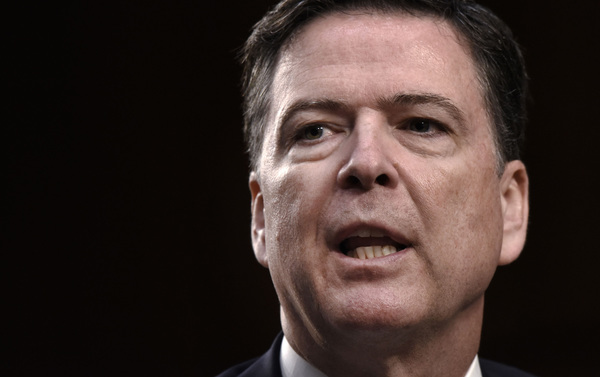
"I was honestly concerned that he might lie" about what they talked about, Comey said.
Those concerns only deepened with their subsequent conversations, he said.
As the committee's highly anticipated hearing began, the panel's chairman, Sen. Richard Burr, R-N.C., and vice chairman, Sen. Mark Warner, D-Va., praised Comey, rebutting efforts by the White House and its allies to portray him as unreliable.
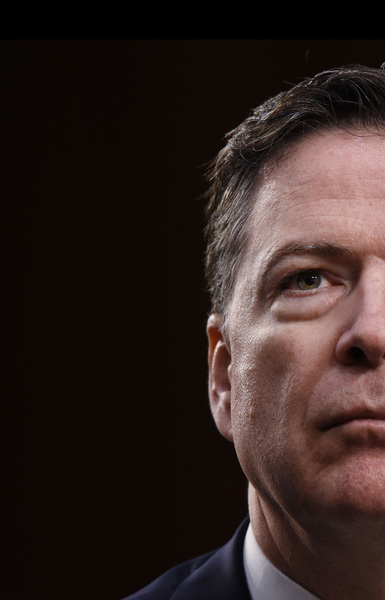
Burr praised Comey's "dedicated service and leadership" at the FBI. "Your appearance today speaks to the trust we have built over the years," he said.
Warner defended the committee's investigation, saying it is "not a witch hunt, it is not fake news, it is an effort to protect our country" against a "foreign operative seeking to hijack our most important democratic process," a presidential election.
In early questioning, one of Trump's defenders on the committee, Sen. Jim Risch, R-Idaho, suggested that Trump's request that the FBI drop the investigation of Flynn could not be considered obstruction of justice because the president did not order him to do anything.
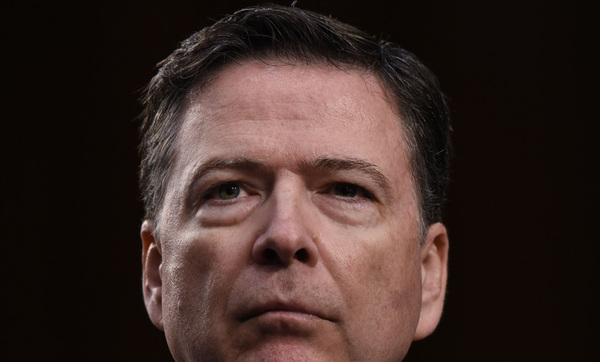
Comey said there was no specific order, but that he took Trump's words as a directive. Answering a question from Burr, Comey said that he would not express an opinion on whether Trump's request constituted obstruction, but would leave the decision to Robert S. Mueller III, the special counsel running the investigation.
Comey's detailed written account of five of the nine one-on-one meetings or phone calls he had with Trump before he was fired on May 9, submitted in advance of his in-person testimony, raised fresh concerns that the president may have sought to obstruct a criminal investigation, a potential crime.
The FBI already is investigating possible collusion between the Trump campaign and Russian intelligence operatives trying to disrupt the 2016 election and undermine U.S. democracy.
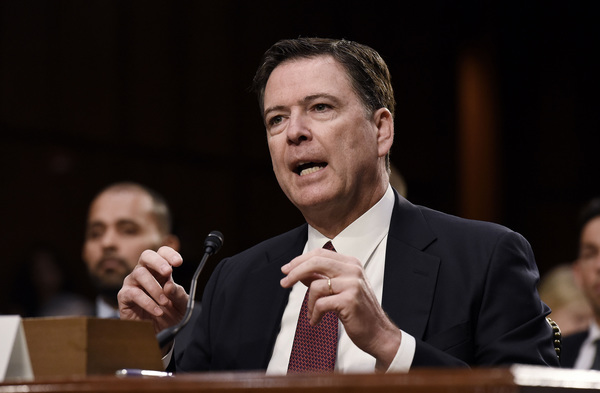
Comey's testimony, the first to directly suggest the president sought to influence the investigation, thus may become a milestone in the controversy that has dogged the White House from Trump's first days in office.
In his statement, which he did not read at the hearing, Comey variously described feeling uncomfortable and frustrated by Trump's comments, which he considered inappropriate. But he carefully avoided expressing any views as to whether Trump had violated the law.
In his prepared statement, Comey testified that Trump repeatedly complained that the FBI investigation into Russian meddling had cast a "cloud" over his administration. He also said that Trump sought repeatedly to get him to publicly declare that the president was not under investigation.
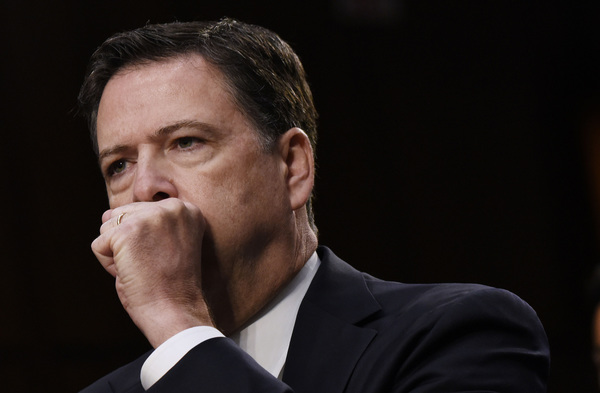
Comey, though he acknowledged Trump was not personally a target of the inquiry, said he declined to say so publicly because he would be obligated to declare otherwise if the focus of the investigation shifted.
A day after Trump sacked Comey, Trump told two senior Russian envoys in the Oval Office that Comey was "crazy, a real nut job," according to leaked accounts of the conversation. The president later told NBC News that he had the "Russia thing" on his mind when he decided to fire the FBI chief.
But when a political backlash mounted, the Justice Department appointed former FBI Director Mueller as special counsel to oversee the widening investigation and to prevent White House interference.
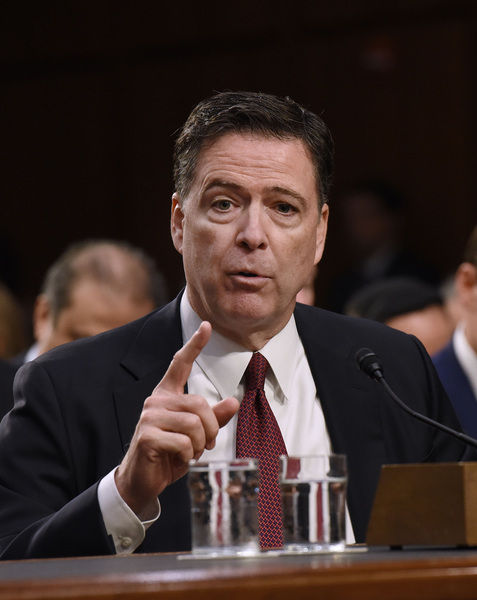
Democrats on the Senate Intelligence Committee probably will press Comey for clear evidence of obstruction of justice that they conceivably could use to build an impeachment case against Trump.
Trump and his Republican allies seized on parts of Comey's account in which he confirmed that he told Trump he was not under investigation, citing it as vindication of Trump's public statements.
Comey also is likely to face questions about why he decided to share his account of the president's comments only with a small circle of top aides at the FBI _ and not inform anyone at the Justice Department.
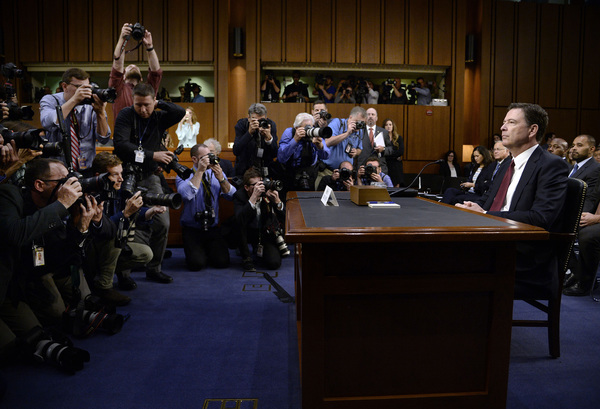
In his prepared statement, Comey said he saw no reason to inform Attorney General Jeff Sessions because he expected Sessions to step aside from the Russia investigation. Sessions did so two weeks later.