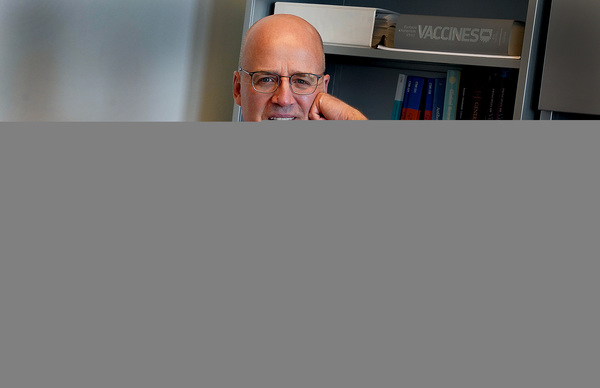
Early in the pandemic, Chris Parks needed a gene and $1 million.
Commuting from his home in Boonton, New Jersey, to his laboratory in Brooklyn, New York, he tuned to the local news. Death counts seemed to have replaced traffic reports. More people were dying of COVID-19 in all five boroughs of New York City.
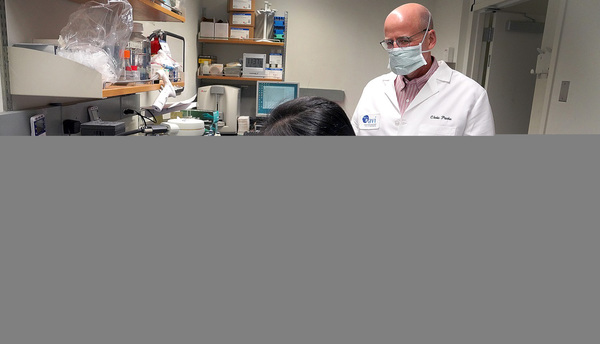
When he reached his office at IAVI, once known as the International AIDS Vaccine Initiative, on the eighth floor of the Brooklyn Army Terminal, his fellow scientists wanted to know: Would they be working on a COVID-19 vaccine?
Parks didn't have an immediate answer. He needed a go-ahead from the senior leadership.
And the $1 million — just to get started.
Developing a vaccine is a gamble. Efforts fall short. A virus can disappear.
But Parks knew this was different. The December outbreak in Wuhan, China, alarmed him. Then came news from Thailand, Japan, Korea — and Seattle. One day he pulled out an old textbook, "Fields Virology," as if he needed to be reminded of where this was headed.
The World Health Organization issued warnings. Experts said hundreds of thousands of Americans would die within a year. More than science, this was becoming a moral responsibility. His inbox filled with questions.
Then one day in mid-February, he got the OK. If the company's technical expert believed the lab could make a vaccine, then it should try, even if that meant spending its own money.
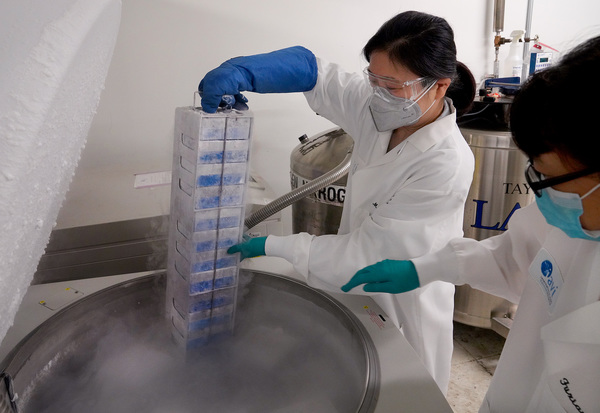
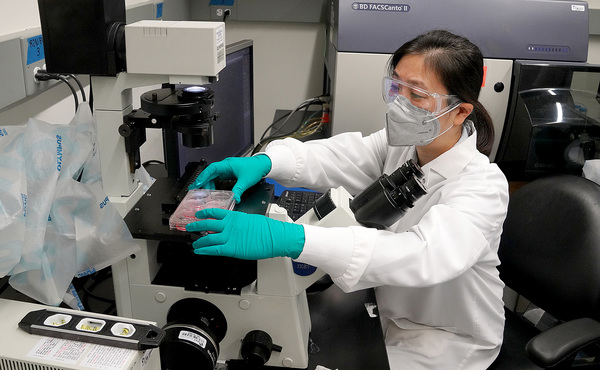
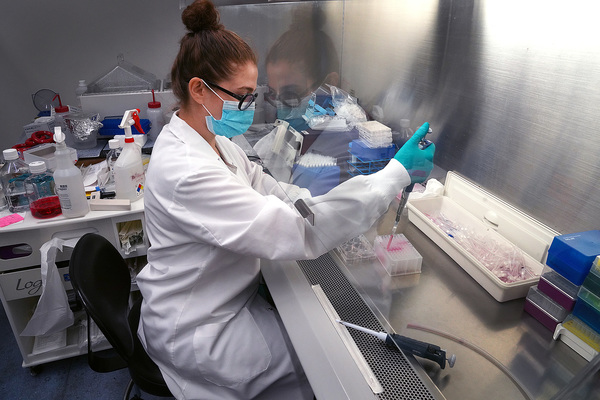
IAVI's Brooklyn lab had fewer than 25 scientists. It was tiny compared with Pfizer, Sanofi, Johnson & Johnson, AstraZeneca and Merck, whose scientific staffs numbered in the hundreds.
And IAVI was a nonprofit, an underdog in a high-stakes race.