Colombian police have made one of the country’s biggest seizures of cocaine in recent history, hauling in eight tonnes of the illegal drug near the border with Panama worth an estimated $240m (£167m).
The huge stash of drugs was found in an underground hideaway on a banana plantation in the municipality of Turbo in the Antioquia department, government officials said on Sunday. Three people were arrested in the police operation.
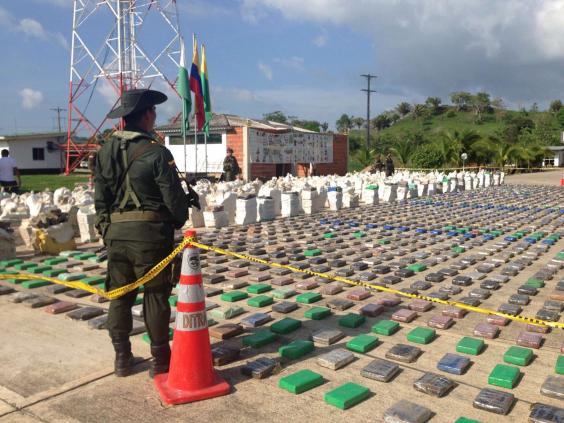
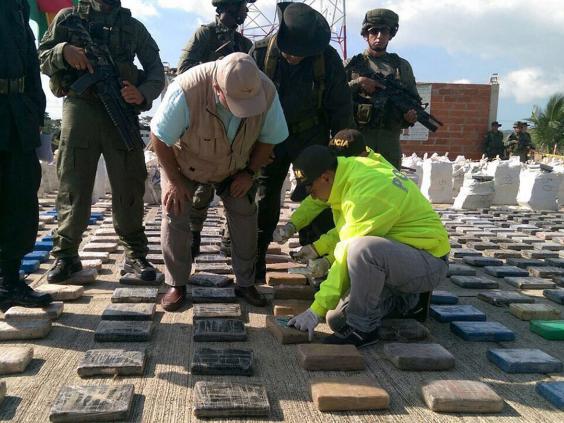
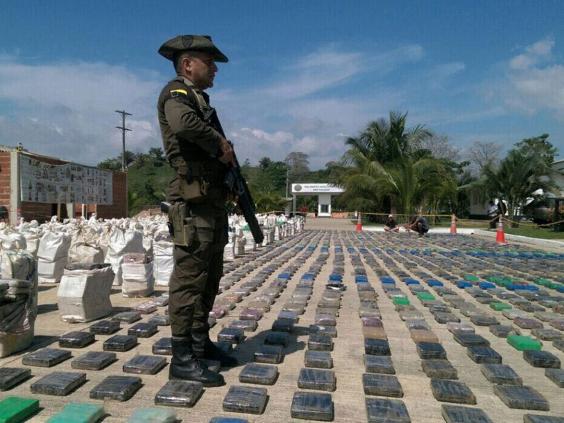
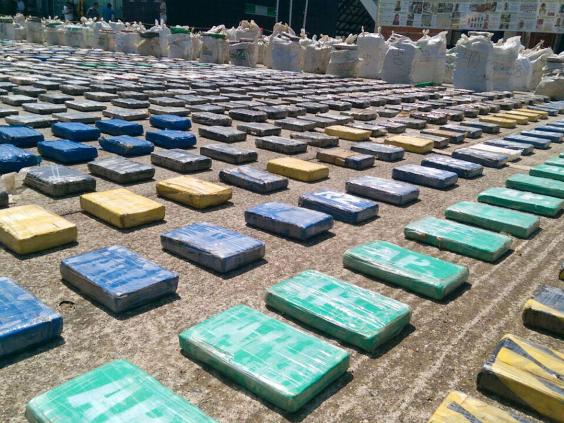
Colombian police released photos of the haul showing packages of cocaine laid out on the ground, with sacks filled with more packages lined up alongside them.
The country’s president, Juan Manuel Santos, said on Twitter that the cocaine haul marked “the biggest seizure of drugs in history,” calling it “A hit against criminals.”
The cocaine belonged to the crime gang known as Clan Usuga, Defence Minister Luis Carlos Villegas said. The US has offered a $5m reward for the capture of the gang’s leader.
Authorities in Colombia seized around 252 tonnes of cocaine in 2015 – over half of the 442 tonnes believed to be produced in the country each year, according to United Nations figures.
In February last year Colombian officials confiscated 3.3 tonnes of cocaine with an estimated street value of around £58m, again belonging to Clan Usuga.
Just months later more than eight tonnes of the narcotic were seized by US authorities off the coast of El Salvador. The drug was being carried in a submarine-like vessel, a method of transportation that was identified by the Royal Navy several years ago as a way that crime cartels were using to avoid naval patrols in the Caribbean to send cocaine from Central America to Europe and Britain.