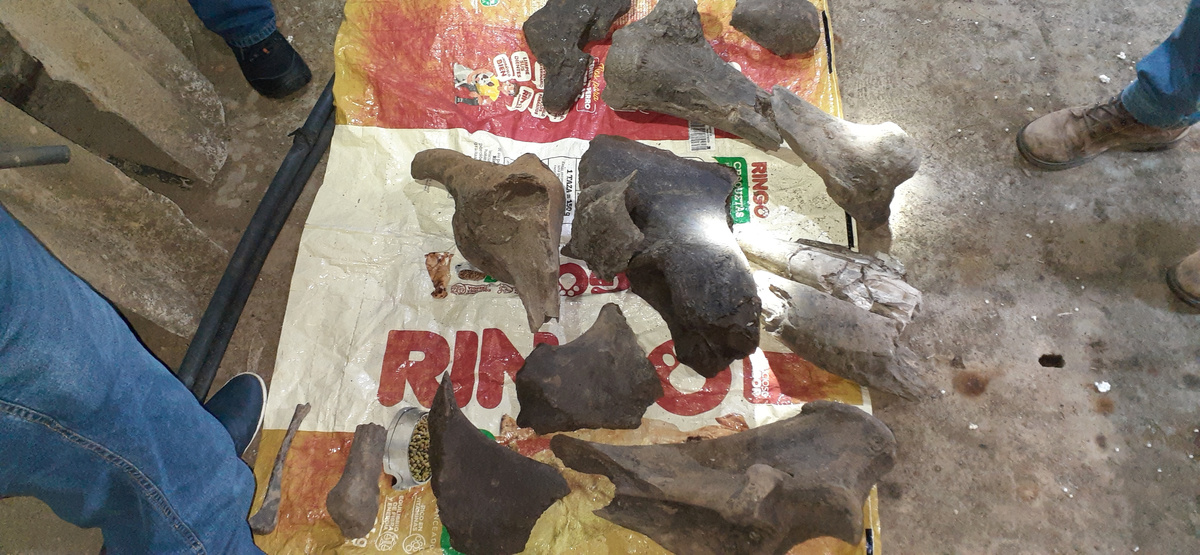
Fossils of a mastodon, a giant prehistoric relative of today's elephants, have been discovered at an artisanal gold mine in central Colombia in a find which researchers say could herald a trove of similar specimens.
Gold miners working a tunnel near the town of Quinchia, in Risaralda province, came across what they soon realized were bones on Tuesday.
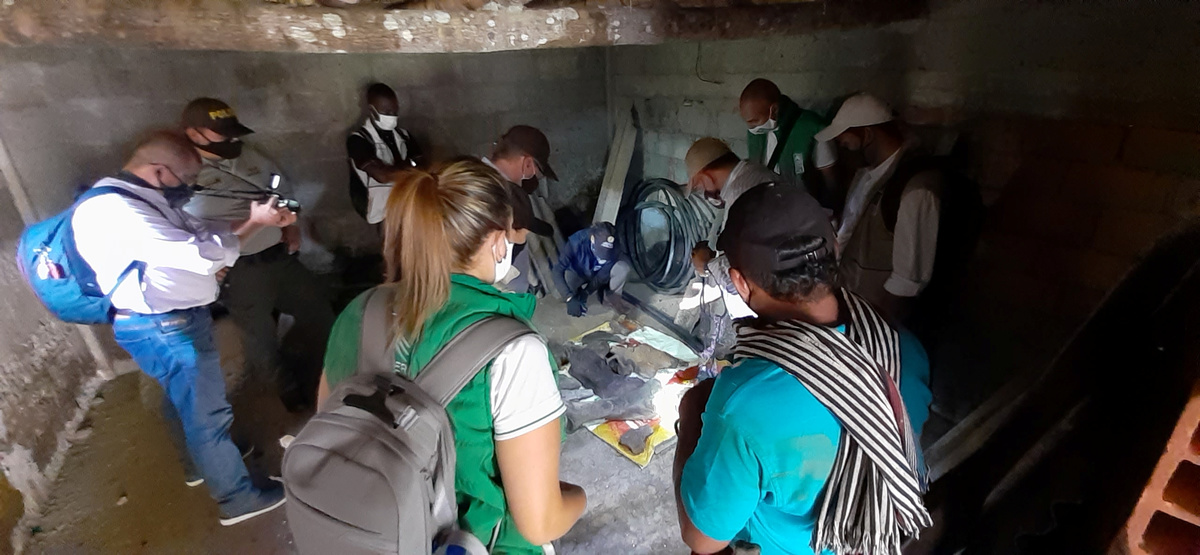
The discovery is the first of its kind in the province but mastodon remains have also been found in Cundinamarca and Valle del Cauca provinces, as well as along Colombia's Atlantic coast, said Carlos Lopez, an anthropologist at a university in Risaralda's capital Pereira.
"These animals attract attention due to their large size - a giant bone doesn't go unnoticed," Lopez said. "It really takes us in a time machine ... to think about what they were like and how they lived, and if humans lived alongside them."
Experts study the mastodon remains and remove those still inside the mine, where a complete tusk measuring 1 meter 10 centimeters (3.5 feet) long can still be seen.
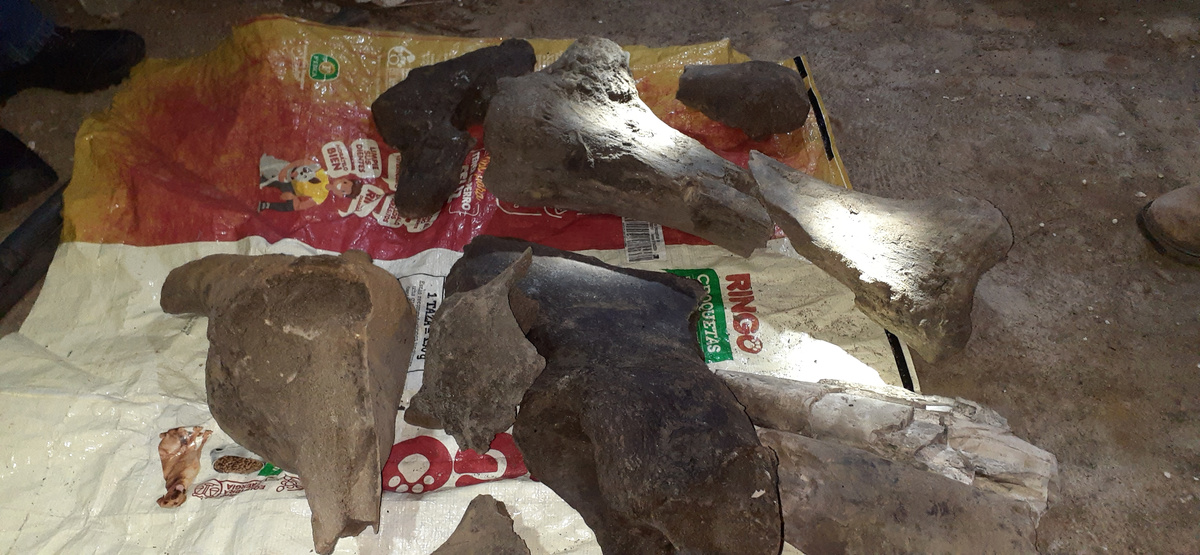
"They sent us some photos, which we sent to expert anthropologists in the area and they determined they belonged to megafauna ... that died out between 2 million and 10,000 years ago," said Julio Gomez, director of the regional environmental authority for Risaralda.
The discovery could herald similar finds in the region.
"More (remains) could be found," Lopez said. "These animals lived in herds, they didn't live alone, a little like the herds of elephants we see in Africa today."
(Reporting by Camilo Cohecha; Writing by Oliver Griffin; Editing by Richard Chang)