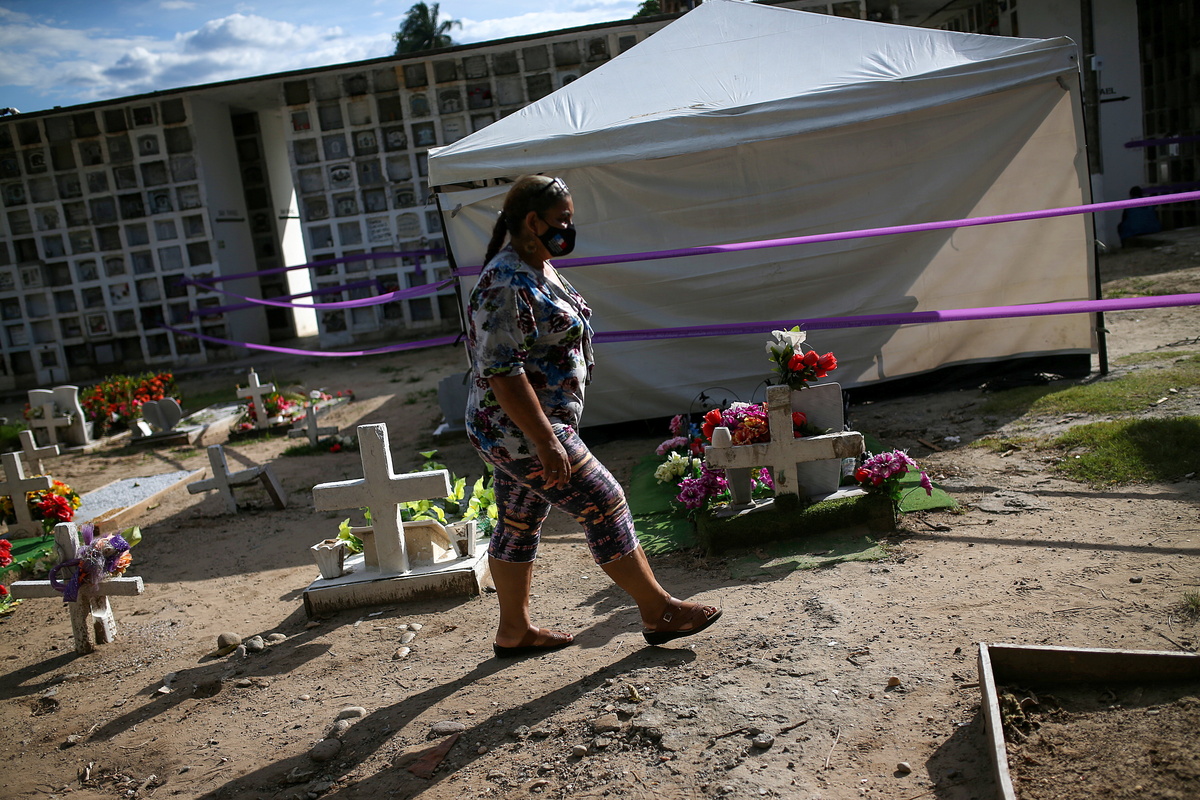
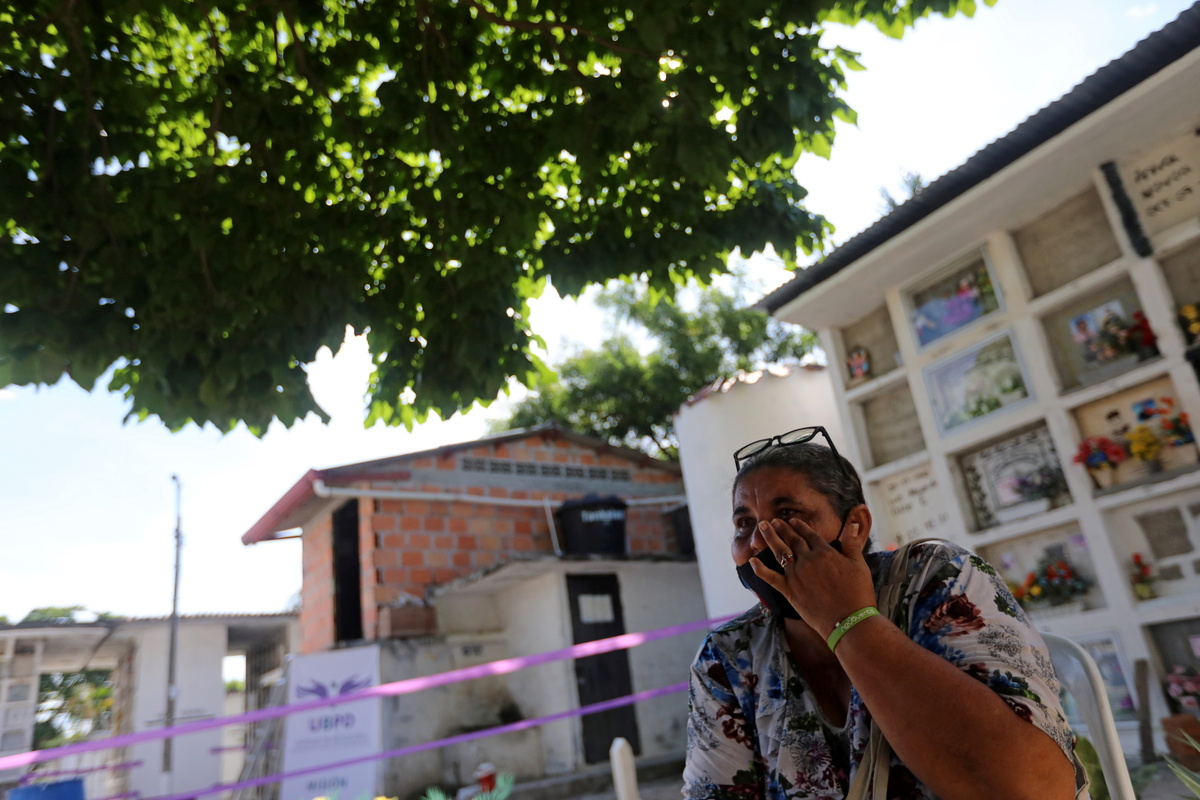
When her 17-year-old son Jose Andres was kidnapped by paramilitaries at the height of Colombia's civil conflict, Gloria Ines Urueña vowed she would not leave the sweltering riverside town of La Dorada until she found him.
She has been true to her word for more than two decades - searching for her son's body despite threats from the group that killed him.
An estimated 120,000 people have gone missing during Colombia's nearly 60 years of conflict. A 2016 peace deal between the government and the Marxist FARC rebels brought some respite, but another left-wing insurgency and armed criminal gangs - many descended from right-wing paramilitaries - persist.
Now a national plan to identify victims buried anonymously in cemeteries has renewed the hope Urueña and thousands like her hold of finding their loved ones' remains.
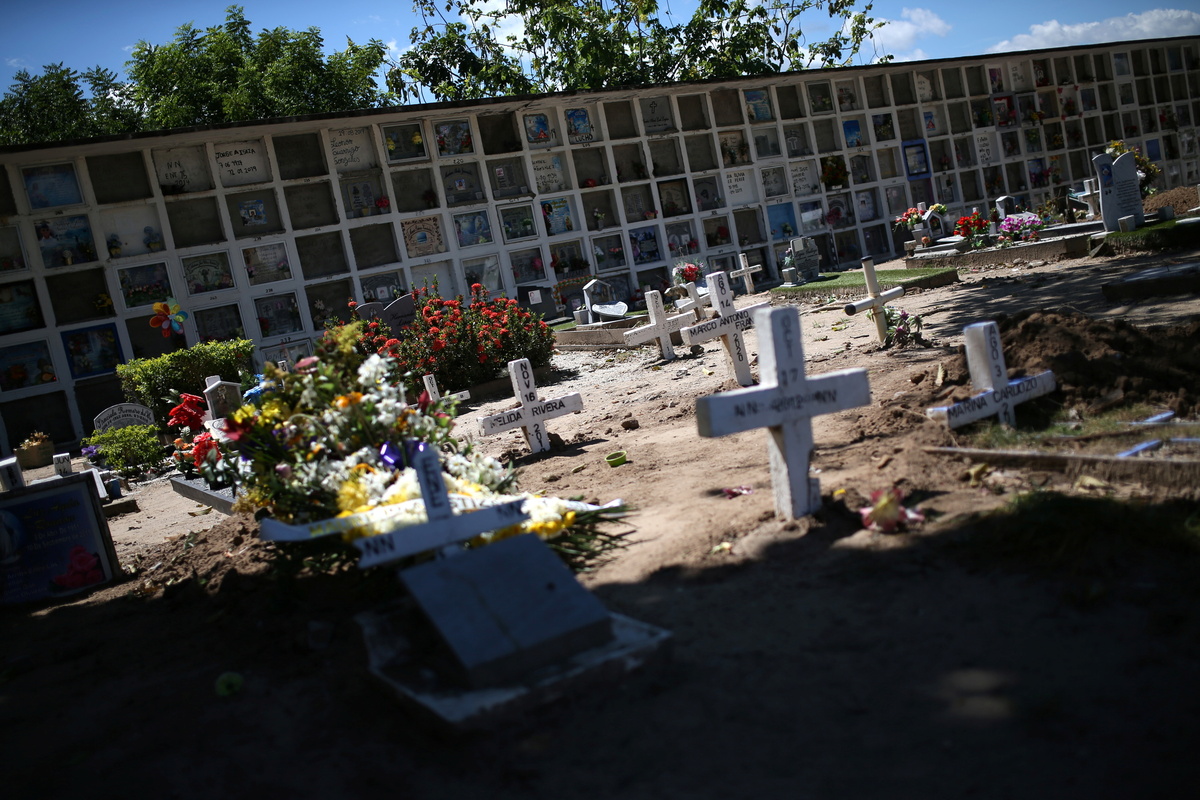
The Search Unit for Disappeared People, founded under the 2016 deal to fulfill one of its key promises, is investigating cemeteries across Colombia, hoping to untangle years of chaotic record-keeping and neglect, identify remains, and return them to families.
"Back then, I spent a month looking near the river, near the dump, farms, all that, and I was alone," said Urueña, as a forensic team examined human remains at La Dorada's cemetery.
"I've always said I don't just want to find my son: I want to find all of the disappeared."
Many of Colombia's disappeared were killed by leftist rebels, right-wing paramilitaries or the military. Others were kidnapped, forcibly recruited, or willingly joined armed groups.
Most are likely dead, buried in clandestine graves high in the windswept Andes or deep in thick jungle, dumped in rivers or ravines.
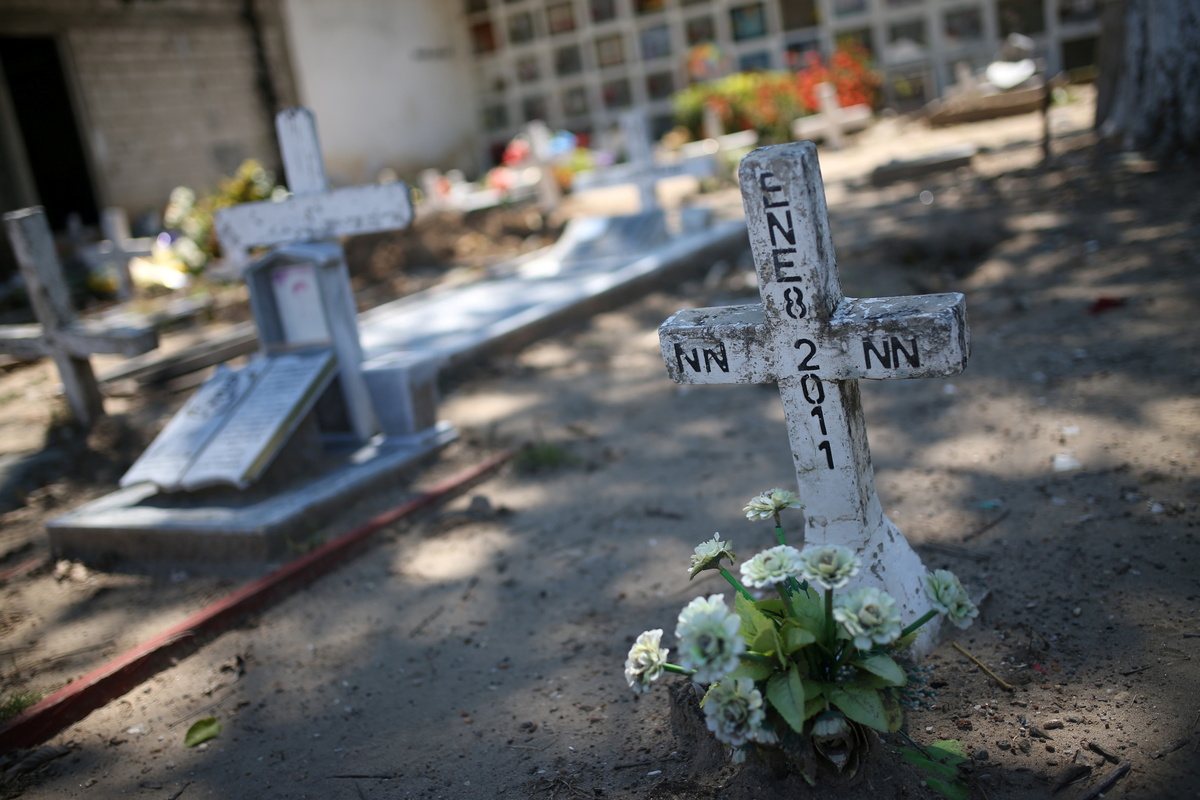
But some ended up in graveyards. Found by the roadside or pulled from waterways, remains were buried anonymously by locals risking the wrath of armed groups, their graves marked with NN for 'no name'.
The strategy may be unique: the recovery of potentially tens of thousands of bodies from cemeteries has likely not been tried before, especially during an ongoing conflict.
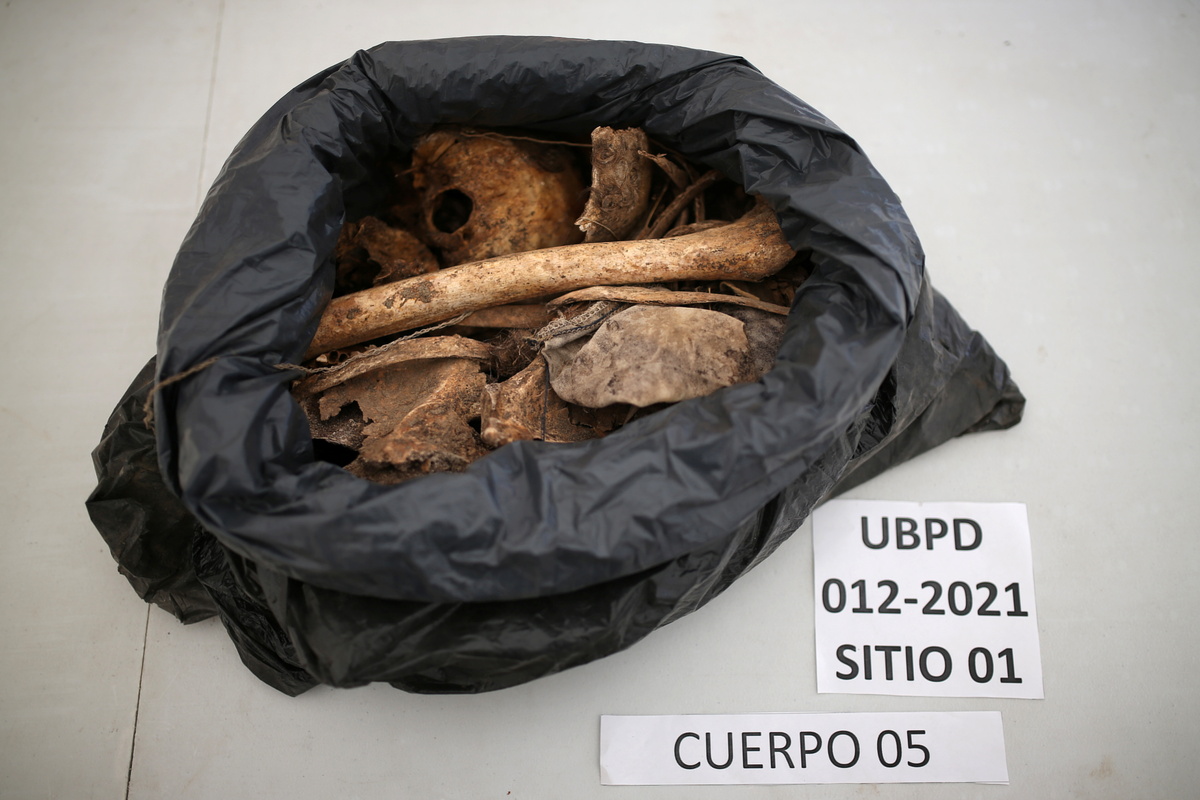
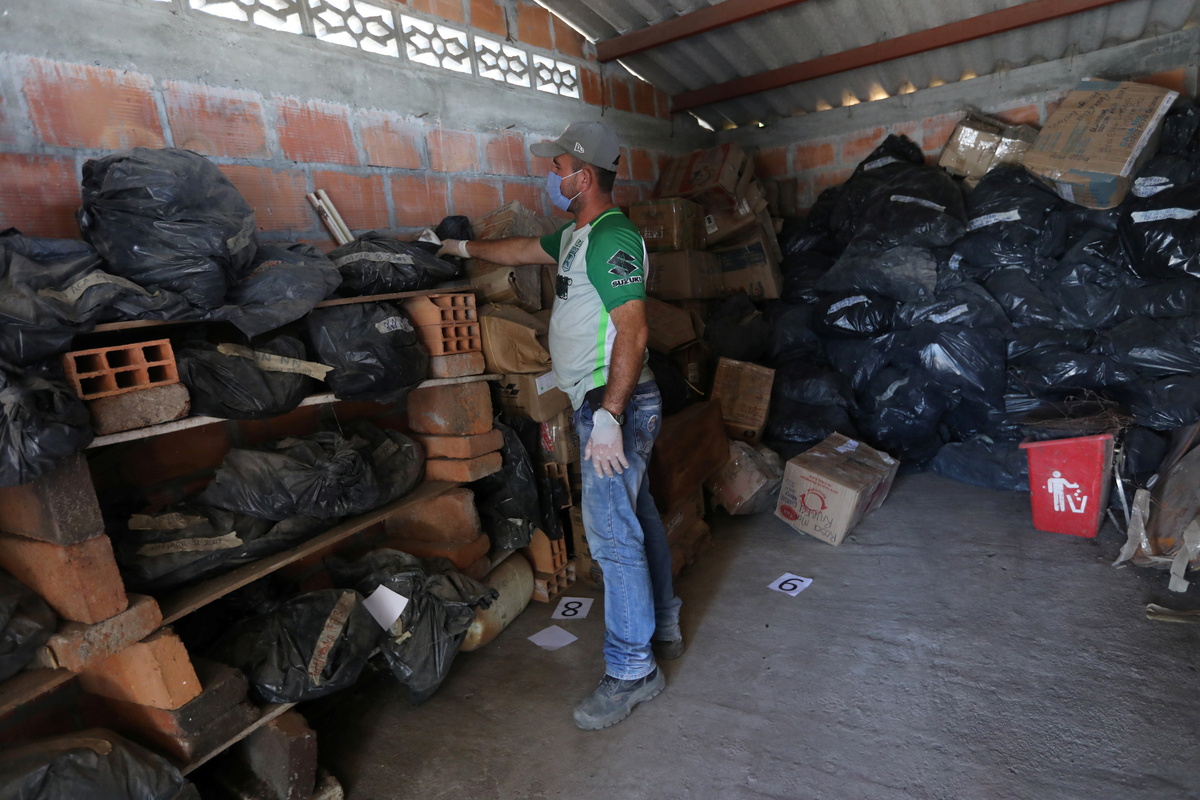
Some remains have been moved or mixed together, exhumed multiple times during efforts to identify them or saved in trash bags in storage rooms.
Some remains have been assigned multiple case numbers, while others were buried in cemeteries but never autopsied and so have no case number at all.
Other remains have case numbers, but cannot be located.
"It's not just a recovery of bodies, but also of information," said unit head Luz Marina Monzon. "It's a jigsaw puzzle."
PIECING IT TOGETHER
The unit has no estimate of how many disappeared people may be in Colombia's cemeteries. Many graveyards have had no consistent management or resources, or are run by religious organizations with their own records and rules.
DNA from nearly 5,200 unidentified bodies is stored in a database at the government's National Institute of Legal Medicine, along with nearly 44,400 samples from families of the disappeared to cross-check genetic material with newly-discovered remains.
The institute also holds a separate database of reports of missing people. So far, the unit has uncovered some 15,000 reports of disappeared persons that were not previously in it.
Threats to families and ex-combatants providing information to the unit can stymie its work, Monzon said.
"The persistence of the armed conflict is a huge challenge to accessing information, to accessing locations and to guaranteeing the participation of victims in the search," Monzon said.
This scale of cemetery exhumations is unusual, largely because many people disappeared in countries like Argentina, Chile, Bosnia, Guatemala and Kosovo were buried in clandestine graves. Scattered graveyard exhumations have been conducted in some places.
But Colombia's effort may hold particular lessons for Mexico, which is facing perhaps the world's most active disappearance crisis and where the unidentified are sometimes buried in cemeteries but rarely exhumed.
"Mexico needs to start looking at what the Colombians are doing," said Dr. Arely Cruz-Santiago of the University of Exeter, who researches citizen forensics in Mexico and Colombia. "Especially because they are very similar countries in the sense of the scale more or less of the conflict."
BONES IN BAGS
Beads of sweat bloomed at the temples of forensic anthropologist Carlos Ariza as he cradled a cranium in one hand, using his finger to indicate the bullet's likely trajectory.
This skull belonged to a man, about 40. Later during the examination in a stifling tent in La Dorada's cemetery, Ariza discovered a second bullet hole in the cranium, hidden under caked mud.
"NN Mar. 17 2003," read the label on the plastic trash bag which had held the remains in a dark storage room.
Over a few days, forensic staff opened the bags, delicately removing each bone, fragment of fabric or tuft of hair. They packed 27 sets of remains off to a regional lab for DNA testing.
La Dorada lies in the southernmost point of the Magdalena Medio region east of Medellin, once a hotbed of violence where hundreds of thousands of people were murdered, disappeared, raped and displaced.
Paramilitary groups were frequent perpetrators. They demobilized between 2003 and 2006 under a peace deal, though many members later formed crime gangs.
HOW MUCH LONGER?
About a month after Urueña's son was taken in 2001, two men showed up at her house in La Dorada on a motorcycle and told her to stop looking.
"'He was my son and I will not move from this house until I know what's become of him. And if your boss wants to kill me that's my answer'," she said she responded. "I told him 'do it now if you want and that way you'll end my suffering too.'"
Jose used to bring his mother flowers on his way home. When his sister became pregnant as a teenager, he helped support the baby.
"If he were here it would be different, as much for the family as for me, because the family fell apart," Urueña said.
Her older son fled town in the face of paramilitary threats, not returning for 11 years. Her older daughter left to find work, leaving Urueña to raise her grandchildren.
Her granddaughter, now 18, has promised Urueña she will continue the search for Jose even after Urueña's death.
"We ask how much longer we have to wait," Urueña said. "Even though the years pass, I am still full of hope."
"And though you don't want to cry, the tears come."
(Reporting by Julia Symmes Cobb, additional reporting by Lizbeth Diaz in Mexico City, Nicolas Misculin in Buenos Aires, Gabriela Donoso in Santiago, Sofia Menchu in Guatemala City and Daria Sito-Sucic in Sarajevo, Editing by Rosalba O'Brien)