Colombia is entering its fourth day of recovery efforts following Monday's magnitude 7.4 earthquake — the strongest to hit the country this century — with a death toll that has climbed steadily and shows no sign of leveling off.
The national count: 265 dead, hundreds still unlocated
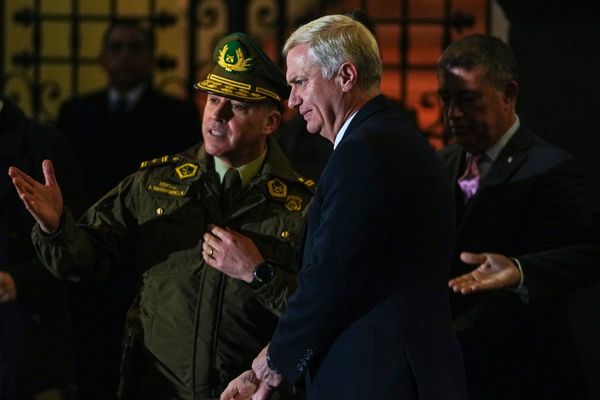
President Abelardo De La Espriella, who took office just five days before the quake struck, updated the country Wednesday evening: 265 people confirmed dead, 3,494 injured and 496 still unaccounted for, out of roughly 25,872 families affected nationwide. He said the government's attention is now centered squarely on the missing.
That official missing count sits well below independent tallies. Civilian-run tracking efforts have logged figures north of 4,100 people whose whereabouts remain unclear — a gap authorities attribute to duplicate and unverified reports flooding in as families search for loved ones. The two numbers as measuring different things: one is a government-verified count, the other an open, crowd-sourced list still being cleaned up.
Colombia's Geological Service has logged more than 100 aftershocks since Monday, keeping search teams on edge and prompting thousands of families in Pereira and Cali to sleep in tents in public parks rather than return to structurally uncertain homes.
Cali and Pereira absorb the heaviest losses
The country's association of capital cities, Asocapitales, has traced the bulk of the fatalities to two cities in particular. Cali, Colombia's third-largest city, now counts 92 dead and 230 people still missing, with 56 structures fully collapsed and 88 people pulled out alive. Pereira, capital of the coffee-growing department of Risaralda, has recorded 83 deaths, 45 missing and 75 collapsed buildings — even as it leads all cities with 243 people rescued alive from the rubble.
In Manizales, in neighboring Caldas, authorities have confirmed five deaths, with damage concentrated in the historic center, including the city's metropolitan cathedral.
Cali's own count of collapsed buildings with people believed trapped has climbed sharply since the quake first hit — from an initial estimate of 20 structures in the earthquake's opening hours to more than 45 as of this week, according to city officials. Mayor Alejandro Eder's administration has repeatedly requested reinforcements from Bogotá and Medellín to keep pace.
Chocó closes its search — while the national missing count keeps climbing
In a rare piece of good news, Chocó's governor, Nubia Carolina Córdoba-Curi, announced Wednesday that the department — home to San José del Palmar, the earthquake's epicenter — has formally closed its search-and-rescue phase after locating the last family reported missing, a group of four Venezuelan nationals found alive. "We are no longer searching for anyone under the rubble," she said, redirecting the department's rescue capacity to other regions still in active search mode. Chocó's toll stands at 13 dead and 182 injured, alongside more than 1,100 homes destroyed and nearly 9,000 damaged across 29 municipalities.
Quindío, meanwhile, has reported no deaths, but its capital, Armenia, has counted roughly 175 injuries and dozens of collapsed or damaged buildings. The University of Quindío's main campus sustained facade, roof and ceiling damage — not a structural collapse, contrary to some early social-media claims — and suspended classes while it assesses the building.
Building collapses top 140, tens of thousands of homes destroyed
Colombia's presidency put the national infrastructure toll at 140 collapsed buildings, 11,347 homes destroyed outright and more than 53,000 additional homes damaged, in a briefing delivered alongside the casualty update. Nearly 1,820 schools, 631 community centers, 20 vehicle bridges, 203 roads and five airports have also sustained damage, the president said.
In Cali, the collapse of a section of Hospital Universitario del Valle — the region's main high-complexity medical center — has become one of the emergency's defining images. Three floors of the hospital's Block 2, housing pediatrics, neonatal care and internal medicine, came down in the initial quake, forcing staff to evacuate more than 600 patients into the hospital's gardens. Rescuers pulled seven people alive from the rubble in the days that followed. The hospital's director now says the facility has lost roughly 40% of its bed capacity as it works to restore full service.
Hospitals across the region are stretched thin
Nationally, 179 health facilities have reported structural damage, according to the presidency's tally. Beyond Cali, hospitals and clinics from Pereira to Quibdó activated emergency protocols within minutes of the quake, and field hospitals set up in gyms, stadiums and parks are now absorbing overflow from patients whose regular care — dialysis, chemotherapy, routine surgery — has been interrupted. In Chocó, one of Colombia's poorest and least accessible departments even before the disaster, Interior Minister Rodrigo Lara said the government has delivered tents, blankets and food supplies this week while working to bring in dozens of additional structural engineers to assess buildings; the department currently has only nine.
Where the international aid is coming from — and the fight over who gets asked
International support has picked up sharply this week, though not without controversy. The U.S. State Department has pledged $15.5 million for emergency shelter, food, protective measures and damage assessments. El Salvador has delivered the first 50 tons of a 100-ton humanitarian shipment to Cali, and a Mexican flight carrying nearly 60 tons of supplies was en route as of midweek, alongside an independently deployed Mexican volunteer rescue team. Ecuador sent an official 47-person search-and-rescue unit with dogs, and Israeli Prime Minister Benjamin Netanyahu ordered an immediate aid mission Thursday. Pope Leo XIV sent a telegram offering prayers for the dead and displaced.
But Colombia's disaster management agency has confirmed it formally requested search-and-rescue teams from only four countries — the United States, El Salvador, Ecuador and Israel — even as nations including Venezuela, Peru, Mexico, Brazil and several European countries offered help. Colombia's foreign minister, Omar Bula, has pushed back on accusations that the selection reflects the new government's ideological alignment, saying the country is working "without any ideological or political consideration" and accepting broader humanitarian aid from a longer list of countries regardless of the formal rescue-team request.
Government moves to unlock reconstruction funding
De La Espriella has invoked Colombia's constitutional economic-emergency mechanism to fast-track reconstruction financing, telling the country that every peso disbursed will be subject to public scrutiny. The declaration opens the door to a new fund, dubbed the "Fondo Milagro," to channel domestic and international contributions. Colombia's finance minister has already attached numbers to the effort: a World Bank credit facility of up to $450 million, the full deployment of an existing risk-management fund, and a reallocation of 2026 budget lines toward the hardest-hit regions.
Locally, Pereira has barred private vehicles from its streets from Wednesday at midnight through Monday evening, limiting traffic to taxis, motorcycles and the Megabús transit system to speed emergency vehicles through the city. Cali, for its part, has reinstated a modified odd-even license-plate rotation through Saturday — a reversal from the total suspension of traffic rules in the earthquake's first days — and imposed its third nightly curfew of the week, running from 9 p.m. to 6 a.m., to keep streets clear for rescue crews.
The hardest-hit region — Cali and the Eje Cafetero cities of Pereira, Armenia and Manizales — is also one of the largest source regions for Colombian immigrants in South Florida's Doral and Weston communities, giving the disaster immediate, personal resonance for diaspora families now working phone lines and organizing donation drives to reach relatives back home. Telemundo51 in Miami has kept a live blog running around the clock as the local audience tracks developments in real time.