Whether it is spooned on to a delicious Sunday roast, stirred through gravy or smeared liberally across a sausage sandwich, few condiments inspire such fervent loyalty among British diners as Colman’s English mustard. But have you ever wondered what sets the iconic mustard apart from the rest? Colman’s mustard’s characteristic flavour is all down to Jeremiah Colman, who in 1814 began making mustard in the Norfolk village of Stoke Holy Cross, making use of the region’s fiery and flavoursome mustard seeds.
Nearly 200 years later and Colman’s is made with 60% of its seeds sourced from a select group of English farmers. The result is a mustard that boasts a trademark pungency. Colman’s reliance on home-grown produce, however, doesn’t come without its perils. In 2007, the English mustard industry very nearly died, when dwindling harvests and poor weather led to a third of mustard seed growers quitting their trade.
Fortunately, a small but determined group of 11 farmers formed the English Mustard Growers (EMG), a cooperative of farmers who, with the help of Unilever, vowed to reinvigorate the industry. And the EMG has gone from strength to strength. Its membership has grown to 19 farmers across Cambridgeshire, Lincolnshire and Norfolk, while harvests are the best they’ve been in nearly 20 years.
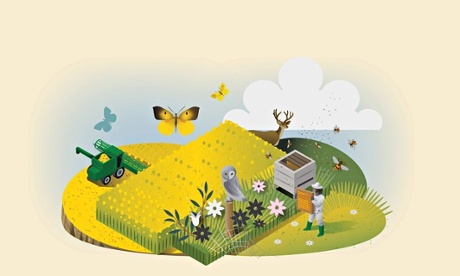
Fans of Colman’s aren’t the only ones to benefit from England’s booming mustard industry. Members of the EMG are encouraged to support local wildlife and ecosystems by adopting the Unilever Sustainable Agriculture code of practice to improve soil fertility, increase biodiversity and use pesticides in a responsible way.
Both Unilever and the EMG have also been working closely with the British Beekeepers Association in an attempt to assess how many bees are present on each farm and to work out what farmers can do to support them. One of the farmers involved in the scheme is Phil Warham, who grows mustard seed on his farm nestled within the Norfolk Broads.
“The whole agricultural business needs bees,” says Warham, “because without them we wouldn’t have any pollination. And no pollination means no crops.
“Mustard plants are particularly good for bees because they’re not harvested until late summer, which gives the bees almost two months’ worth of extra pollen. Once the mustard has been harvested, the bees can then move on to the borders of the fields, which we purposefully leave to grow wild. We hope these moves will not only safeguard mustard for another 200 years, but will also help protect the local wildlife.”
200 years of Colman’s
The world’s most famous English mustard was born in 1814 when Jeremiah Colman began making mustard in the Norfolk village of Stoke Holy Cross. Colman’s fiery blend of mustard seeds proved so successful that by 1866 the company had not only relocated to a factory in Norwich but had also been appointed mustard maker to Queen Victoria. The Colman’s brand has grown, but its Original English Mustard is still made on the same site in Norwich with 60% seeds sourced from a select group of English farmers. To celebrate its 200th anniversary, Colman’s has released three limited-edition jars inspired by vintage adverts used over the past two centuries.