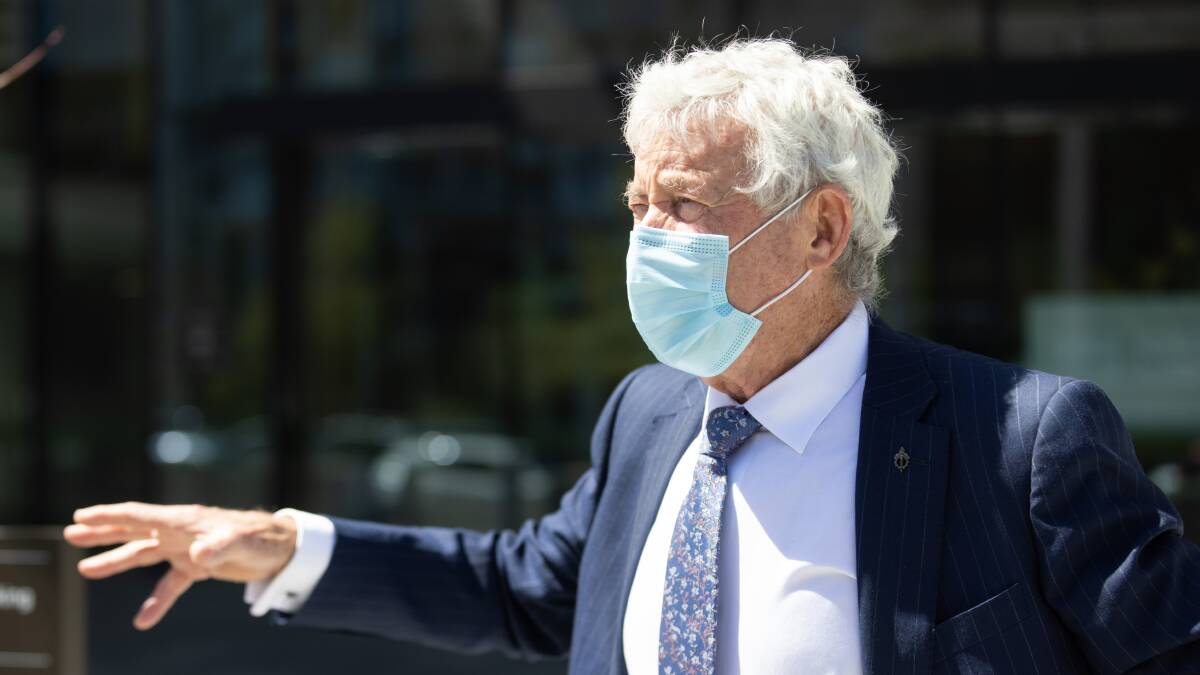
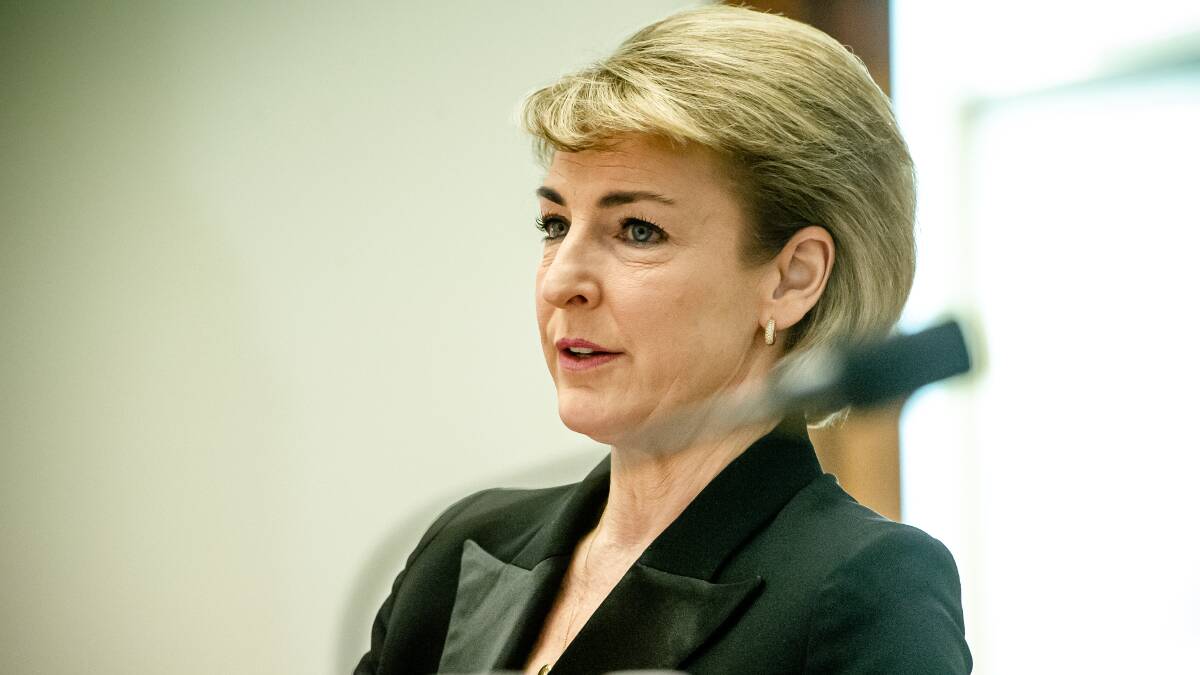
The protracted case of Bernard Collaery might be heading to the High Court, with counsel for the federal Attorney-General indicating Michaelia Cash may look to challenge the level of secrecy applied to a key judgment.
Mr Collaery, a Canberra lawyer and former territory politician, is set to stand trial in the ACT Supreme Court accused of five offences.
He is pleading not guilty to four charges alleging he broke the law by sharing protected information about the Australian Secret Intelligence Service in media interviews.
He is also fighting a single count of conspiring with his former client, the ex-spy known as Witness K, to unlawfully communicate such information to the government of East Timor.
The allegations concern the exposure of a 2004 espionage operation, in which Australian spies bugged a government building in the southeast Asian nation.
Australia was negotiating with its impoverished ally over lucrative oil and gas resources at the time.
Mr Collaery's trial, already more than three years in the making and still without a commencement date, was set to be shrouded largely in secrecy as a consequence of orders made by Justice David Mossop in June 2020.
Justice Mossop made these orders, prohibiting the public disclosure of certain evidence likely to be given at the trial, on the application of then-attorney general Christian Porter, whose lawyers argued this material was likely to prejudice Australia's national security.
Mr Collaery's legal team challenged that decision in the ACT Court of Appeal, which last month ruled in his favour and set aside Justice Mossop's orders.
In a judgment summary, a full bench of that court wrote that it doubted a significant risk of prejudice to national security would materialise if the issues in question became known.
"On the other hand, there was a very real risk of damage to public confidence in the administration of justice if the evidence could not be publicly disclosed," Chief Justice Helen Murrell, Justice John Burns and Justice Michael Wigney found.
Those judges added that the open hearing of criminal trials was important because, among other things, this deterred "political prosecutions".
The Court of Appeal's full judgment has, since last month's decision to allow much more significant slabs of the trial to be conducted openly, been the subject of legal wrangling.
MORE COURT AND CRIME NEWS:
- Alleged Parliament House rapist to stand trial
- Chocolate thief gave worker 'flogging for no good reason'
- Jail deemed undesirable for inmate who set cell fire to protest mind control
- Businessman admits membership of criminal group
Senator Cash's lawyers appeared in court on Tuesday to seek that significant chunks of it be redacted prior to publication on the internet, with nearly all of the several hours worth of argument about this issue conducted behind closed doors.
Chief Justice Murrell made what she determined to be the appropriate revisions to the reasons and was set to publish them on Friday morning, but she ultimately did not.
This was because Tim Begbie QC, for Senator Cash, sought that publication be delayed for at least 28 days while the Attorney-General considered making an application for special leave to challenge the level of Chief Justice Murrell's redactions in the High Court.
Chief Justice Murrell said on Friday that the Attorney-General would presumably "bring all its resources to bear" in order to make a prompt decision so the reasons could be published as soon as possible if a High Court challenge was ultimately not pursued.
She described the potential challenge as "rather unusual".
While the public cannot yet lay eyes on the Court of Appeal's judgment, lawyers involved in the case left with copies of it in large, sealed bags.
Kieran Pender, a senior lawyer at the Human Rights Law Centre, lamented the latest pursuit of secrecy in the matter.
"The Attorney-General should be introducing long-overdue reform to the Public Interest Disclosure Act, so that whistleblowers are protected, not punished, rather than pursuing more secrecy in this case," he told The Canberra Times.