A coronial inquest into the death in custody of a 22-year-old Yamitji woman in a South Hedland police cell will begin in two months time, the Western Australian premier, Colin Barnett, told her family this week.
Ms Dhu, whose first name is withheld for cultural reasons, was arrested for more than $1000 in unpaid fines and placed in the lockup of the South Hedland police station, 1640km north of Perth, to “cut out” her fines. She complained of stomach pains and died three days later, on 4 August 2014, on her third visit to Hedland Health Campus.
The WA justice system allows people to “cut out” unpaid fines by spending time in custody, at a rate of $250 a day. That’s about $80 less than the daily cost of keeping an adult in prison.
The WA police investigation into Ms Dhu’s death was completed last year but her family was concerned they would be forced to wait up to two years for a public inquest.
At a meeting with Ms Dhu’s mother, Della Roe, grandmother, Carol Roe, and sister in Port Hedland this week, Barnett said the inquest would be held in the middle of the year.
He also got permission for them to visit the holding cell where, they believe, Ms Dhu took her last breath.
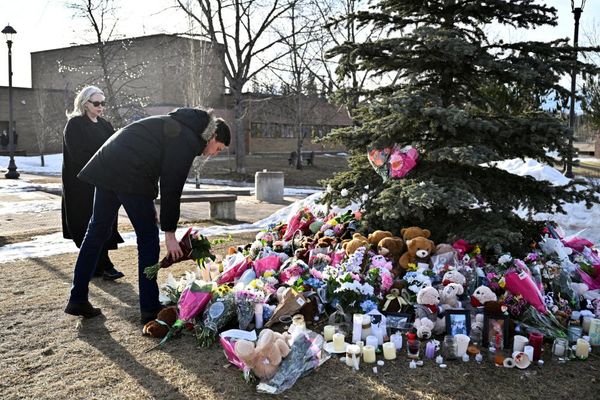
“That was probably their most immediate issue yesterday, to actually visit the site and lay a wreath and say their goodbyes,” Barnett told reporters in Perth on Friday.
He said he met with Ms Dhu’s family for about an hour and promised them a “thorough and detailed” investigation into her death.
“I also made it very clear that I very much regretted if any procedures either within police or the hospital were not up to standard,” he said. “And extended my apology if that was proved to be the case.
“Obviously, I also expressed my sympathy to the family.”
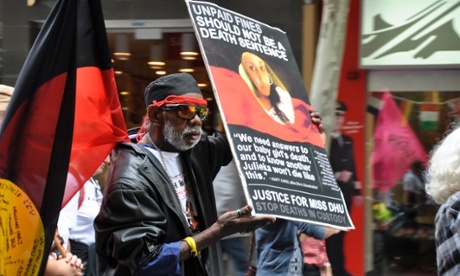
Barnett made a public promise to Delia Roe at a national day of action against Aboriginal deaths in custody in October last year that he would review both deaths in custody and Western Australia’s high Aboriginal incarceration rates.
He told reporters on Friday that a multi-agency taskforce was working on ways to divert Aboriginal people away from the justice system for lower-level offences like unpaid fines, and the first report would surface “within a month or so, hopefully quicker”.
Among the options being considered, he said, are “drying out shelters” in remote communities or towns for those affected by alcohol.
“It may be arrangements to pay off a fine, it may be garnishing some of that income through other means,” Barnett said. “What we’re trying to do is ensure that people get out of the system for minor offences at a relatively early stage and that there are support services to help.”
It’s understood some policy changes related to reducing Aboriginal incarceration will go before cabinet next week.
Marc Newhouse, chairman of the Death In Custody Watch Committee WA, was at the meeting between Ms Dhu’s family and Barnett.
He told Guardian Australia Delia and Carol Roe were “very pleased” with the outcome of the meeting and that he was “feeling positive” about Barnett’s commitments.
“They were very distressed the day before because they could just see into the window of the holding cell and they were wailing, ‘she’s still in there!’ but after they went into the cell they said, ‘she has gone now, she has left this place’.”
Newhouse said Barnett’s comments about proposed new programs for reducing Aboriginal incarceration rates were “light on detail” but it appeared to be “moving in the right direction”.
However he said harvesting welfare payments to pay down unpaid fines was not a viable solution.
“If it comes out that they are going to dock 14 or 15% of people’s welfare payments, we are to going to support that,” he said.
Newhouse said his optimism was tempered by the Barnett government’s other corrections policies, including a recently strengthened “three-strike” burglary policy that by the government’s own estimates will put an extra 206 adults and 60 juveniles in jail.
“On the one hand the premier is saying that there’s going to be systemic change to the system, and on the other, the government has just passed the three-strike laws that are going to increase incarceration,” he said.
The opposition’s corrections spokesman, Paul Papalia, said best way to reduce Aboriginal deaths in custody was to reduce Aboriginal incarceration rates, and the only way to do that was to reduce all incarceration rates, starting by reversing harsh new community service order regulations that see people automatically jailed if they skip three community service days.
“They won’t die if they’re not in there,” he said. “Forty per cent of adults jailed in WA are Aboriginal. It’s been that way for a long time, but when you have a record increase in prisoner numbers, which we have had, the number of Aboriginal people in custody naturally increase.”