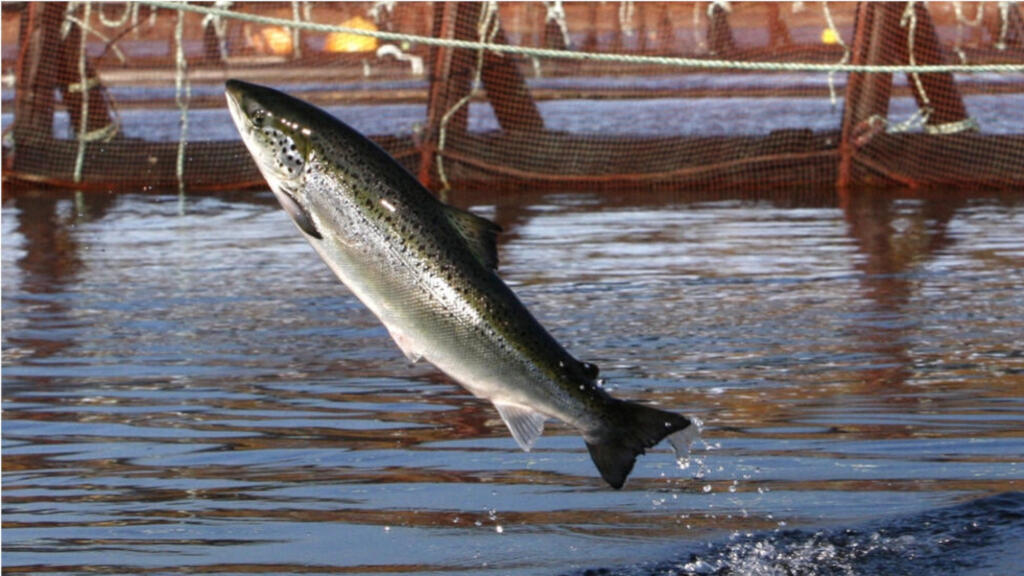
Salmon exposed to cocaine in the water swim longer distances, an Australian and Swedish study published this week shows. Recreational drugs and medicines entering natural environments via wastewater are a growing threat to biodiversity, disrupting the behaviour of many animals.
The study, published on 20 April in the Current Biology journal, reveals that salmon exposed to cocaine in the water swim longer distances than those that have not been exposed.
Researchers from Griffith University in Australia and the Swedish University of Agricultural Sciences looked specifically at how cocaine might affect the movements of wild fish in their natural habitat.
"Cocaine, like other drugs, including prescription medicines, is found in wastewater all over the world," Professor Michael Bertram of the Swedish University of Agricultural Sciences told RFI.
An environmental issue
The researchers collected around 100 wild Atlantic salmon from Lake Vättern in Sweden to expose them to the drugs.
Observing the specimens under the influence of cocaine, the researchers noticed that the fish swam a distance almost twice that of the other salmon. Their experiment also revealed that fish exposed to benzoylecgonine, a metabolite formed by this drug in the liver, swam 12.3 kilometres further than the others.
The team aims to draw attention to the issue of water pollution caused by drugs, which they say are not just a social issue but an environmental one.
"This is a major and growing risk to biodiversity. Human health, the health of global life and the health of ecosystems are all interconnected," said Bertram. "Everything that humans use, produce or administer to animals eventually ends up in the environment, unless it is treated and completely removed, which is very rare."
Modernising wastewater treatment
To tackle this problem, he suggests two solutions.
"In the case of cocaine, it’s difficult to implement because it isn’t sold as a medicine. But for prescription drugs, we can use green chemistry to design products that break down more quickly in the environment and are less likely to affect wildlife."
The other solution would be to modernise wastewater treatment plants.
"Switzerland, for example, has carried out a nationwide modernisation of its wastewater treatment infrastructure. And this has led to improvements in these facilities. In Sweden too, work is being done in this direction. Modernisation helps, in part, to resolve the problem we are raising here," he said.
Bertram stresses, however, that things are moving in the right direction. In his view, the European Union is a leader in this field.
He added, however: "Whatever happens, we must pay attention to the impact on biodiversity."
This article was adapted from the original version in French, by Juliette Pietraszewski.