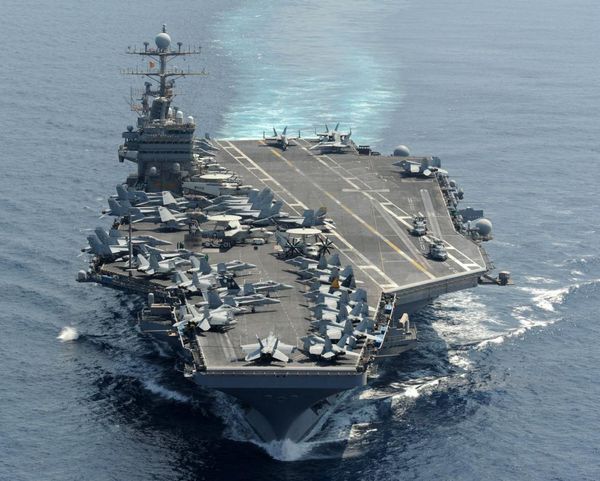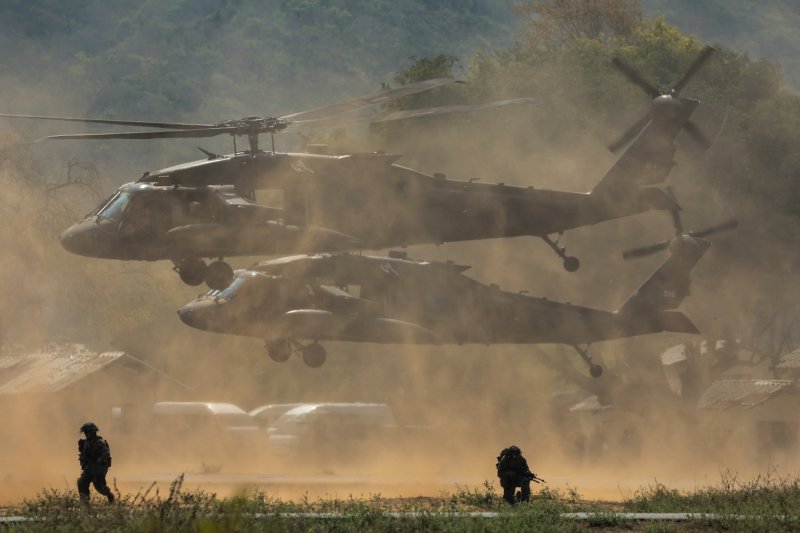
Thailand and the United States will proceed with the Cobra Gold 2027 military exercises according to the original plan, a spokesman for the Ministry of Defence said on Thursday.
The annual multinational exercise is part of an established security partnership and is not being used as a bargaining tool in trade or tariff negotiations, said Rear Adm Surasant Kongsiri.
He was adding his voice to an earlier official government denial of a foreign media report that the government plans to use military and security cooperation with the US as leverage in negotiations over US tariffs.
Cobra Gold 2027, scheduled for March, will be the 46th edition of the multinational exercise, involving the Thai armed forces, the US Indo-Pacific Command and armed forces from 24 partner countries and observers, in addition to the seven core members: Thailand, the United States, Singapore, Indonesia, Japan, South Korea and Malaysia.
In a related development, Commerce Minister Suphajee Suthumpun also rejected reports that Thailand had offered military cooperation in exchange for trade concessions.
She said defence cooperation was an existing framework, while trade negotiations are focused on achieving a balanced arrangement with Washington on reciprocal tariff benefits.
She said Thailand had highlighted its private-sector investment in the United States as evidence of its commitment to helping reduce the US trade deficit. Thai companies have invested nearly US$20 billion there, supporting numerous jobs, with an additional $5 billion in the pipeline.
Thailand has also told Washington that at least 30% of its trade surplus with the US stems from exports by American companies that have established production bases and invested in Thailand.
Ms Suphajee is scheduled to travel to the US for technical negotiations later this month.
Thai goods currently enjoy tariff exemptions covering about 72% of products under the first tranche of Section 301 measures and Section 232, particularly agricultural and electronics products.
The Ministry of Commerce is preparing detailed information on the remaining 28% still subject to tariffs, with the aim of securing the lowest possible rate for Thailand.