The Coalition is considering using federal government building contracts to pressure companies not to engage in or to cave in to environmental boycotts.
In a sign the government is looking for innovative ways to implement Scott Morrison’s threat to crack down on environmental protests, the attorney general, Christian Porter, has sought views on whether the federal building code could be used to “prevent multiple secondary/environmental boycott demands and behaviour”.
The question is contained in an industrial relations discussion paper on the code, released on Tuesday.
The code, last updated in 2016, governs the federal government’s engagement with construction companies and is usually used to influence industrial conditions and the role of unions, rather than environmental groups.
It has been used to ban union flags on worksites, to force employers to reject clauses allowing unions access to worksites for inductions, and to ban clauses limiting the use of contractors.
The paper notes the code already requires companies to report “actual or threatened industrial action and secondary boycott demands as soon as practicable, but no later than 24 hours”.
Although the code directly applies only to companies bidding for government work, those companies must adopt preferred work practices in all their private sector agreements and impose the same conditions on subcontractors in order to comply.
If the code were used to prevent secondary or environmental boycotts, the government could potentially put pressure on a company to build a rail line to Adani’s Carmichael coalmine or lose all its government work, for example.
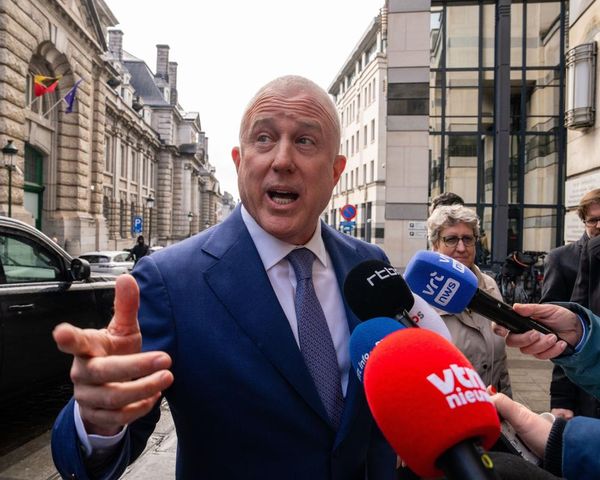
Asked about the proposal at a press conference in Melbourne, Porter incorrectly claimed the word “environmental” did not appear in the paper, before conceding the government is interested in how to combat “secondary boycotts which would include any number of different reasons” for boycotts.
“We have come across a range of instances where businesses have been damaged by behaviour that could be described as secondary boycotts,” he said.
“In the context of the Commonwealth as a purchaser of construction services … we’re interested in hearing from all of the parties if there is a role for the code to ensure businesses don’t get damaged by unfair secondary boycott behaviour.”
Porter agreed that companies losing work for engaging in or caving in to a secondary boycott were “all possible options”.
A wide range of businesses have been targeted for Adani-related boycotts including banks, such as Westpac, and many other companies outside the construction sector.
In January Greyhound ruled out any extension of work on the controversial Adani coal project after it was targeted for providing transport to workers for the construction company BMD, which is building the railway to take the coal to Adani’s Abbot Point port.
In November Morrison branded environmental protesters “anarchists” and threatened a radical crackdown on the right to protest in a speech to the Queensland Resources Council, claiming progressives were seeking to “deny the liberties of Australians”.
Porter explained that a crackdown could include moves to limit access to litigation funding and environmental litigation and to prevent secondary boycotts by groups such as Market Forces.
He accused the group of attempting to “impose their political will on companies across the country through widespread, coordinated harassment and threats of boycotts”.
The Competition and Consumer Act already contains civil penalties for secondary boycotts, which target one business in order to prevent provision of goods or services to another, including if they cause “substantial loss or damage” or substantially lessen competition.
However, secondary boycotts for the “dominant purpose” of environmental protection or consumer protection are permitted.
In a second discussion paper, Porter asked stakeholders how best to strengthen civil penalties for underpayment, in addition to the Coalition’s existing commitment to criminalise wage theft.
Porter has said that criminal penalties should be reserved for serious cases – and not “genuine mistakes” – but has lent support for alternative punishments including disqualification following the $300m underpayment of salaried staff at Woolworths, uncovered in November.
In a statement Porter said legislation to criminalise wage theft would be introduced “in coming weeks” but more needed to be done for cases that are “incredibly serious and border on negligence, given we are talking about sophisticated organisations that should be capable of meeting their obligations under workplace law”.
“The Coalition has already increased some civil penalties by a factor of 10, but it is clear to me that more still needs to be done to motivate companies to improve their performance, such as disqualifying directors of organisations that continue to get it wrong.”
Porter told reporters in Melbourne that a wide-range of sophisticated entities had underpaid workers including Coles, Woolworths, the ABC, Made Establishment Group, Maurice Blackburn, Sunglass Hut, Commonwealth Bank, Super Retail Group, Qantas, and Michael Hill.
Porter said businesses had “their eye off the ball”, suggesting they are “so far away from their knitting” because they are involved in social issues.
Porter accused companies of “spending time, money and effort self-promoting …telling us how good [they] are” when they should “pay [their] people properly” instead.
The discussion paper noted that although the Fair Work Ombudsman has attempted to disqualify directors, courts have shown “reluctance” to do so without more explicit language in the Fair Work Act.
The paper notes the government has accepted recommendations from the migrant workers’ taskforce for “adverse publicity orders” and banning orders against employers who underpay migrant workers on principle.
It proposes that employers could be required to display a notice admitting to having underpaid their employees, but invites stakeholders to consider how these would affect diverse businesses such as cafes and online stores.
Under the proposed banning orders, courts could block employers from recruiting migrant workers for a specified period.
The discussion paper canvasses the possibility that job ads featuring non-compliant rates of pay could themselves be banned, in addition to the act of underpayment.
“The migrant workers’ taskforce found that these sorts of advertisements are prevalent, and particularly target migrant workers,” it said.