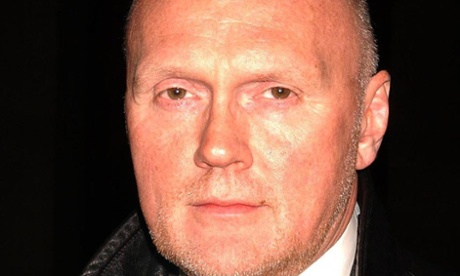
Allan Leighton has been confirmed as chairman of the Co-operative Group and moved quickly to allay any lingering concerns among its six million members that the new management team intended to demutualise the supermarket and funeral home business.
The serial non-executive – who previously turned around Asda and chaired Royal Mail – said that his family background linked him to the UK’s largest mutual and that the distinguishing factor of the business was indeed its mutuality.
“The power of the Co-op is that it’s a mutual society,” said Leighton, whose appointment as chairman has been expected since the start of the month.
His appointment to the £250,000 a year role – though he is donating his fee to the Co-op foundation – marks a key point in the turnaround strategy of the group, which was taken to the brink by a £1.4bn hole in its banking arm and mired in controversy following revelations of drug-taking by the bank’s former chairman Paul Flowers.
Leighton has become the first independent chair and immediately replaced Ursula Lidbetter who stepped up to the role in November 2013 at the height of the Flowers controversy.
“I grew up with [the Co-op] ... it is the fabric of the community,” Leighton said, saying his father had worked at the Co-op in roles taking the family to Hereford and Nottingham. But the mutual was currently the “underdog”, he said, and he wanted “to take it a bit back to the future”.
Leighton served as boss of grocery chain Asda from 1996 to 2000 and was non-executive chairman of Royal Mail from 2002 to 2009 and president of Loblaw, the largest food retailer in Canada, from 2008 to 2011.
He will now oversee the overhaul of the board which until now has comprised five members from independent co-operatives, such as Lidbetter, and 15 from the millions of members of the mutual business. This is being replaced by a structure in which the members elect four representatives who will sit on the board alongside five independent members and two members of the executive team, including the boss Richard Pennycook.
The members will elect their representatives at the annual meeting on 16 May and the Co-op is currently encouraging members to stand for election. Around 2.6 million are thought to meet the criteria, which includes being a member for three years and meeting a threshold of expenditure.
This is described as a one-member-one-vote system, which replaces the current system of members’ views being heard through approximately100 elected delegates.
The May annual meeting – just days after the general election – is also the moment when members will vote on the long-standing contributions to the Co-operative party, whose 31 MPs sit alongside those from Labour in Westminster.
The wording of the motion on which members will vote has not yet been published but follows a survey conducted by the previous boss, Euan Sutherland, which asked: “To what extent do you think it is appropriate or inappropriate for big businesses to donate money to political parties?”
The Co-op party is launching a campaign to win support for the ongoing donations which amount to £625,000, approximately 75% of its funding. Karin Christiansen, general secretary of the Co-op party, intends to spell out the successes of the party – which has been linked to Labour since the 1920s – in setting policy and changing laws.
The campaign – Keep it Co-op – is asking members of the supermarket and funeral home business to back a statement saying they support the idea of the Co-op movement being about changing society for the better.
“The Co-op movement is getting incredible value out of the relationship,” said Christiansen. “The Co-op party, though, needs to explain itself more clearly and demonstrate how it can help co-operative businesses.” She added: “It’s about the value of keeping a political voice.”
Among the policies that the Co-op party said it has influenced over the years are consumer protection, winning financial support for credit unions, cracking down on payday lenders and founding 800 co-operative schools.
“This is partly about being able to talk to people. We’ve not really had the ability to do that. This is about the purpose of the movement,” said Christiansen.
Leighton did not give a view on the current link to the Co-op party. He is preparing to step down as chief executive of the Pandora jewellery brand next month and received a £3.4m payoff after moving from chairman to chief executive in July 2013.