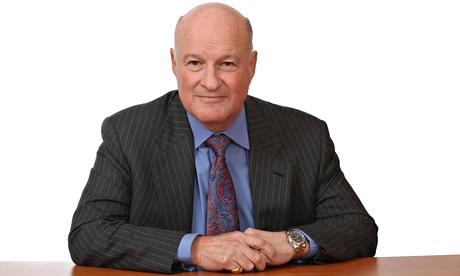
The loss-making Co-operative Bank is likely to fail the Bank of England’s annual assessment of its financial strength, its chief executive has revealed.
Niall Booker, who joined last year when the bank was on the brink of collapse, said it would “come as no surprise” that it would struggle to pass Threadneedle Street’s stress tests of leading banks and building societies.
The results of the tests are scheduled for publication on 16 December but Booker was forced to clarify the position of the bank following a report in the Times.
The Co-op, which has had to raise £1.9bn of capital in the last 18 months, is thought to be hoping to avoid raising more as the Bank of England has already approved a five-year plan put together by Booker to reverse its fortunes.
The high street lender reported a loss of £1.3bn for 2013 and a loss of £76m for the first six months of 2014 as it battled to keep customers in the face of series of scandals which forced the wider Co-operative Group of supermarkets and funeral homes to cede its overall control of the bank to hedge funds and other bondholders. The mutual’s shareholding has fallen to 20%.
The discovery of a capital shortfall last year was shortly followed by revelations about the bank’s former chairman Paul Flowers who has since admitted drugs offences. An investigation is underway by the City regulator into the situation.
Booker – who was paid £1.7m in 2013 – has warned the bank will not make a profit until at least 2016 as he cuts staff and closes branches to save costs.
In August, the bank made a little noticed disclosure in its interim results that when it subjected itself to its own stress test involving a once-in-25-years financial meltdown it fell below the minimum capital requirement set out by the regulator.
Booker said: “Given the disclosures to the market in August, it will come as no surprise if the bank does not meet the desired capital ratios in the stress tests due to be announced in December. Almost 70% of our customer assets are residential mortgages and it has always been clear to ourselves and the regulator that we are vulnerable to these tests at this point in our turnaround.”
The current round of stress tests being conducted by the Bank of England’s Prudential Regulation Authority are tougher than the one in 25 scenario the Co-op had used in the summer.
The PRA is testing banks – including leading high street lenders such as bailed-out Royal Bank of Scotland and Lloyds Banking Group – on their ability to withstand a 35% fall in house prices and rising unemployment and interest rates.
“We are supportive of the stress tests,” Booker said. “Nearly all banking crises have their roots in bad loans and in particular bad property loans so it is right that this aspect should be stressed under extreme scenarios.
“The stress tests were undertaken at the end of last year and in 2014 we have made significant strides through capital raising and, as we stated at half year, are ahead of schedule in the disposal and run down of non-core assets.
“Given market movements it may be possible to exit certain portfolios which are particularly susceptible to stress at levels which can now be accommodated in our capital position.”