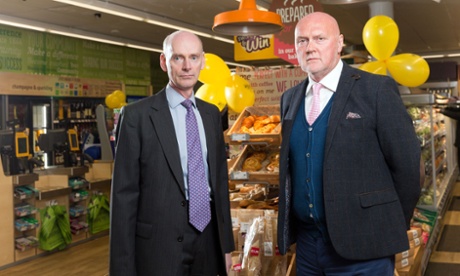
The Co-operative Group has returned to profit and reduced its debt mountain as it tries to draw on its traditional community links to bounce back from a tumultuous year.
Chief executive Richard Pennycook declared the “rescue phase” of the mutual’s turnaround complete. “The hard work of rebuilding the Co-operative Group for the next generation ... is now under way.”
Pennycook said the group would be going “back to the future” by emphasising its community links and campaigning on issues important to the 8.5 million members who own the business. “We are owned by members in the communities in which they live and work. Nobody else can say that,” he said.
However, Britain’s biggest mutual, which was founded in 1844, said members would have to wait until the end of a three-year recovery plan in 2017 for a resumption of dividend payments. The last payment, of £34m, was made in 2013.
The Co-op made a net profit of £216m in the year to January as it benefited from the sales of its pharmacy and farming businesses. Borrowings at the group, which is now focused on food, funerals, insurance and legal services, were cut to £808m from £1.4bn.
The improvement in profits came despite a 3% fall in revenues to £9.4bn after the Co-op disposed of some grocery stores and sales at its funeral business fell as a result of last year’s low death rate.
Pennycook admitted that without the profit from the pharmacy sale and property disposals, the Co-op would “at best, have broken even” but said he expected “steady improvements” in profits from now on.
Last year’s profit compares with a £2.3bn loss in 2013 following the discovery of a £1.5bn black hole at the group’s banking armalong with a writedown of the value of former Somerfield stores.
In a disastrous year, the Co-op Bank came close to collapse and lost its mutual status. It was rescued by bondholders, led by US hedge funds, in a deal that reduced the Co-op Group’s stake to a minority holding of 20%. The bank’s former chairman, Paul Flowers was fined for drug possession last spring. The Co-op Group’s former chief executive Euan Sutherland quit in March after a furore over his pay.
There were encouraging signs in the Co-op’s grocery business where sales at established stores rose 0.4%. Within that, sales at smaller convenience stores rose by 3.2%. The chain which is the UK’s fifth biggest food retailer by market share and has 2,800 convenience and medium-sized stores, opened 82 new convenience stores and refurbished more than 700 shops. It hopes to add a further 100 smaller stores this year. It also plans to slim down its portfolio of 717 poorly performing larger stores by disposing of up to 75 sites a year. It sold 37 last year.
Pennycook said store revamps were starting to pay off, with refurbished stores seeing “high single-digit uplifts in sales”. He added: “Where we want to grow is in the convenience part of the market, and in that part of the market we’re growing market share.”
Pennycook admitted there was still much work to do in a tough market locked in a supermarket price war and where bigger rivals such as Sainsbury’s and Waitrose are rapidly opening more convenience stores. But he said: “I’m very confident we are heading in the right direction.”
The former Asda and Royal Mail boss Allan Leighton, whose father ran a Co-op store, was recently appointed as the society’s first independent non-executive chairman after a shakeup of its governance structure. He is putting together a new smaller, plc-style board, composed of a majority of independent directors.
They are expected to be appointed ahead of the group’s annual meeting in May, with further elected directors set to join the board following the meeting. About 2.9 million members are eligible to vote at the annual meeting. They will be asked whether the society should continue to make donations to the Co-operative party, which is affiliated to the Labour party.