The Co-operative Bank will take take at least two more years to shake off the legacy of its disastrous merger with Britannia and return to profit, its chief executive has warned as he revealed a first-half loss that more than doubled to £204m.
“We won’t be profitable in 2015 [though] these results are slightly better than we expected,” Niall Booker said. “We won’t be profitable in 2016 either.” He declined to estimate whether the bank would return to profit in 2017.
The bank’s pretax loss for the six months to the end of June widened from £77m a year earlier as revenue fell, charges for bad behaviour rose and it spent more money to make up for lack of investment in its systems.
Booker’s prediction means the bank will have posted a loss for four years running after it was left burdened by bad debts from the 2009 deal with the troubled Britannia Building Society.
The once mutually owned lender reported a £257m loss in 2012 and a £1.3bn loss for 2014. The bank’s financial troubles exposed chaotic governance and organisation.
Operating income in the first half fell to £236m from £307m after it sold assets and suffered losses on some of the disposals. It set aside an extra £10m to compensate customers mis-sold loans and packaged accounts, taking the charge to £49m. Spending on projects to improve systems and processes increased to £102m from £69m while gains on loans that performed better than expected fell by £42m.
Booker said losses this year and next year will be caused by a similar mix of charges and costs, mainly made up of the £450m allocated to overhaul inadequate systems and processes and to catch up with the industry-wide move into digital services, such as banking via smartphones and tablets.
The Co-op bank nearly collapsed in 2013 when it announced a £1.5bn capital shortfall and pulled out of trying to buy more than 600 branches from Lloyds Banking Group. It was engulfed in scandal over its former chairman who later admitted possession of class-A drugs. The bank had to be rescued by hedge funds, leaving its former owner, the Co-op group, with just 20%.
Regulators last week spared the bank a £120m fine for failing systems and misleading reporting between 2009 and 2013 because the penalty would have weakened the bank, which is run by new leadership.
Booker, who helped clear up the mess at HSBC’s US business during the financial crisis, joined the Co-op bank in May 2013 when it was on the verge of collapse. Campaigners have criticised his pay deal, which could be worth £4.97m this year and £5m in 2016 even as the bank continues to report losses.
He said his plan to rebuild the bank was on course and its core business was performing better, while customer departures had slowed after mass defections last year.
The bank, whose ethical reputation has been damaged by its recent troubles, lost a net 2,250 current accounts in the first half of 2015 compared with 62,646 a year earlier. Booker said minimising overdraft charges had helped retain customers.
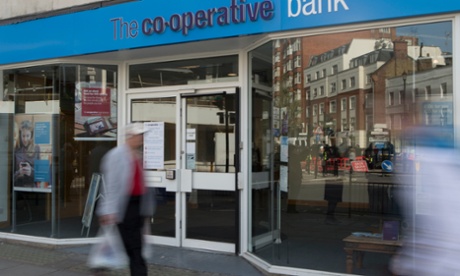
As part of Booker’s cost-cutting plan, the bank has closed more than a quarter of its branches in the past year. Branch numbers have fallen to 165 from 227 a year ago, Booker said. He said closures would slow from now on but that more branches would go as customers conducted more of their business on computers and phones.
“We took a fairly big whack at the branches early on. It’s consistent with what you’re seeing elsewhere in the market and it will drive fewer branches and continued investment in digital channels,” Booker said.
The expected losses for this year and next year meant the bank was unlikely to launch a mooted initial public offering in the near future, he said.
“It will be a wee bit of time before we are ready to IPO,” he said.
“We must focus on keeping our products simple, continuing to reinforce risk management and systems, strengthening our culture and maintaining our high levels of service. The transformation of the bank remains challenging.
“However, this should not diminish the progress made against our strategic plan. The actions we are taking are creating a resilient bank that can stand alone, distinguished in the marketplace by its values and ethics.”