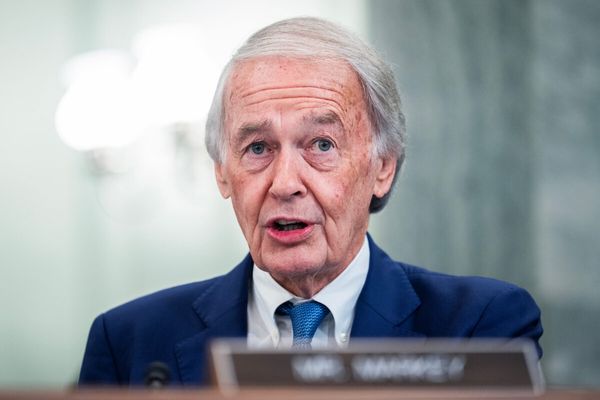
Clive Palmer has accused his former Senate leader, Glenn Lazarus, of “spitting the dummy” by quitting just hours after the party sacked Lazarus’s wife from a paid position.
The founder of the Palmer United party (PUP) played down the impact of the departure on his political influence, saying “the number of seats or individual interests is not the most important thing in politics”.
But Lazarus’s decision to serve out the rest of his six-year term as an independent leaves the PUP with just one vote in the Senate, the WA representative Dio Wang.
Senior government figures said they would now negotiate with each of the eight crossbench senators individually, mindful that the Coalition required support from at least six of them to pass any legislation opposed by Labor and the Greens.
Palmer, a lower house MP, was in a much stronger bargaining position when the Senate composition changed in July last year and he effectively controlled four upper-house votes, including the Motoring Enthusiast party’s Ricky Muir, with whom he had a loose voting alliance.
But Muir has grown in confidence to judge proposed legislation on its merits, and Jacqui Lambie quit the PUP to become an independent in November last year after a falling out with Palmer.
Lazarus announced his decision to quit the party in a media release issued shortly after midnight on Friday, saying he had “a different view of teamwork”.
“I don’t allow people to bully me,” Lazarus told 4BC. “I just feel, as I’ve said before, that the best thing for me and for the people that I represent was to become an independent.”
The PUP’s national director, Peter Burke, revealed that the upheaval followed the party’s decision on Thursday to send a termination letter to Lazarus’s wife, Tess, “primarily because she failed to comply with the terms of her employment”.
Tess Lazarus ran as a PUP candidate in the Queensland state election in January and regularly issued media releases on behalf of Glenn Lazarus.
Guardian Australia understands she was employed by the party to run the PUP office in Canberra, but the Palmer camp had concerns that she was increasingly focused on working for Glenn Lazarus.
Palmer said he did “not know why she was sacked” but insisted that “everybody has got to do their bit regardless of their position”.
“It’s true that Glenn Lazarus has spat the dummy,” Palmer told 4BC on Friday. “He did it a couple of hours after Peter Burke had terminated his wife’s employment with the party for reasons best known to them.”
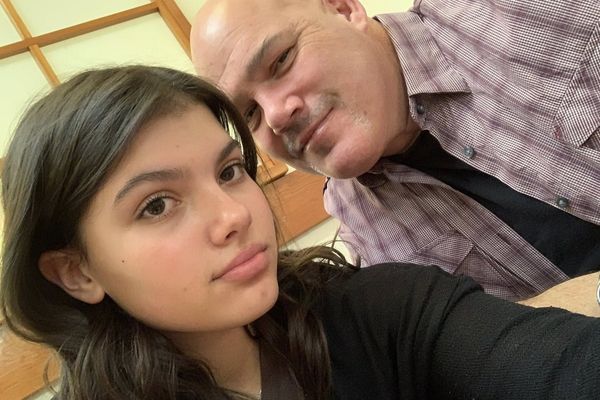
Tess Lazarus said in a statement that she had worked 70 to 90 hours per week assisting the PUP senators in the conduct of their parliamentary business, and would “continue to assist Senator Lazarus in a voluntary role”.
She said: “I am disappointed that Clive has responded in this manner by making hurtful and untrue comments about myself and Glenn in the press.”
Glenn Lazarus told the ABC that he had grown frustrated about the way the party was run and it was not just one issue that had triggered his resignation.
Wang said he was “saddened” to hear of Lazarus’s resignation and he expected to “continue to work together closely as colleagues in the Senate as we share many common interests”.
In a statement, Wang reaffirmed his commitment to the PUP and described the situation as “business as usual”.
Palmer rejected suggestions the PUP was a spent political force, saying the party would be in a “stronger position” at the next election.
In a media release, he said the party had faced a “constant barrage from major parties” to undermine its position since its establishment shortly before the 2013 federal election.
Palmer blamed the PUP’s current woes on the rapid preselection process it had to follow to choose candidates in the weeks leading up to that election.
“The party endorsement processes were not developed as well as they are now and unfortunately many of the candidates were opportunists interested in themselves more than the ideas the party represented,” he said.
The government’s Senate leader, Eric Abetz, said he would seek to speak to Lazarus and Wang on Friday to find out how they would like negotiations to operate after the change.
“We will negotiate and interact with Senator Lazarus on the basis of his now being an independent,” Abetz said.
“For myself and my colleagues it means eight representations instead of the seven we used to make to the crossbench. We are happy to do that and we are up for that.”
The prime minister, Tony Abbott, said the challenge for the government was “the same now as it was before”.
“It is to talk in good faith to all of the Senate crossbenchers, and I guess I should also point out that we only have to deal with the Senate crossbenchers when the Labor party and the Greens are taking this kind of feral, ‘let’s not talk to the government’ approach,” Abbott told the ABC.
The opposition leader, Bill Shorten, said there appeared to be “trouble at the Palmer mill”, but described the crossbenchers as people of conscience with whom Labor would discuss proposed legislation.
“We’re going to deal with the senators on the issues rather than necessarily every twist and turn of the Clive Palmer show,” Shorten told the ABC.