Climate change is driving increasingly common bouts of heavy rain in the US that cause deadly and damaging flash floods that will only become more frequent and intense as the crisis worsens, experts say.
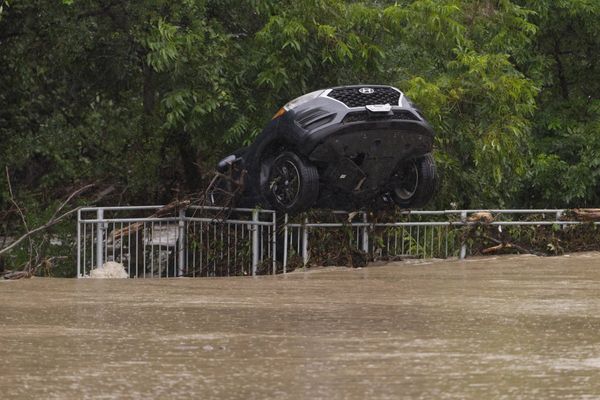
A year after deadly flooding in central Texas that swept through a children’s summer camp, the state and other parts of the United States are again experiencing unusually heavy rain. Over the last month, states like Alaska, Missouri, New Jersey, New York, Ohio and Pennsylvania have all experienced record rainfall, causing flash flooding across the country.
Despite climate scientists’ forecasts and tragic events like the flood at Camp Mystic in Texas, experts argue that some government officials are not investing enough money and political capital to upgrade infrastructure and restrict where people can build to accommodate the new, wetter normal.
“We have basically built for a climate that no longer exists, and retrofitting our infrastructure is a slow and expensive process,” said Alice Hill, a senior fellow for energy and the environment at the Council on Foreign Relations. “Adding to that challenge is the fact that in many places, climate change – the term – is a dirty word, and that can reduce the initiative to make sure that any investments made today can carry the excess rainfall.”
Heavy precipitation events have become more common because the oceans and air have warmed, which has caused evaporation to increase and put more water vapor into the atmosphere, said Jennifer Francis, senior scientist with the Woodwell Climate Research Center.
That vapor is a greenhouse gas, which creates a positive feedback loop. It’s also “a fuel for storms” because hurricanes feed off it, and it provides storms “more water to work with”, Francis explained.
That heavy rainfall is more likely to cause flash flooding in hilly areas where the soil does not allow much water to enter the ground; densely populated places where highways and buildings reduce the amount of water absorbed by the Earth; and canyons, where hikers can be trapped by rapidly rising water, according to the National Oceanic and Atmospheric Administration.
Much of the country is not prepared for the extreme weather, experts say. That is in part because some cities still use pipes that are more than a century old.
“That system just can’t carry this kind of rainfall,” Hill said.
Cities like Houston and New York City have also continued to let developers build in floodplains.
In central Texas, for example, much of the landscape is hilly, which leaves limited space for construction, said Jim Blackburn, an environmental law professor at Rice University in Houston.
“So that flat land next to the [Guadalupe River] has always been, from a Texas viewpoint, prime for development,” Blackburn said.
To protect against catastrophic property damage and deaths, governments must introduce regulations to prohibit building homes and businesses in flood plains, Blackburn said.
But in Texas – among other states – people “generally resist flooding regulations and try to find our way around them as best they can”, Blackburn said.
At Camp Mystic, where 25 campers, two counselors and the director died during the flooding, the owners had successfully appealed to the Federal Emergency Management Agency (Fema) to have some of its buildings removed from a 100-year flood map, which allowed the camp to operate and expand in the potentially dangerous area.
In Harris county, Texas, where Hurricane Harvey in 2017 caused more than $125bn in damage, homeowners and developers have appealed to Fema to have more than 6,500 homes removed from the floodplain map, which allows them to avoid stricter building rules and flood insurance costs, the Houston Chronicle reported.
Now Fema is drafting a new flood zone map to adjust for the increased rainfall rate.
“People use these maps for decisions on buying real estate. They use these maps to determine the vulnerability of hazardous waste facilities, various types of sensitive private-sector and government facilities, and hospitals. We want those to be free from flooding during flood emergencies because, among other things, we need to get to emergency rooms,” Blackburn said.
Real estate developers are concerned about the potential new map because it could create liability issues and make properties in the new floodplain less attractive to buyers, Blackburn said.
“They may have promoted it as not being in the floodplain, and they will have to go out and change all those statements,” Blackburn said.
People in Texas and other red states who advocate for bolstering regulations and infrastructure upgrades to prepare for the increased rainfall must contend with another challenge: distaste for the phrase “climate change”, Blackburn said.
The Republican party of Texas stated in its 2024 platform that it opposes “environmentalism, or ‘climate change’ initiatives, that obstruct legitimate business interests and private property use”.
Efforts to adapt have also encountered obstacles at the federal level. In April 2025, the Trump administration announced that it was eliminating the Building Resilient Infrastructure and Communities program, which had been slated to provide $882m in grants designed to help cities invest in disaster-preparedness projects, like improving stormwater infrastructure. In December, a judge ordered Fema to restore the funding.
A link to the April 2025 press release that announced the end of the “wasteful, politicized grant program” now directs visitors to the Fema homepage, which promotes that it is providing “$600 Million to Help Communities Reduce Flood Risk”.
US cities have invested in the so-called “sponge city” concept, a design to absorb and hold excess water from rainfall.
“That could be through a park, converting impermeable surfaces to permeable surfaces like grass, creating easier water flows for the rainfall,” Hill said.
Despite the Trump administration’s reversal on infrastructure investments, experts say that changing the country so that it can adapt to the additional rainfall will take years.
In the meantime, government officials are trying to keep people safe amid the summer’s heavy rains.
In Missouri, a summer camp experienced flash flooding this month; more than 200 children and staff were evacuated via helicopter. No one at the camp died, but one woman, Faith Gregory, died after her home was swept away.
In Texas, flash flood emergency orders were issued Thursday in two counties, including the one where Camp Mystic was located. Greg Abbott, the Texas governor, reported that two people have died.
“I am informed that the loss of life is not a camper,” he said, noting that more than 70 people had been rescued. “Our No 1 focus is saving lives.”