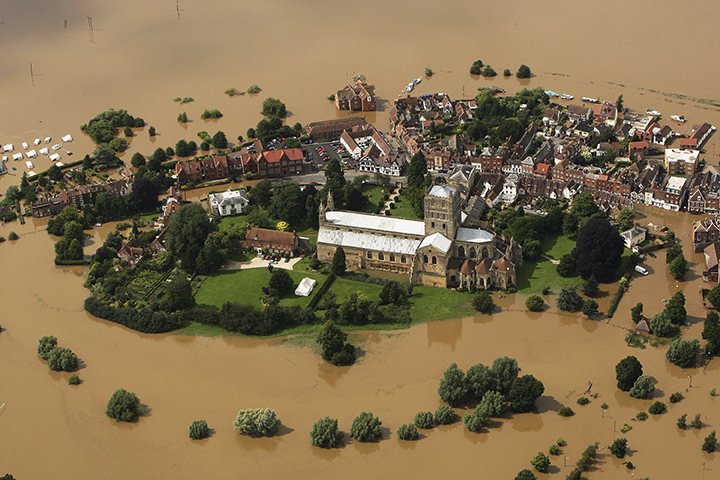
Recent extreme weather events have focused public attention on climate change and scientists are studying how global warming is affecting flooding in the UK. Companies are beginning to look at the need to embed climate change risks into their business plans but only 52% of companies in a recent report showed that they are engaging with suppliers on greenhouse gas emissions and climate change strategies. Photograph: Daniel Berehulak/Getty Images
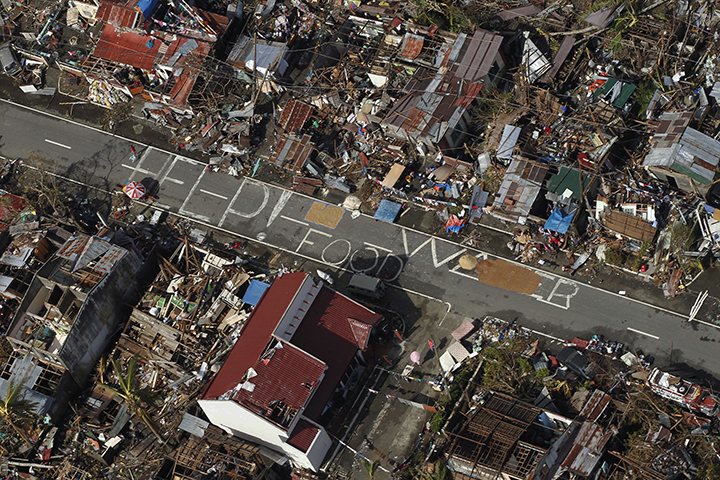
The Philippines was hit by 24 typhoons last year but typhoon Haiyan in November was possibly the strongest storm ever measured, killing many thousands of people and making millions homeless. Professor Myles Allen, head of the Climate Dynamics group at the University of Oxford, says: "The current consensus is that climate change is not making the risk of hurricanes any greater, but there are physical arguments and evidence that there is a risk of more intense hurricanes." Photograph: Wally Santana/AP
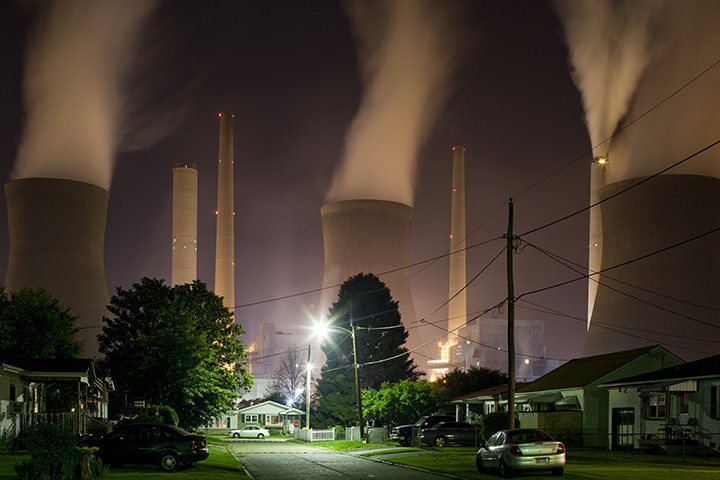
The energy industry has a responsibility to bear in the production of greenhouse gas emissions - 90 companies on the list of top emitters produced 63% of the cumulative global emissions of industrial carbon dioxide and methane between 1751 to 2010, amounting to about 914 gigatons of CO2 emissions, according to research published in the journal Climatic Change. Photograph: Paul Souders/Getty Images
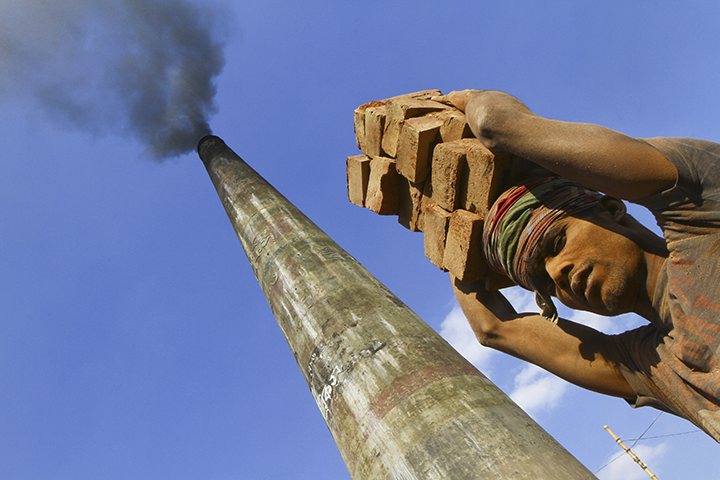
Air pollution is one of the major environmental problems today, especially for developing countries. There are 6,000-7,000 brickfields in Bangladesh, mostly located outside towns and cities in low-lying lands. Nearly half of the total number of brickfields are considered illegal, threatening the environment and human health. Photograph: Mehedi Hasan/Corbis
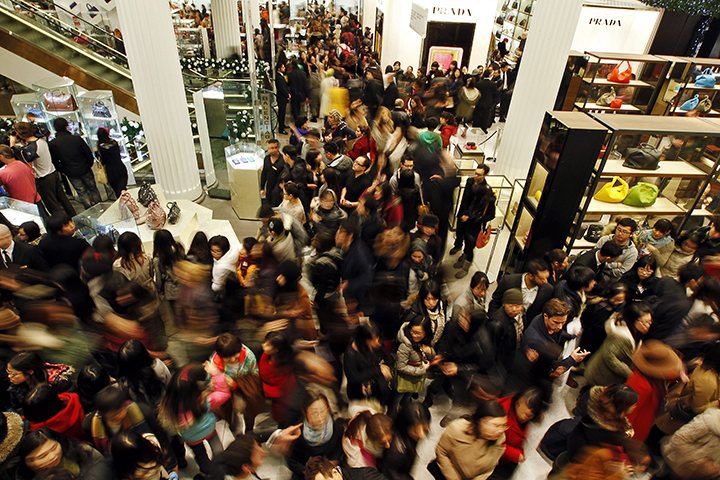
The ever-growing demands of consumers are driving the need to produce more energy to source, manufacture and distribute goods. There are many who believe that materialism and consumerism have gone too far. As George Monbiot says: "Buying more stuff is associated with depression, anxiety and broken relationships. It is socially destructive and self-destructive.” The Christmas sales bring out the dilemma between the time to be merry and the pressure to over-consume. Photograph: KERIM OKTEN/EPA
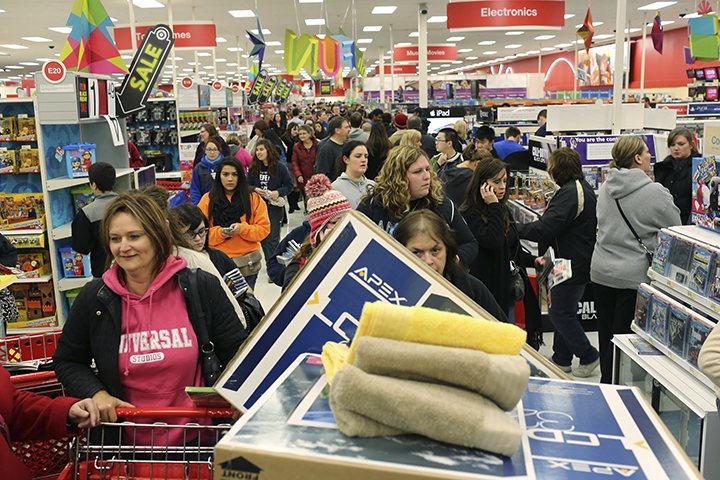
Businesses that view customers solely as consumers are missing out on an opportunity to develop a more complex and interdependent relationship with them. Companies need to collaborate to create a more sustainable future. Photograph: Tasos Katopodis/Getty Images
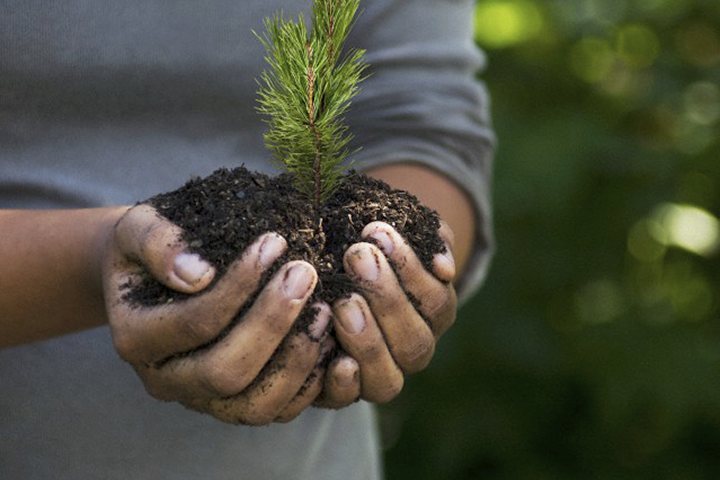
Carbon offsetting schemes are making a revival as businesses embrace the need to develop schemes that both reduce CO2 emissions and help communities in the developing world. For many people planting a tree is seen as an obvious way of carbon offsetting as trees and other plants play a vital role in balancing CO2 and oxygen levels but is it enough? Photograph: 145/© Ocean/Corbis
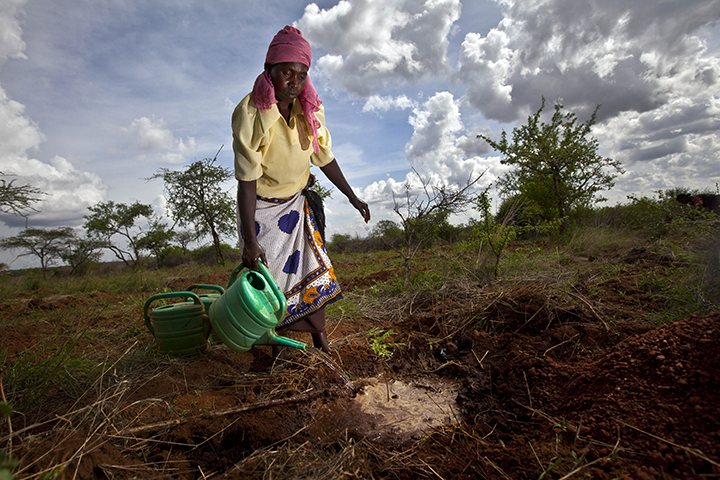
A woman in Nyumbani, Kenya waters a seedling after planting it in the hope that after a number of years the village can harvest the hardwood for timber and become more self-sustaining. Photograph: Ben Curtis/AP

Businesses are choosing to support projects that deliver more than just verified carbon reductions. Projects like these support communities and economies, like the Gyapa stove project which supports the local manufacture and sale of over 12,500 stoves a month. It has also saved families $35m in fuel costs and created more than 700 local jobs as well as cutting over 1m tonnes of carbon dioxide. Photograph: ClimateCare
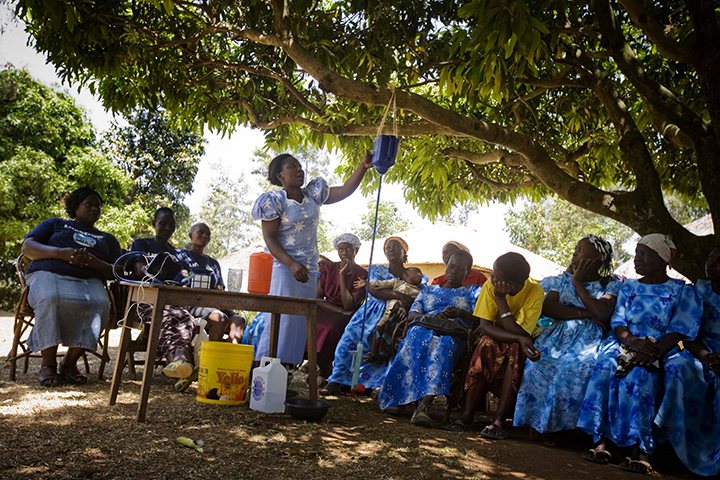
Women demonstrate how to use their LifeStraw water filters, supplied by Vestergaard, in a village near to Butere, Western Province, Kenya on 14 February, 2012. LifeStraw Carbon for Water is one of the many Climate and Development projects businesses offset with through ClimateCare and provides safe drinking water as well as cutting CO2. Photograph: KATE HOLT/KATE HOLT