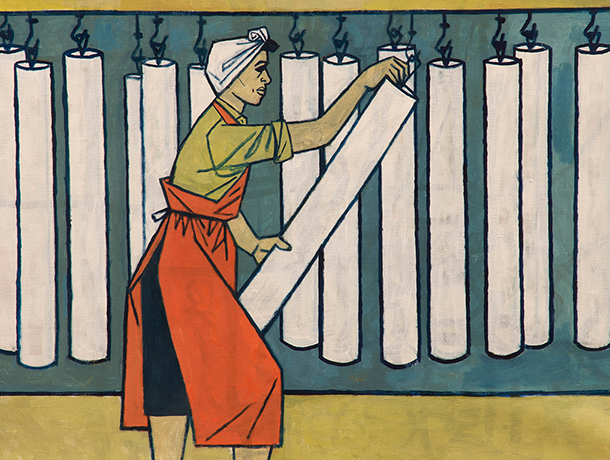
These paintings and posters created between the 1930s and 1970s by the brazenly left-wing Clifford Rowe remind us of a time when artists believed they could illustrate the optimistic future of idealist politics. Working in a social realist and often propagandist mode championed by communist Russia, Rowe pictured the collective dignity of common labour and, perhaps more edifyingly, the ongoing struggle against fascism and capitalism. As was the convention, any tendency towards bourgeois individualism in the form of an identifiable personal style tended to be subsumed under the weight of collective message-mongering. There is no doubting the sincerity of Rowe’s political conviction, yet this work, as art rather than historical documentation, now looks tired and rather retro-quaint.
Lanchester Gallery, to 20 Oct
RC Photograph: PR
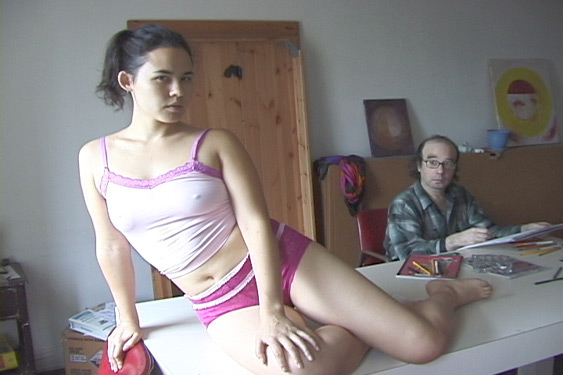
Billy Wilder’s gripping 1944 film Double Indemnity is an astute study of doomed desire. In it, Barbara Stanwyck and Fred MacMurray indulge in a murderous affair under the beady eye of Edward G Robinson; this exhibition (which is backed by a film season, My Noir) uses stills from the film to punctuate a series of present-day artworks on similar themes. Sophie Calle’s classic 1981 photo-text work The Shadow gets an outing, while Laurel Nakadate – an artist unafraid of embarrassing encounters – shows a video of herself posing provocatively for a middle-aged stranger as he attempts to draw her portrait.
Cornerhouse, Sat 14 Sep to 5 Jan
RC Photograph: PR
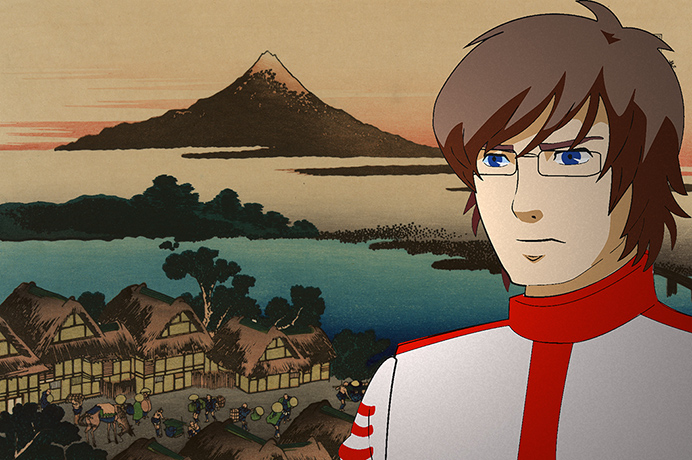
Like most British kids growing up in the 1980s, David Blandy got a slow drip of Japanese culture through cartoons and computer games. His early work channelled his nerdy white middle-class fanboy fixations on romanticised alien worlds into a bittersweet critique of cultural tourism. Blandy’s new animations focus on William Adams, the first Englishman to arrive in Japan in 1600, and frame him as another Ulysses. Adams’ story is interwoven with Blandy’s personal ruminations on Japanese art, Hiroshima and everyday life. Created with the Tokyo Geidai animation school, they float from landscapes lifted from traditional woodblock prints to skies exploding with spaceship rocket fire or bombs dropping.
The Rose Lipman Building, N1, to 26 Oct
SS Photograph: PR
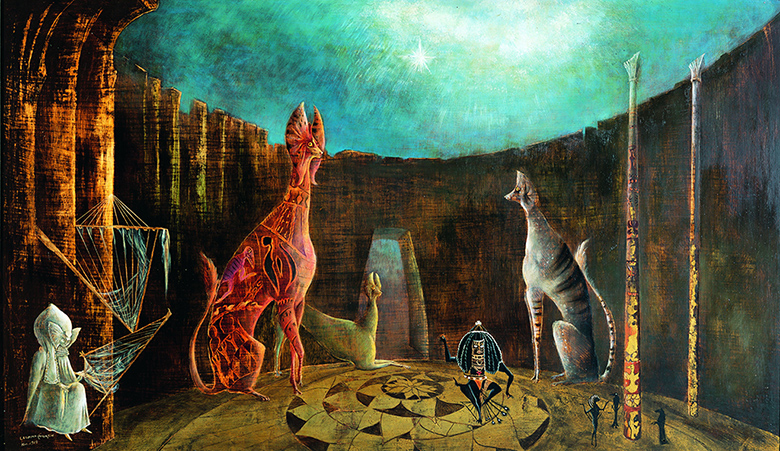
Leonora Carrington was the partner of the surrealist superstar Max Ernst for a time, but it seems to have gone largely historically unrecognised that her work was at least as haunting as his. Until now. This show of her paintings, with a supporting array of sculptures, tapestries and manuscripts, comes as a timely reminder of her highly distinctive dreamworld of cryptic rituals, shrouded spectres, mutant mythological beasts and pallid sleepwalkers. Carrington’s painterly style, with its compositional awkwardness and obsessively focused brushwork, tends to look as spooky as her subject matter. Spindly and skeletal protagonists appear to be psychologically withdrawing under the spirited pressure of the surrounding atmosphere. More Jungian than Freudian and altogether spellbinding.
Irish Museum Of Modern Art, Thu 19 Sep to 26 Jan
RC Photograph: PR
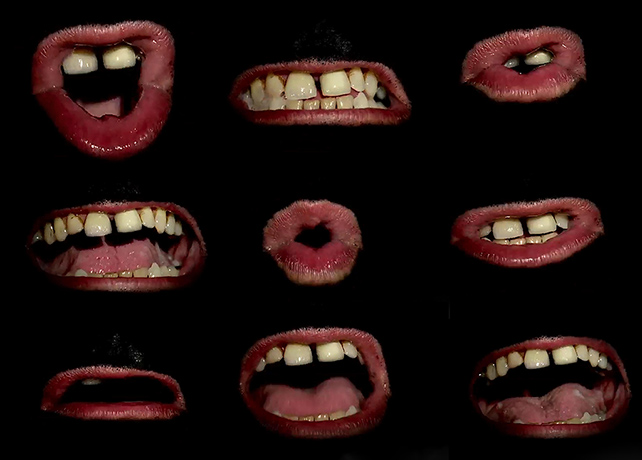
Mel Brimfield’s work is full of improbable cultural mash-ups. Her latest film collides Morecambe and Wise and Tony Hancock gags with one of Samuel Beckett’s most radical plays, Not I, in which a spot-lit mouth frantically jabbers in a blacked-out theatre. Brass Eye’s David Cann plays the mouth to tragicomic effect, spouting lines by British comedy greats. Another film resurrects Rising Damp’s diehard romantic, Miss Jones, passionately delivering a string of lover’s cliches, in spite of the fact that she is very much single. This weekend, Brimfield’s live performance piece (An Audience With Willy Little) is staged on board the SS Shieldhall, which is moored at Southampton Docks.
John Hansard Gallery, to 2 Nov
SS Photograph: PR
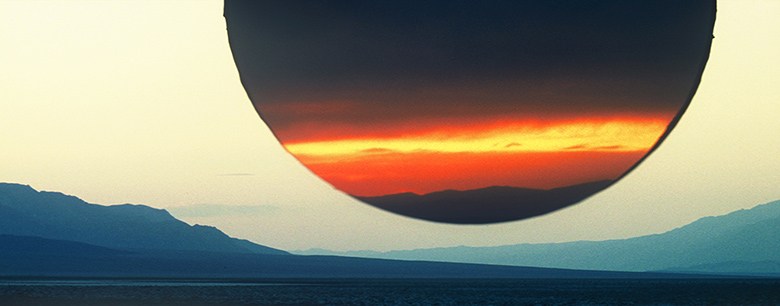
Not long before his death, the master of dystopian sci-fi, JG Ballard, wrote to the artist Tacita Dean with a challenge. They were both fascinated by the American artist Robert Smithson’s mighty coiling earthwork, Spiral Jetty, in Utah’s Great Salt Lake. Ballard entreated Dean to approach Spiral Jetty as a mystery to be solved by the film she would make there. The resulting work, JG, is lush, layered and continues Dean’s unique treatment of 35mm film. Clocks, discs and spirals appear within a magnificent world of blue lakes, salt crystals and burning suns.
Frith Street, W1, to 26 Oct
SS Photograph: PR
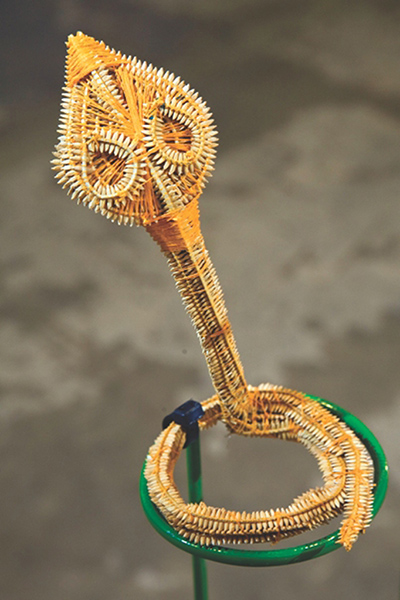
The Mumbai-based artist Sharmila Samant is politically active in the fight against the exploitation of rural communities by the multinational powers-that-be. Yet her work is made up of contrasting cultural signs rather than obvious declamations. Her installation, entitled Against The Grain, features a white field crafted from Bt cotton, a genetically modified insecticide that the artist is convinced constitutes a form of patented transgenic “bio-terrorism”. Rearing from the field are an alarming multitude of deadly cobras (pictured), crafted using traditional techniques. It’s protest art mixed with a defiant and irrepressible creative energy.
Oriel Davies, Sat 14 Sep to 6 Nov
RC Photograph: PR
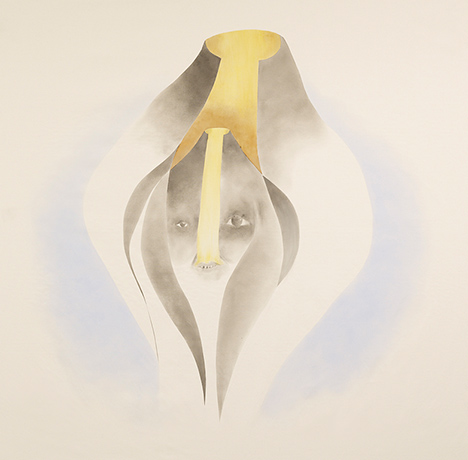
The last time Enrico David’s work was shown in London back in 2009, the Italian surrealist was known for his raunchy dark wit and graphic elegance, which earned him a Turner prize nomination. Then, his work featured a carnivalesque lineup of marauding, truncheon-wielding harlequins and svelte acrobats in high heels and bird masks, which he painted as flat, sharp-edged silhouettes. He has since left London for Berlin, and his works on paper have become looser and paler. There’s an occasional splash of harlequin checks here and there, but it’s almost as if someone has tipped water over his bold, brightly coloured earlier output. Faces peer from translucent washes of paint, while macabre ghostly figures sprout from pencil lines that might have started out as freeform doodles.
Michael Werner, W1, Tue 17 Sep to 2 Nov
SS Photograph: PR