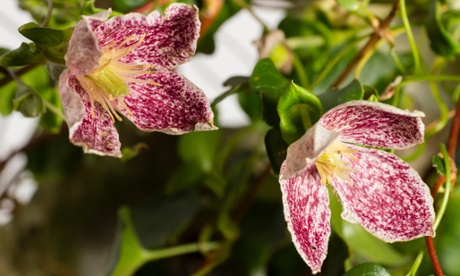
For the first time since I planted it four years ago, my Clematis ‘Freckles’ has flowered. I had almost given up on it.
‘Freckles’ is a cultivar of Clematis cirrhosa. Native to the Mediterranean and parts of North Africa, it requires a bit more shelter than spring- and summer-flowering varieties. But it’s worth the extra effort – it’s the first clematis of the year to flower, bearing scented, open bells in cream with brick-red ‘freckles’ within.
The pendent flowers are best viewed from below, so it works best when trained up an arch or against a wall. I planted mine next to my garden gate where I could enjoy its blooms whenever I passed through. Having spent the last four years weaving its dark evergreen foliage through the fence among the leaves of ivy and sweet jasmine, it’s finally bearing its first few blooms. They were worth the wait.
Flowering from November through to February, ‘Freckles’ and other C. cirrhosa cultivars bloom when there’s little else around. And not only do the flowers look good, but their nectar and pollen fills the hungry gap for winter bees.
Like flowers, most bees are tucked up in winter: honeybees shelter in their hives and bumble and solitary bees hibernate until temperatures increase in spring. But increasingly, in southern areas and especially in towns and cities, buff-tailed bumblebee queens establish winter colonies. They take advantage of the warmer winters, reduced competition for food and increase of winter flowers in gardens and parks, and their workers brave snow and ice to gather pollen and nectar for the grubs back in the nest.
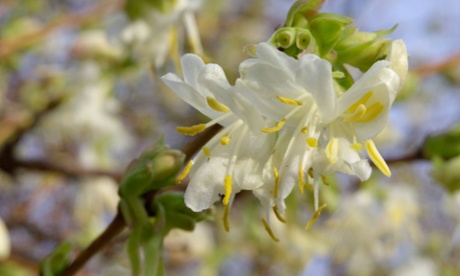
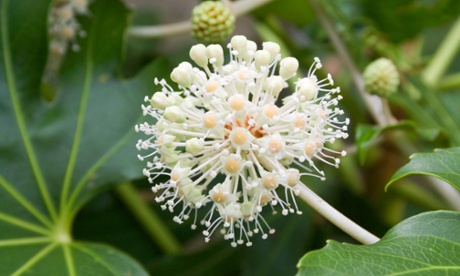
Clematis ‘Freckles’ therefore joins the ranks of other winter-flowering plants such as mahonia, winter honeysuckle (Lonicera x purpusii ) and Fatsia japonica as being essential for winter-active bees, and not just those brave enough to establish winter colonies. Others may be roused from hibernation early due to an unusually warm day, or disturbed by human activity. These bees all face death if they are unable to find food, so all of us should aim to grow something to provide them with sustenance over the winter months.
I’ve not seen a bumblebee on my clematis flowers yet but I’m happy to know the food was there for them if they needed it. Now, as the first hellebores and snowdrops of the year are coming in to bloom, the options for bees are increasing. But I hope from now on, between November and February, I can count on my Clematis ‘Freckles’ flowering for winter bees.
How to grow
Clematis cirrhosa is best grown against a south-facing wall, as winter sunshine and warmth will encourage earlier flowering. Plants can become leggy with age, so benefit from being grown in conjunction with a shrub which will hide its bare stems. This variety needs little pruning – just a tidy up after flowering will do. Don’t remove too much as it flowers on old wood.
• The picture of Clematis ‘Freckles’ on this blogpost was changed on January 28 2015 to replace an incorrectly-captioned image.