
Anthropic has officially launched Claude Opus 4.8, the latest version of its flagship AI mode. With this rollout the company promises that it may have fixed one of AI's biggest flaws. According to Anthropic, Claude Opus 4.8 is designed to be more honest, more thoughtful and significantly less likely to confidently pretend it knows something when it doesn’t.
The company says Opus 4.8 is around four times less likely than its predecessor to allow flaws in code it writes to pass without warning the user. At a time when AI companies are racing to make models faster, more agentic and more autonomous, Anthropic appears to be focusing on the one thing that seems to be ignored: AI should know when it might be wrong and admit it.
Claude Opus 4.8 is being positioned as a better collaborator
Anthropic says early testers described working with Opus 4.8 as feeling more like working with a real collaborator than previous models. According to the company, testers said the model asks better questions, catches its own mistakes and pushes back when plans don’t make sense instead of simply agreeing with users.
One of the biggest criticisms surrounding chatbots is that many of them have become “yes-men,” often validating bad ideas, weak assumptions or outright incorrect information rather than challenging users. Anthropic appears to be leaning heavily into the opposite approach.
The company also says Opus 4.8 showed major improvements in legal reasoning, coding, browser agents and long-form analysis tasks, with several early access partners claiming it outperformed previous Opus models and even GPT-5.5 in some agentic workflows.
Users can now control how much the model thinks
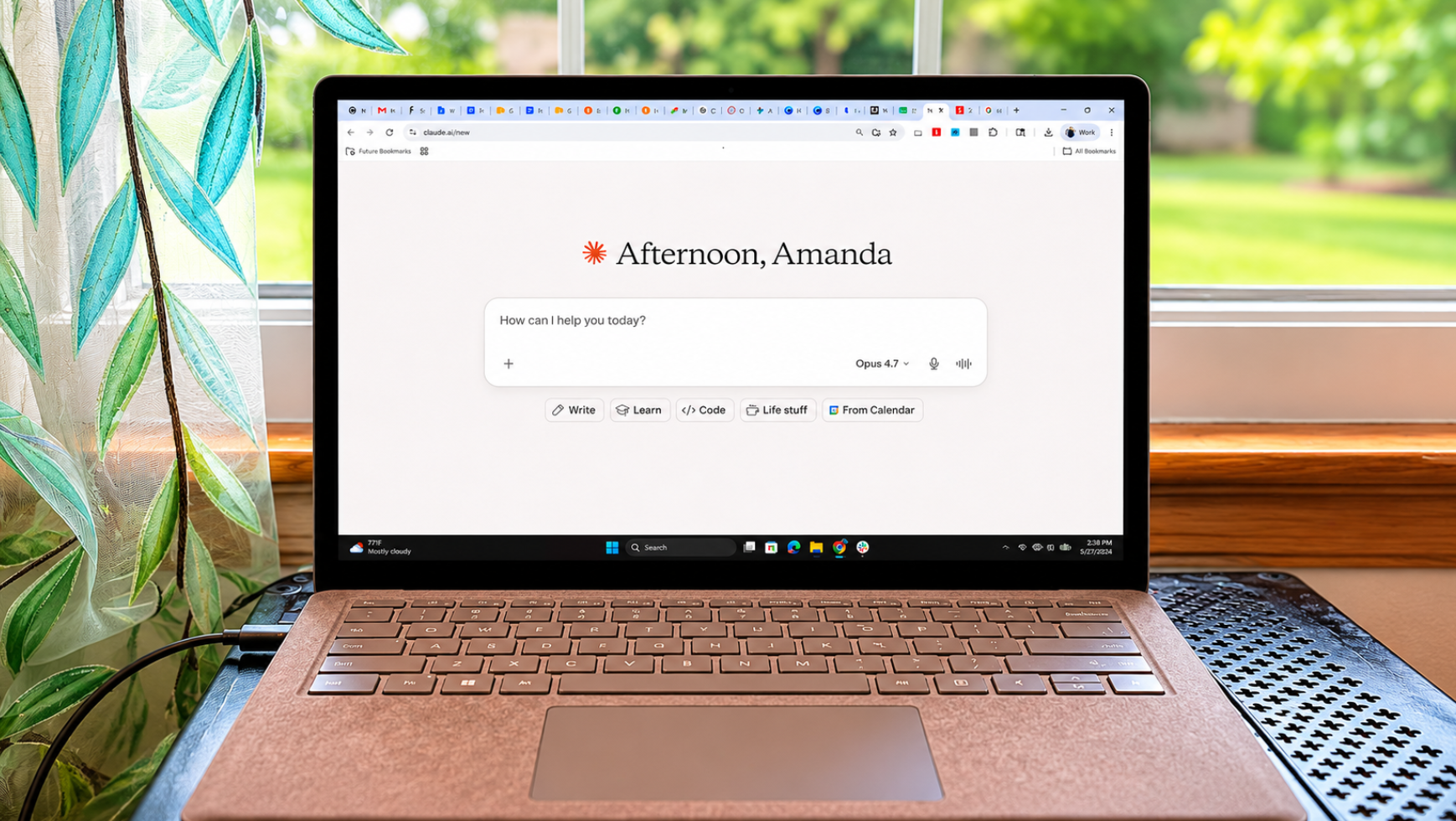
Alongside the new model, Anthropic is launching a new effort control system inside Claude. Users can now decide how much thinking Claude puts into a task.
Higher effort modes allow the AI to spend more time reasoning through responses, while lower effort settings prioritize speed and lower token usage. Anthropic says Opus 4.8 defaults to “high effort” because it offers the best balance between quality and usability.
Instead of chatbots instantly firing back responses, companies increasingly seem focused on making models pause, reason and verify information before answering. OpenAI, Google and Anthropic are all moving in this direction as AI systems become more autonomous and agent-driven.
Claude can now run more dynamic workflows
In addition to the new model, a new research preview feature called Dynamic Workflows was also announced. The feature allows Claude to launch hundreds of parallel subagents during a single task, verify the work and combine the results before responding back to the user.
According to Anthropic, Claude Code can now handle massive codebase migrations involving hundreds of thousands of lines of code from start to finish. The future increasingly looks less like a chatbot answering one prompt at a time and more like autonomous systems quietly coordinating multiple AI processes behind the scenes. Anthropic hints at something even bigger coming next by revealing it’s already working on “a new class of model with even higher intelligence than Opus.”
The company says some organizations are already testing a system called Claude Mythos Preview for cybersecurity work, though Anthropic claims models at that level will require stronger safeguards before broader release.
Looking ahead
At the same time AI companies continue pushing toward more powerful systems, they’re also increasingly acknowledging that the next generation of models may carry risks requiring entirely new safety standards.
It's clear that Anthropic is trying to position AI like a careful collaborator that questions itself, flags uncertainty and thinks longer before responding, a strategy that seems long overdue. Ironically, that restraint may end up becoming one of the most valuable AI features of all.