Anthropic recently announced that all new Claude models will embed an invisible signal into their text output. The goal is to help identify AI-generated content and meet new transparency requirements under the European Union's AI Act.
But if you're picturing an invisible digital stamp that permanently proves the words were written by AI, that's not exactly how it works. Instead, Claude subtly changes the statistical patterns in its writing. The text still reads naturally to humans, but software designed to look for those patterns can potentially recognize that it came from Claude.
The announcement has reignited debate over whether AI watermarking is finally the answer to identifying AI-generated writing or if it even works.
What is an AI watermark?
Unlike a copyright watermark on an image or hidden metadata inside a file, a statistical watermark is built directly into the words themselves. The AI slightly favors certain word choices and sentence patterns while generating text.
Individually, those choices are meaningless to us as humans, but across hundreds of words, they create a statistical signature that specialized detection software can identify. It's kind of like a fingerprint that is only recognized by software trained to understand the pattern.
The watermark itself is invisible to readers and doesn't appear anywhere in the document. Copying text into Word, Google Docs or an email won't reveal anything unusual because the signal is designed to be detected only by software that understands the statistical patterns Claude leaves behind.
Does watermarking affect the quality of Claude's writing?
Slightly, but let's be real, AI writing isn't great to begin with. Alexander Cui, head of research at GPTZero, tells Tom's Guide that the statistical watermarking does introduce a small tradeoff because the model has to make slightly different word choices than it otherwise would.
"The output quality does subtly decrease," Cui said. "Directionally, it does reduce the output quality."
He added that modern watermarking techniques have become sophisticated enough that most users are unlikely to notice the difference in everyday use.
And, while the watermark can be removed, it makes things much more complicated. Editing a few words won't remove a statistical watermark, in fact, many watermarking systems are designed to survive minor edits or paraphrasing.
But the signal becomes much more fragile if Claude's response is rewritten by another AI model. That is, if you asked Claude to write your science paper and then asked ChatGPT to revise the draft. In that case, the watermarking becomes important because Claude's output often isn't the final product. A response might become the input for another chatbot, an AI coding agent or a document editing assistant before anyone reads it.
Cui says the watermark generally doesn't survive that kind of workflow.
"The watermark applies very subtle changes," he explained. "They usually would not affect downstream output. What you need is the actual text written by the model itself."
Does this mean AI detectors finally have proof?
Anthropic's watermark is one additional signal, but it's not definitive proof that a document was written by AI.
Alon Yamin, CEO of AI detection company Copyleaks, says statistical watermarks can help identify AI-generated content, but shouldn't be treated as a silver bullet.
"While this seems like a big step forward for AI detection on the surface, it's far from a silver bullet," Yamin said.
He argues that watermarking should be considered alongside other evidence rather than replacing broader AI detection methods.
These days, modern documents often mix human writing with AI assistance. From tools like Grammarly to help edit or Apple Intelligence Writing Tools, these common AI features have become integrated into daily use by many. For example, someone might draft an article themselves and ask Claude to improve grammar, reorganize paragraphs or rewrite a headline.
Does ChatGPT do the same thing?
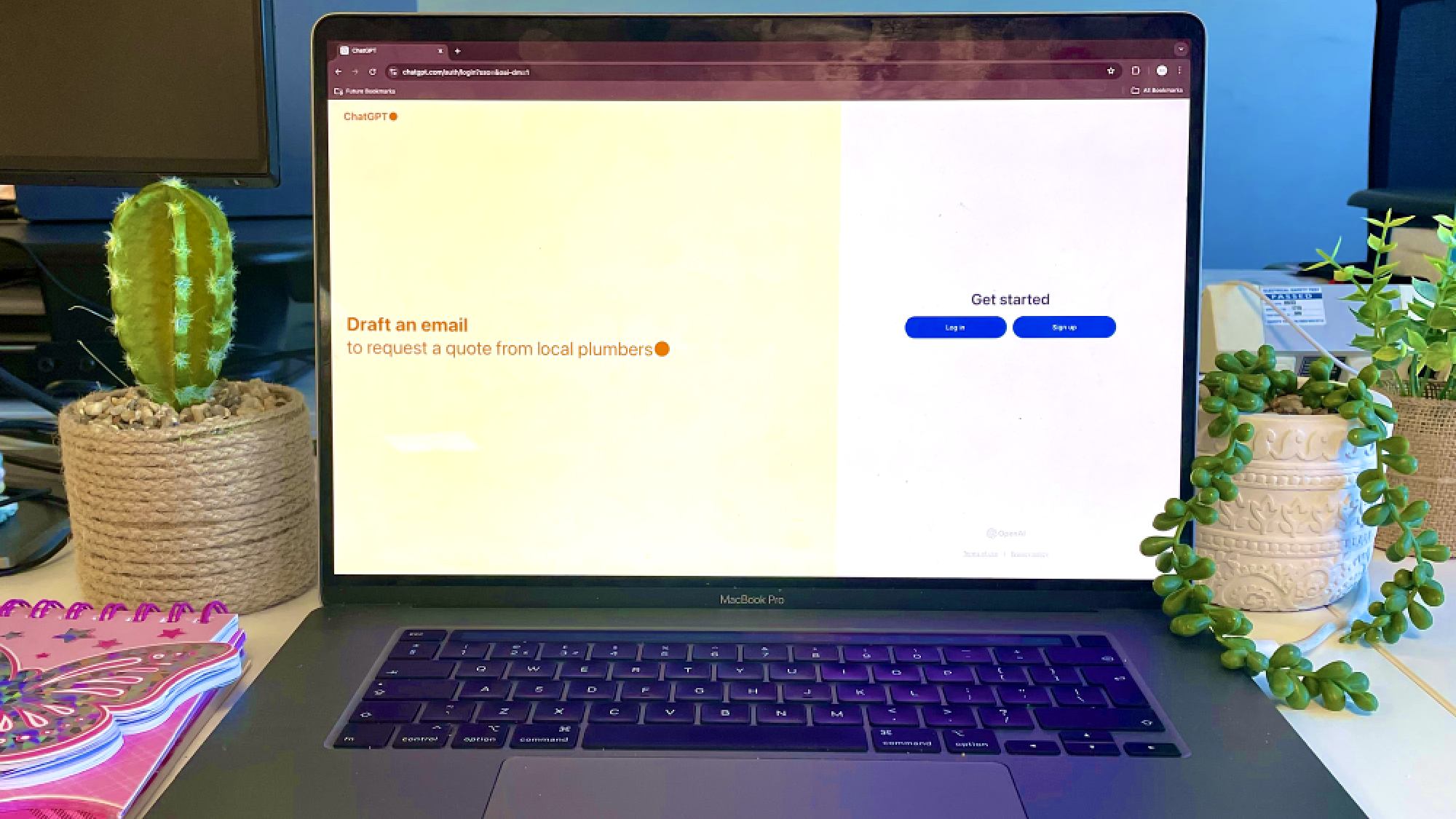
OpenAI has spent years researching watermarking and other provenance technologies, but it has not broadly deployed statistical text watermarking across ChatGPT responses.
Google has also explored watermarking techniques for AI-generated content, while several companies have experimented with metadata-based approaches instead of statistical signals embedded in text.
As a result, Claude is currently taking one of the most visible steps toward model-level watermarking for everyday AI writing.
You'll likely never notice a watermark while using Claude, and it won't suddenly make AI-generated writing easy to identify. But where it could matter is in education, publishing, enterprise software and workplaces that need to disclose when AI was used to create content.
Bottom line
The big picture here is that watermarking is a tool companies are experimenting with as governments push for greater transparency around AI-generated content. It can be useful under the right conditions, disappear after enough editing or rewriting and works best when combined with other evidence rather than on its own.
But as of August 2, 2026, every word Claude writes now contains a hidden statistical watermark that most people will never see.