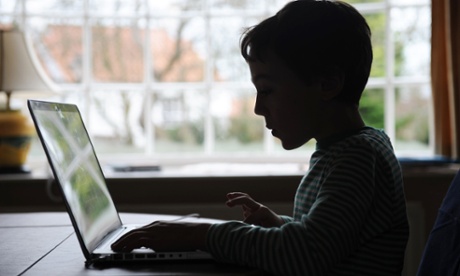
Ongoing work to protect children from explicit content online took a step forward this week as the music industry and online video providers agreed to include clear age ratings to flag up explicit content.
Clear age ratings will help parents make informed choices about the content their children access online. Using the familiar BBFC age ratings, which we know well from the cinema and DVDs, is a great way of providing helpful and trusted advice to parents.
However, no technical tool can provide a perfect solution. With the vast majority of parents unaware of existing filtering tools raising awareness is now vital. And more needs to be done to help young people become critical thinkers online.
UK acting alone
There are limitations to the BBFC initiative. One drawback is that its current scope means that only UK music labels are submitting their videos for age rating by the BBFC, and only YouTube and Vevo will be making use of these ratings to display on their platforms. This means that much of the content children are accessing – from US music labels in particular – will not be involved in the scheme.
A clear next step will be to use the positive example of this UK collaboration to increase pressure on other countries to take on board these measures. Showing evidence of the effectiveness and impact of this scheme could help, and we would welcome transparency from industry about how effective and popular these tools are.
Parents in the dark
Age ratings alone will not protect children; what really empowers parents is if these ratings work together with parental control tools. It is great to see that YouTube is making sure the age ratings work alongside its safety mode tool, while Vevo has committed to working on this. What is essential now is making parents aware of the availability of these tools and supporting them to use them. As Ofcom found last year, just 12% of parents of 5- to 15-year-olds said they use YouTube’s safety mode, while 73% said they were not aware of this tool.
As an internet safety education charity we produce practical and easy-to-follow guides for parents about setting up parental tools on their home internet, on children’s devices and on online services, through the parents’ guide on our UK Safer Internet Centre website, which we run along with two other leading charities, the Internet Watch Foundation and the South West Grid for Learning.
Helping parents to choose the right parental control tools for their family is a great step, and these are especially helpful for protecting very young children, who are more upset by inappropriate content online. But technical tools will only ever form part of the solution. They help reduce the chances of children being exposed to inappropriate content online but can never eliminate this risk.
Schools need to educate
We need to educate young people to ensure they are able to process, critique and cope with the sometimes upsetting or confusing things they see online. To fulfil children’s rights online we need to focus on empowerment as much as restriction, balancing their rights and freedoms with their protection.
Parents and carers play a key role in educating young people to be critical thinkers online and in helping reassure children that they can turn to their parents for support if anything worries them.
With the over half of 12- to 15-year-olds saying they mostly find out about YouTube videos through their friends, it’s important that young people themselves take responsibility by not sharing explicit content with peers and siblings. This message really resonates with young people; on Safer Internet Day this year we found that 75% of 11- to 16-year-olds believed they have the power to create a kinder online community.
Schools too have a huge role to play. The computing curriculum, which was made statutory in 2014, provides a great opportunity to cover media literacy and critical thinking online, while subjects like person, social, health and economic education (PSHE) currently under consideration for statutory status by the UK government – albeit delayed – provide a chance to explore themes around body image, gender stereotyping and the role of popular culture in influencing attitudes and behaviours. Talking about sexualisation in music videos can be a helpful starting point for talking about other issues like pornography too.
By giving young people the emotional resilience to deal with inappropriate content, as well as providing effective and easy-to-use technical solutions, we can ensure we are doing the best we can to help protect children online and ensure they can enjoy their use of technology.