SASAYAMA, Hyogo -- The sleepy house sits there as it has for generations, as if dreaming about days and past owners long gone.
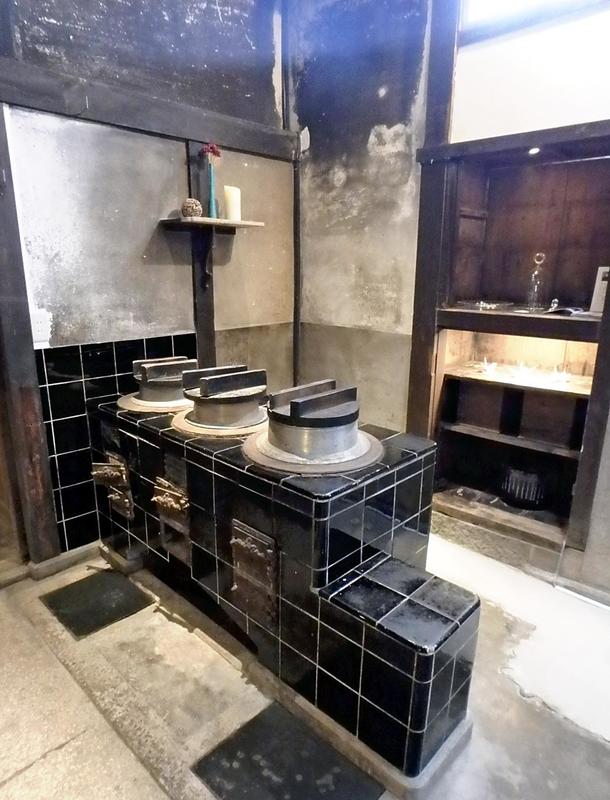
Built over a century ago, the Sasayama Jokamachi Hotel Nipponia was originally a mansion belonging to a local bank president. Complementing the original ceiling and pillars that have remained intact, the addition of antique furniture re-creates the space in a modern Japanese style.
French cuisine served at the restaurant, from black soybean potage soup to an appetizer of mountain vegetables to sauteed trout, makes use of the richness of local ingredients. They don't overdo it. As the area is known for its sake, there is an ample lineup of local brews. Feasting on a meal while conversing with the staff about the house's history, the exquisiteness of the Tanba region permeates the body and soul.
One big hotel
The city of Sasayama is also known as "Tanba Sasayama," as it was a small domain of the ancient Tanba Province. The legendary shogun Tokugawa Ieyasu constructed Sasayama Castle in 1609 as a base for his conquest of Osaka Castle. Surrounded by lush nature and influenced by the Kyoto culture, a charming castle town emerged that remains to this day.
It has also become a progressive area, in which renovations of old traditional houses are among efforts being made to vitalize the region.
Nipponia consists of a main building, in which it shares a reception desk with the restaurant, along with six lodgings created from renovated houses situated around the castle ruins. Regarding the entire town as "one big hotel," the idea is to make visitors feel like they are part of the town.
The project is the work of NOTE, Inc., a general incorporated association based in Sasayama. "Just finding out about life in the town or its culture from a library or museum is boring," says NOTE Director Takeshi Fujiwara, 45. "Those aspects are still alive in an old traditional house."
NOTE reassesses the value of regions that are experiencing falling populations, and was established to utilize the trend of vitalizing towns to regions' best advantage. Starting with a farming village in the suburban Maruyama area, over 100 houses were renovated nationwide over a 10-year period.
"We gave new life to homes that were on the brink of becoming ruins," Fujiwara says. "When people start to come and go, it changes a town."
The process doesn't end with the sale of a renovated house. Taking into consideration the design of the entire town, he says plans for utilizing the structures are decided in consultation with local residents.
New era
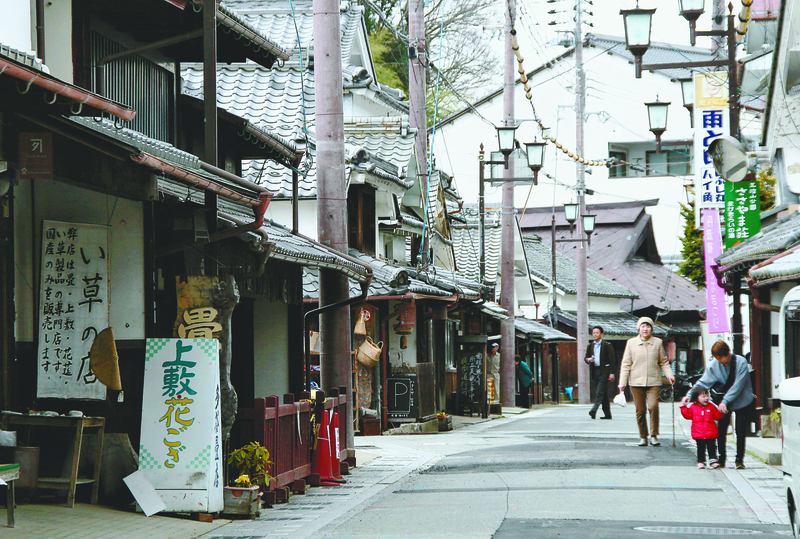
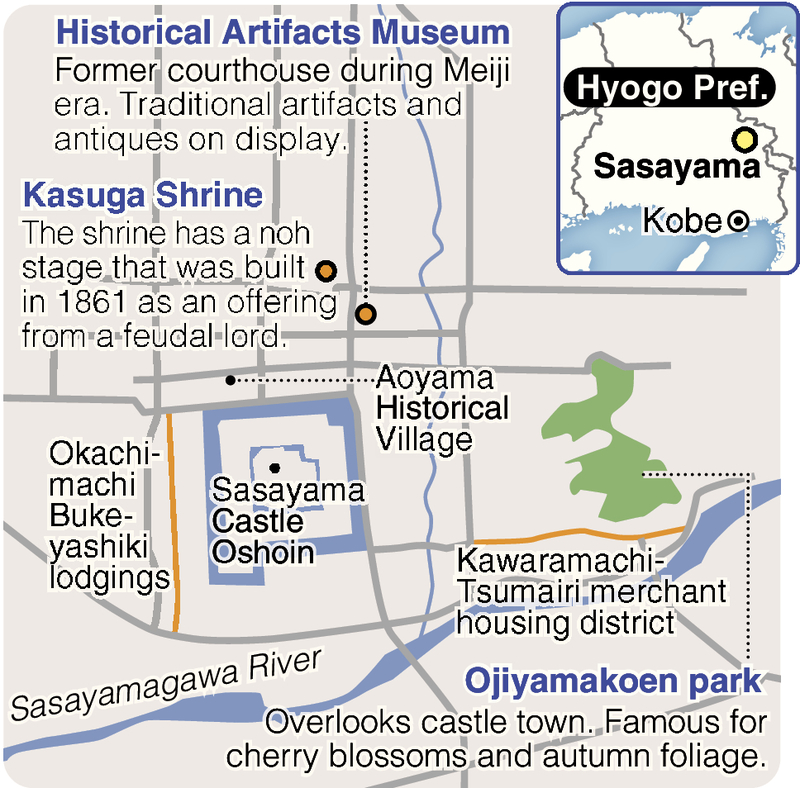
Not surprisingly, strolling around the town is pleasant, and giving a sense of liveliness. Even on weekdays, the shopping street lined with signs for botan-nabe (wild boar hotpot), yakiguri (roasted chestnuts) and other local delicacies is filled with visitors who take in the sake brewery, the Historical Artifacts Museum -- which once was a district courthouse -- and other sights.
The Kawaramachi-Tsumairi merchant housing district, with its delicate latticework and wing walls, conveys life from a bygone age. Fashionable variety stores and souvenir shops stand side-by-side with sellers of tatami mats and housing fixtures, giving the feeling of a bustling community. In combination with the Okachimachi Bukeyashiki residences, which housed low-ranked samurai, it has been designated by the government as an "important preservation district for groups of traditional buildings."
On the other side of the moat is the Sasayama Castle Oshoin (large drawing room), with its elegant thin wooden shingles. The structure burned down during World War II and was rebuilt in 2000, reportedly through donations from many local residents. As the castle does not have a keep, the oshoin has become an indispensable symbol for the people.
To coincide with the start of the new era in May, the city of Sasayama will change its name to the more familiar Tanba Sasayama. Its specialty products such as black soybeans and chestnuts have often been mistakenly identified as coming from nearby Tanba city, so protecting the brand name played a part in the decision.
"Using this opportunity, we can raise our name recognition, and it will be good if it can invigorate all of Tanba," says Makoto Sakai, 46, the strategic planning group chief of the Sasayama city creation section.
With a mix of the old and the new, Tanba Sasayama is taking up its latest challenge that will be watched with close interest.
School for all
What was once the villa of the Aoyama feudal lord in Sasayama is now home to the Aoyama Historical Village. On display are printing blocks used to print the kanji character textbooks for the Shintokudo, the school for the clan.
"There are about 1,200 [blocks] that have been preserved," said an official Kimiko Sakai, 65. "It's very rare, even from a national perspective."
Shintokudo was opened not only as a school for feudal retainers, but for the common people as well. The concept was to not only create a town, but nurture its citizens too.
Botan-nabe: 4 types of miso
Tanba Sasayama, which is surrounded on all four sides by mountains, is the birthplace of the dish botan-nabe. It is said to have started when soldiers during the Meiji era (1868-1912) brought wild boar they had hunted back to the inns they were staying in. While it is considered a winter delicacy because of the hunting season, an increasing number of restaurants have been serving it all year round thanks to improved freezing technology,
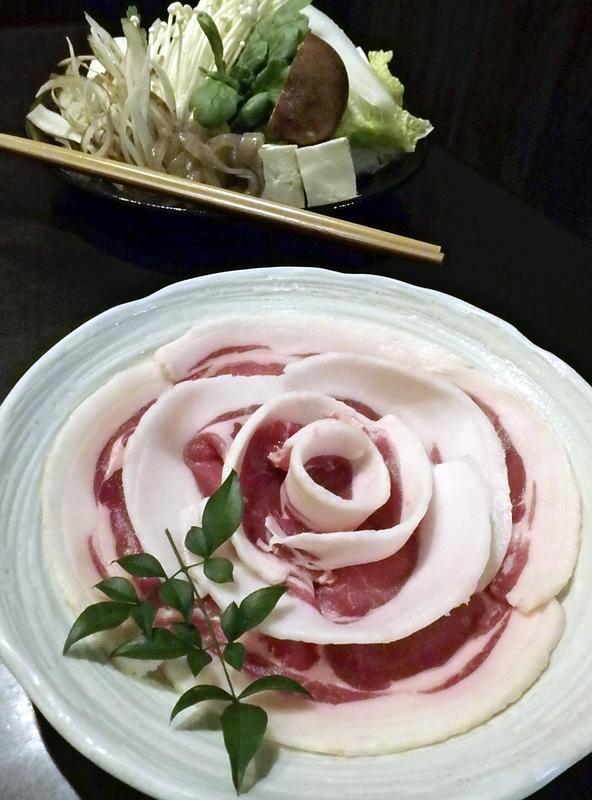
In the restaurant Kai, which offers a selection for solo diners as well as for couples and groups, the owner recommends splurging on the extra special loin course, priced at 5,400 yen. The deep red boar meat, with its white stripes of fat, is arranged like a peony on the plate. "Even if it is simmered for a long time, boar meat does not get tough," says a staff member, to my great relief. I add the locally grown vegetables to the pot, in which the soup stock is made from a blend of four types of miso. The first impression is of tasteful simplicity, but gradually the flavor of the meat permeated with thick miso comes out. It's a sophisticated hotpot that can be savored with hot sake.
Access
From Tokyo, it is a 2-1/2-hour ride on the Shinkansen line to Shin-Osaka Station. From there, a limited express train to JR Sasayamaguchi Station takes about 60 minutes. The rapid express from JR Osaka Station takes 67 minutes. The bus from Sasayamaguchi Station to the city center takes 15 minutes.
For more information, contact the Tanba Sasayama Tourist Association at (079) 506-1535.
Read more from The Japan News at https://japannews.yomiuri.co.jp/