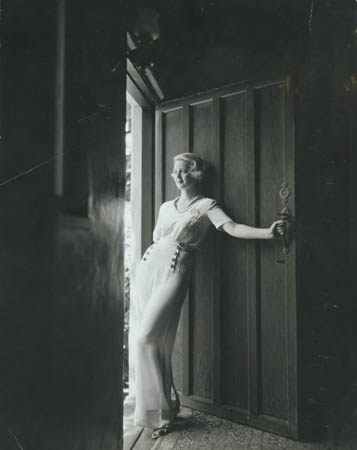
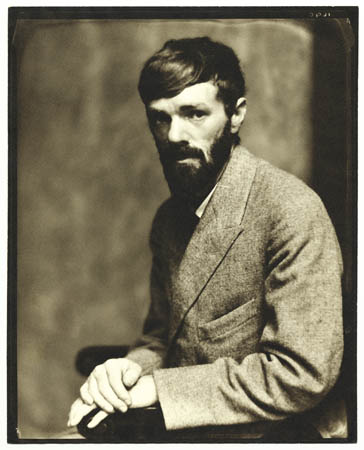
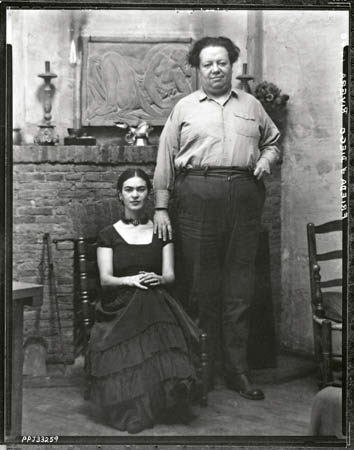
Bette Davis by Maurice Goldberg, 1935. Goldberg's shot captures her at the moment Davis was being transformed into a stylised stuido icon. A standout performance the previous year as an unsympathetic waitress in Of Human Bondage marked her leap from ambitious starlet to serious actorPhotograph: Condé Nast Publications Inc/Image Courtesy Condé Nast ArchiveD.H. Lawrence by Nickolas Muray, 1924. Lawrence was a regular contributor to the magazine and this shot looks to have been taken more as a byline picture rather than portrait. The year this photograph was taken, he acquired a ranch in New Mexico in exchange for the manuscript of Sons and LoversPhotograph: Condé Nast Publications Inc/Courtesy George Eastman HouseFrida Kahlo and Diego Rivera by Peter Juley, 1931. It was Rivera, not Kahlo, who was the star when this portrait was taken. Regarded as an equal of Picasso and a founder of modernism, he was featured in Vanity Fair many timesPhotograph: Condé Nast Publications Inc/Courtesy Peter A. Juley & Son, Collection Smithsonian American Art Museum
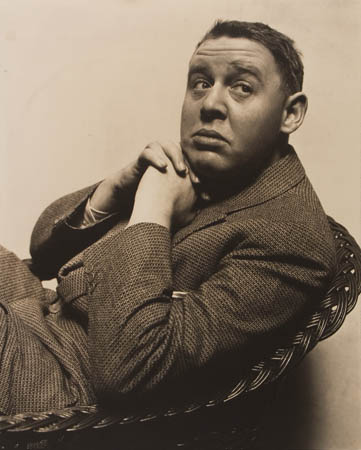
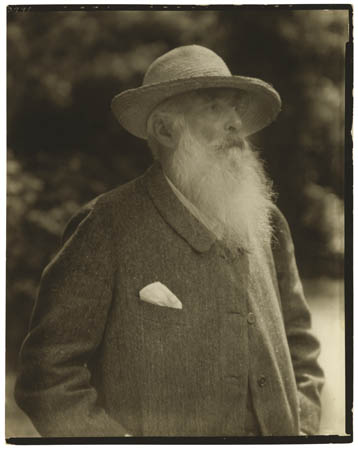
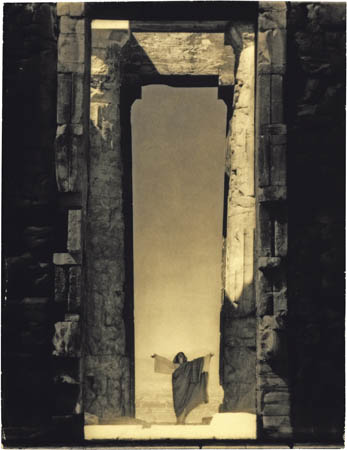
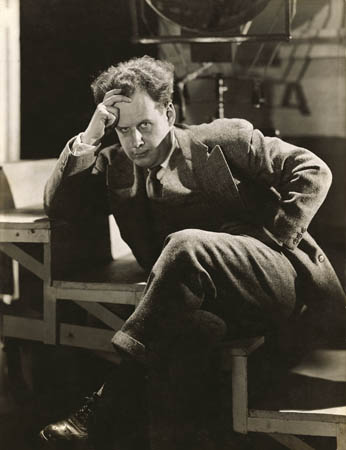
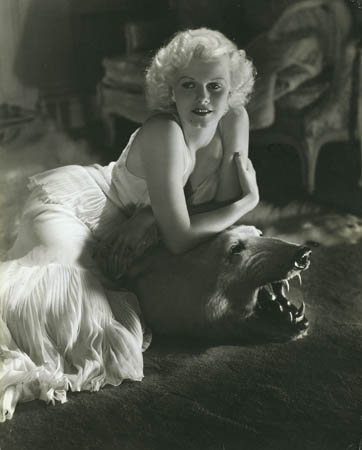
Charles Laughton by Edward Steichen, 1935. After starting out in his family's hotel business, Laughton ended up hopping between Hollywood, London and New York, acting both on stage and screen. This portrait was published in the year of Mutiny on the Bounty, one of Laughton's most famous films Photograph: Condé Nast Publications Inc/Image Courtesy Condé Nast ArchiveClaude Monet by Nickolas Muray, 1926. This portrait was taken three months before the artist died. Muray travelled to Giverny, where Monet had painted some of his famous works of the lily ponds, to take itPhotograph: Condé Nast Publications Inc/Image Courtesy Condé Nast ArchiveIsadora Duncan by Edward Steichen, 1923. Taken on a trip to Athens, this full-length portrait of the modern dancer show her stretching upwards, perfectly framed by the columns of the Parthenon. Steichen had been holidaying in Venice when he chanced upon Duncan and her troupe (known as the Isadorables), who were leaving for Greece the next day and invited him alongPhotograph: Courtesy Joanna T Steichen/Carousel Research Inc/Courtesy George Eastman HouseSergei Eisenstein by Barre, 1930. Shot in a film studio in Paris, this image shows the director just before he set off for America. After the initial hoopla that attended his arrival that year, Paramount rejected as uncommercial his plans to film HG Wells' The War of the Worlds and Theodore Dreiser's An American Tragedy, and cancelled his contract. In November of that same year, he was deported for being a communist Photograph: Condé Nast Publications Inc/Courtesy Howard Greenberg Gallery, New YorkLeni Riefenstahl by Martin Munkacsi, 1934. Shot in the same year as her notorious film of the Nuremberg rallies, Triumph of the Will, this image captures the sporting side of the director, actress and dancerPhotograph: Joan Munkacsi/Howard Greenberg Gallery, New York/Image Courtesy Condé Nast ArchiveJesse Owens by Lusha Nelson, 1935. A classic Olympian pose, this dynamic studio portrait was taken for a celebratory piece that described Owens as a "one-man track team". The following year Owens would live up to this promise by winning four gold medals at the Berlin OlympicsPhotograph: Condé Nast Publications Inc/Image Courtesy Condé Nast ArchiveJean Harlow by George Hurrell, 1934. Taken at the height of her career, this image was captured at Harlow's home. After eloping at the age of 16, within a few years she had carved out a glittering Hollywood career. Three years later Harlow would be dead from renal failure, after her Christian Scientist mother prevented her from receiving treatment. She was 26Photograph: Estate of George Hurrell, courtesy of George Hurrell Jr/Image Courtesy Condé Nast Archive
Sign up to read this article
Read news from 100’s of titles, curated specifically for you.