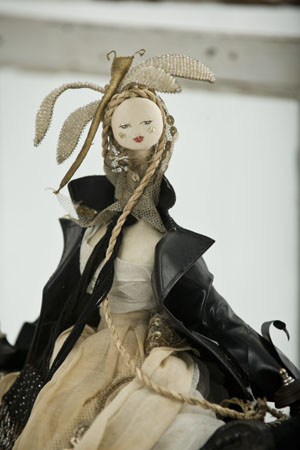
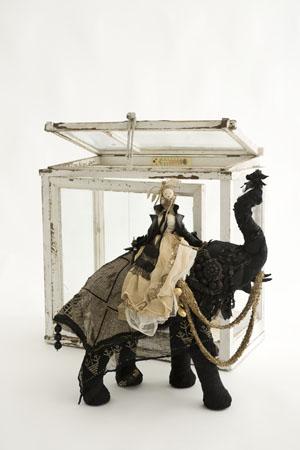
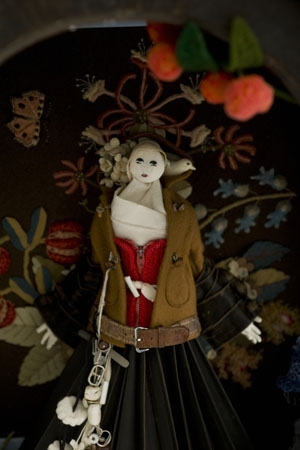
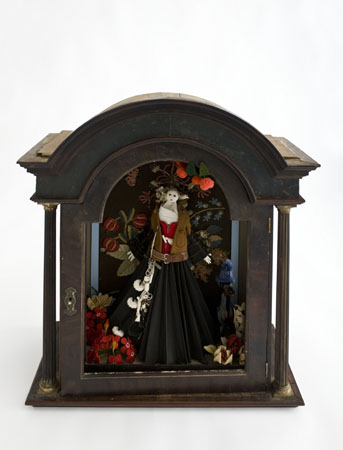
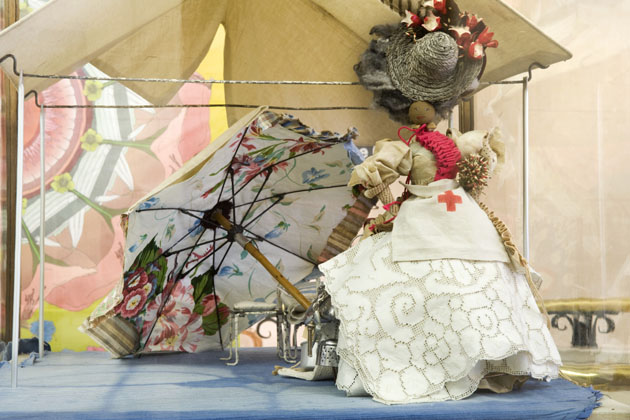
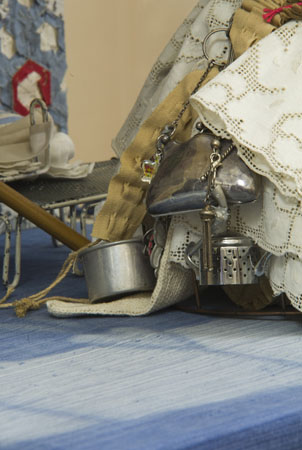
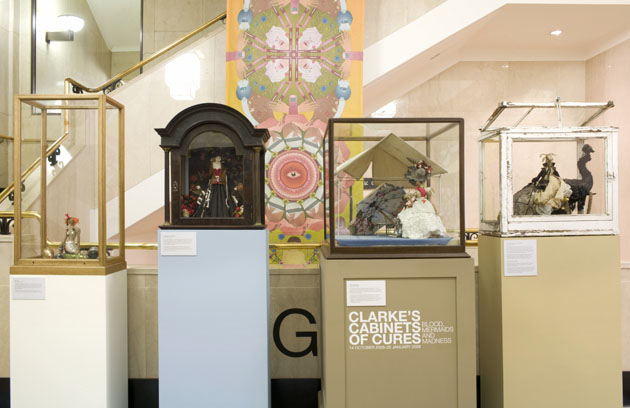
When court physicians were unable to treat her malarial fever, the wife of the Spanish Viceroy of Peru (the Countess of Chinchon) turned to an alternative native remedy: Cinchona bark that later became known as quininePhotograph: Mark Clarke/Mark ClarkeThe countess is depicted on elephant-back wearing golden trainers Photograph: Mark Clarke/Mark ClarkeHildegard of Bingen began having religious visions at an early age and practised medicine in her role as Abbess of Rupertsbery Photograph: Mark Clarke/Mark Clarke
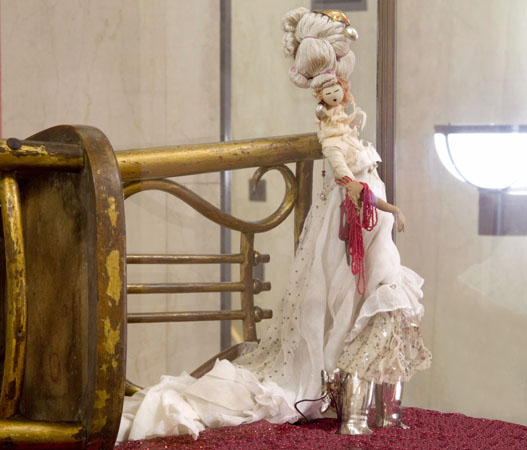
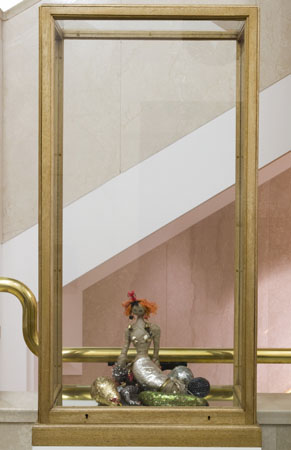
Hildegard's main work was on the curative powers of herbs, stones and animals. Here this 12th century nun features as part of a felt-worked altar inside the case of an 18th century grandfather clock Photograph: Mark Clarke/Mark ClarkeMary Seacole is the Jamaican-born doctor who battled against prejudice and travelled under her own steam, and at her own expense, to care for the troops in the Crimean WarPhotograph: Mark Clarke /Mark ClarkeThe cabinet features Seacole in her makeshift field hospital under her patchwork parasol toting her bag of lucky charms Photograph: Mark Clarke/Mark ClarkeThrough history, bloodletting has been used to treat all manner of ills including madness, syphilis, fevers and love-sickness. This cabinet features a Revolutionary Merveilleuse dripping her way through an upturned Paris trying out the treatment and trying on an aristo's wigPhotograph: Mark Clarke/Mark ClarkeThe classic shipboard disease, scurvy, is triggered by a deficiency of vitamin C. The cabinet features a Biba-Nova scurvy-scarred mermaid basking on a mirrored seabed of 1930s sequinned fruitPhotograph: Mark Clarke/Mark ClarkeClarke's Cabinets of Cures: Blood, Mermaids and Madness is at the Wellcome Collection, London, until January 2009Photograph: Mark Clarke/Mark Clarke
Sign up to read this article
Read news from 100’s of titles, curated specifically for you.