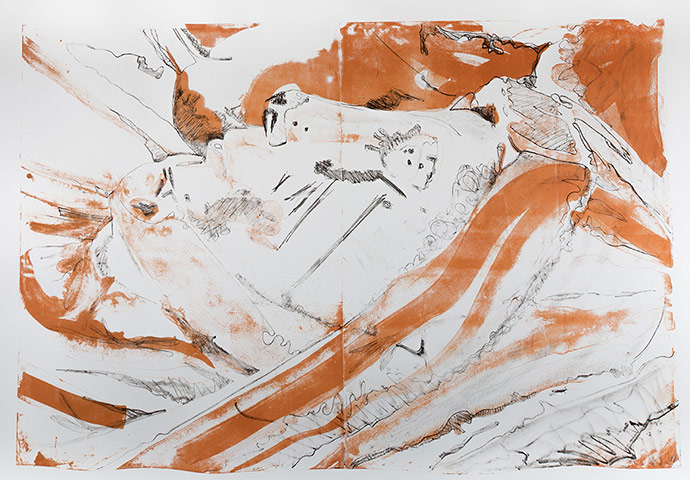
Woods’s improvised images are obviously organically structured to suggest vast landscape vistas or masses of tangled undergrowth, yet they are entirely free of any recognisable topographical detail. The horizon tends to be obscured by the gestural energy of her brushwork, leaving a dizzying space that is an enchantment of webs, wisps, fans, coils and filigree elaborations, often haunted by looming black silhouettes. Overall, one is faced with a convulsion of intertwining colours that suggest more the sensory experience of moving through and feeling the presence of nature rather than looking on from a perspective of objective detachment. Woods offers us virtual landscapes to dream in and be delightfully spooked by.
Terrace Gallery, Harewood House, to 20 Oct
RC Photograph: PR
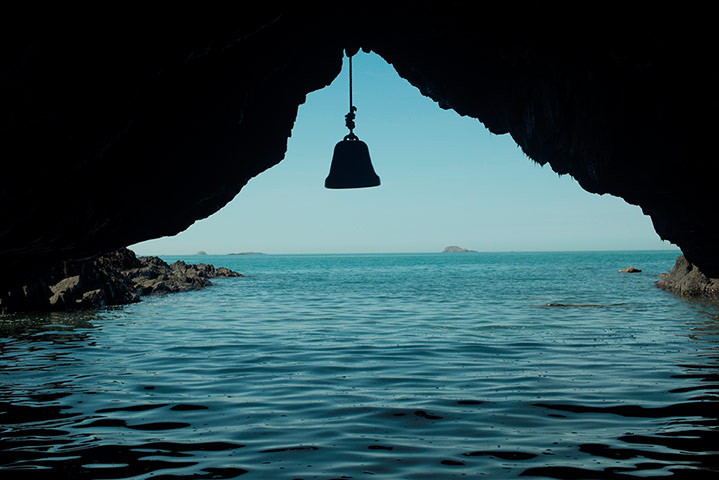
“Maker” is just about a broad enough term for the five mercurial up-and-comers selected for this yearly art show. What they all share is an interest in reframing tradition. Adam Buick has been hanging his hand-blown ceramic bells in lonely sea caves in his native Pembrokeshire and filming the results. Japanese paper-cutting gets updated by Nahoko Kojima, while Linda Brothwell uses a set of handmade chisels and brushes in the restoration of areas of Sheffield’s first cutlery works. Maisie Broadhead recreates and photographs entire scenes from paintings and Roanna Wells’s huge embroidery is inspired by aerial photography of India’s Kumbh Mela festivities.
Jerwood Space, SE1, to 25 Aug
SS Photograph: PR
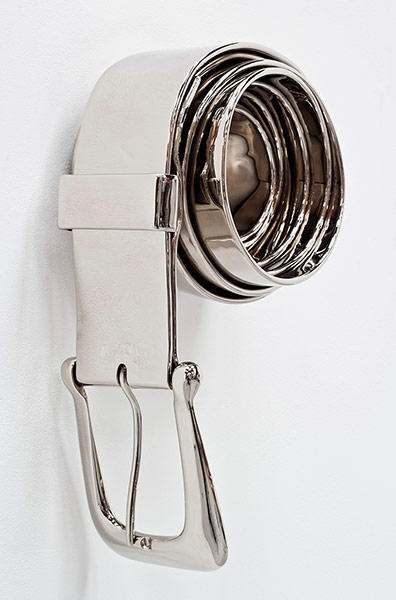
The forward trajectory of modernism is often associated with an increasing compositional boldness. However, A Conspiracy Of Detail attempts to demonstrate that the 21st century – with its micro technologies – heralds a new age of aesthetic finesse. Turner prize-nominee Jim Lambie takes his inspiration directly from Charles Rennie Mackintosh’s contemporary William Morris, whereas Jonathan Baldock’s finely wrought sculptures are influenced by Sunday school Play-Doh techniques. A highlight will be Eva Rothschild’s zig-zag sculpture with, in her words, its “ideas of faith, death, magic, things that are all very messy”.
Glasgow School Of Art, Sat 13 Jul to 29 Sep
RC Photograph: Keith Hunter
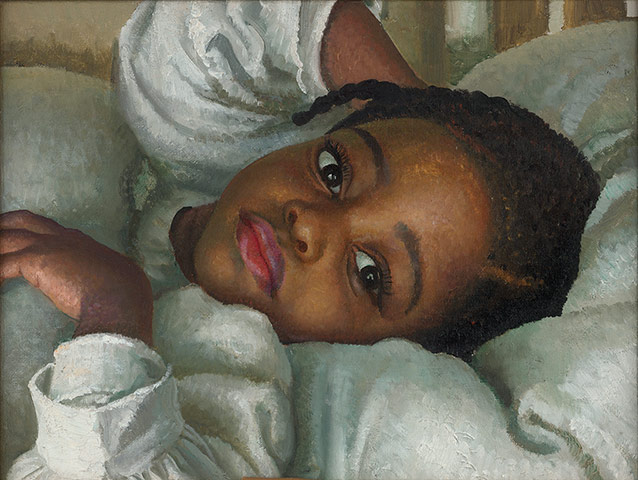
Laura Knight’s paintings have been described as technically accomplished, implying that the British artist’s impressionist output was good but not ground-breaking. Nonetheless, Knight was a trailblazer. Born in 1877 to a family with money troubles but artistic inclinations, she attended Nottingham art school at 13. Her career began before women had the vote, and by the time she died aged 92 she had trailed many impressive firsts in her wake, including being the first female member of the Royal Academy and the official artist at the Nuremberg trials. It makes sense that the subjects that most interested her hailed from society’s hidden corners: dancers, gypsies, women munitions workers in the second world war. This is the first big show of a figure who trod an alternative path through British art history.
National Portrait Gallery, WC2, to 13 Oct
SS Photograph: PR
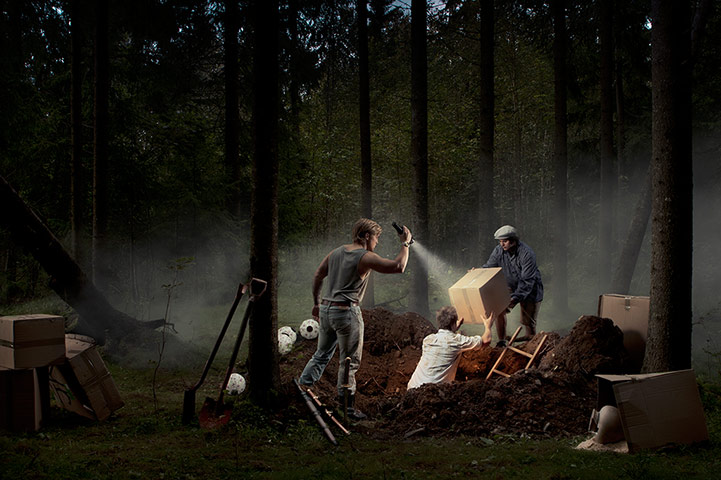
Over recent years, enterprising artist-curators have infiltrated our half-vacated urban centres, thus giving rise to pop-up galleries. The theme of this show is one of narrative sequencing, taking its cue from Einstein’s dictum, “The distinction between past, present and future is only a stubbornly persistent illusion”. Yet, despite the overall subject of tale telling, the art work here is self-sufficiently visual rather than illustrational. Max Limbu’s minimal sculptural staircase suggests movement from one psychological space to another as daylight conditions shift. Elsewhere in a scene that mixes elements of Goodfellas and a trip to Homebase, three men bury boxes in a forest by torchlight in Tor Simen Ulstein’s photographic scenario of narrative suspense.
Fresh Meat Gallery, LCB Depot, Tue 16 Jul to 7 Aug
RC Photograph: PR
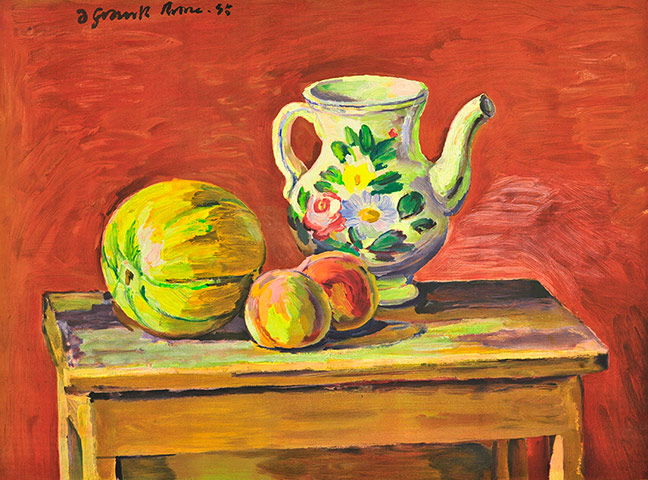
When Lyons decided to revamp its ailing teashops on the cheap after the second world war, they turned to leading artists such as John Piper, William Scott and Duncan Grant (work pictured), to create lithographic prints. The shabby walls were covered over with a vision of national life that was both forward-looking and reassuringly British. This veered from traditional scenes such as Anthony Gross’s cricket on the green and Fred Uhlman’s lighthouse to more modern takes, including Lowry’s northern factories and Ruskin Spear’s Billiards Saloon.
Towner, Sat 13 Jul to 22 Sep
SS Photograph: PR
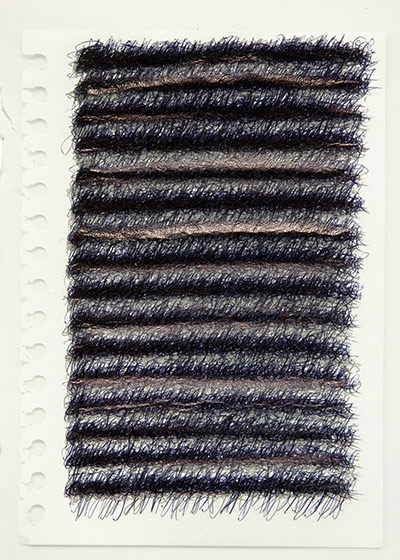
Over three consecutive years Pavel Büchler kept a diary. Consisting of just 12 pages, one for each month of each year, he wrote and overwrote his daily and weekly experiences so that the end result is an illegible complex of scribbly calligraphy. Büchler’s works are reminiscent of the age-old technique of the palimpsest, the partial erasing and scraping back of parchments, so the often religious texts form a layered depth of memory and meaning; like an overlapping of voices through the enriching and deepening passage of time.
The Whitworth Art Gallery, to 1 Sep
RC Photograph: Alan Seabright

Sarah Morris’s abstract geometric paintings are so perfect they might have been realised by a sentient machine; and, in fact, they’re designed on the computer. They seem like blueprints for cities, translating urban plans, communication networks and energy channels into crisp interconnecting lines and colour segments. Morris’s films, as highly produced as any blockbuster, take a similar tack. Her latest subject is Rio, a place where the crescent bay is matched by Brazilian architect Oscar Niemeyer’s curvy take on modernist architecture. It’s alive with people who typify Brazil, including plastic surgeons, TV stars, footballers, a fashion model-cum-revolutionary and the late Niemeyer himself.
White Cube Bermondsey, SE1, Wed 17 Jul to 29 Sep
SS Photograph: PR