Clafoutis has a luscious yet homey French pedigree.
Pronounced kla-FOO-tee, it requires little muss or fuss to be instantly satisfying. A slightly sweet egg-flour-milk batter is poured over tiny cherries, baked and finished with a dusting of powdered sugar.
It is often likened to other egg batter-based foods. But please don't call it a pancake because it is not flipped and cooked on both sides.
Neither is it a quiche (which has a crust), a flan (which has more flour making it thicker) or a far Breton (a custardy cake from Brittany that has a smooth flan-like texture and is dense). When made with pears, peaches or apples instead of cherries, purists say it is not a clafoutis but a flaugnarde.
To confuse matters even more, clafoutis is known by other names within France. In the Auvergne region, it is called millard, and in central France, fans ask for a cacou.
Clafoutis is derived from the word clafir, which means to fill. Typically, small black cherries are laid out on a buttered baking dish, which is then filled with a batter made with eggs, flour, milk and sugar. Some believe the name comes from the Latin expression clavum fingere, which means "to fix a nail," referring to the cherry-studded batter.
The dish's origins can be traced back to the Limousin region in southwest-central France. The French writer, raconteur and prince of gastronomy, Maurice Edmond Sailland, better known as Curnonsky, once said a true clafoutis is made only by people from that area who have beautiful dark blood like the juice of Limousin cherries.
Christiane Larhantec, who lives north of Paris in Coye la Foret, has no connections to Limousin but believes a real clafoutis is made with unpitted tart cherries. Part of the pleasure of eating one is enjoying the fruit with pits intact, she says.
Also if the pits are removed, she says, the cherries will let out more juice, making the custard thinner. But she offers this warning: "You need to pay attention and not bite into the pit." It might crack your tooth.
Didier Berlioz, an assistant professor at the Culinary Institute of America in Hyde Park, New York, says small, unpitted black cherries are ideal. Pits add a complementary flavor to the clafoutis, he says, but the bigger the pit the more tannin it will add to the dish.
"That's why small pits are so much more desirable," the Nice native says.
A perfect clafoutis is delicate, with a crisp edge and top and a creamy interior. The batter should not be overmixed, Berlioz says. Otherwise it will have a souffle-like feel and end up as almost two layers.
It's important to match the texture of the batter to the filling. If the filling is made with ingredients that tend to release a lot of moisture, add a sufficient amount of flour so that it can absorb the excess liquid. He prefers using a light pastry flour when compared to heavy ones like bread flour.
After mixing, the batter needs to rest for about 20 minutes so that the flour can absorb the liquid. Finally, bake at 350 degrees for around 40 minutes.
The traditional way to serve a clafoutis is piping hot, right out of the oven. But be warned: The hot cherries can burn your tongue. If there are leftovers, consume them at room temperature or cold. Don't ever reheat it, especially in the microwave, because the texture will fall apart.
Clafoutis can have a savory side, too, and there is no limit to the type of filling. It will work just like in a quiche, Berlioz says, and it is mainly about controlling moisture content. He suggests cutting savory versions into little squares and eating them with a toothpick as a snack.
Recently, I came across clafoutis recipes in two cookbooks that featured vegetables and cheese and sounded delicious. With the cherry season long past and farmers markets still selling sweet tomatoes and richly colored bell peppers, I geared up to go the savory route and took my cues from the two authors.
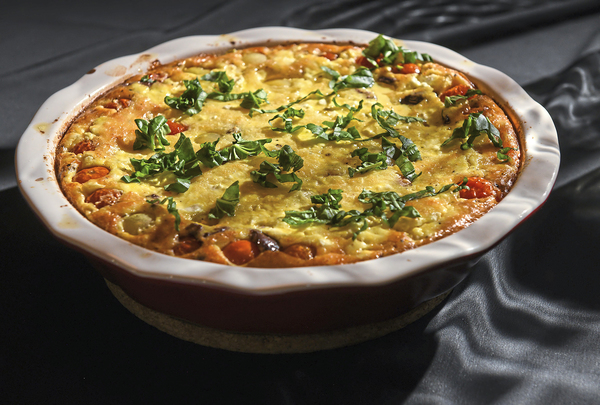
Diana Henry features a clafoutis with cherry and plum tomatoes, olives and basil in her book, "From the Oven to the Table: Simple Dishes That Look After Themselves." The ingredient list also includes goat and Parmesan cheeses, milk and heavy cream, making the dish rich and luscious.
It also tastes just as homey and satisfying as its sweet counterpart made with cherries.
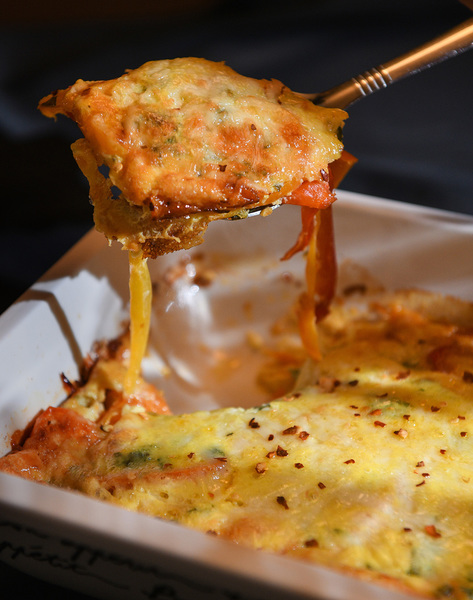
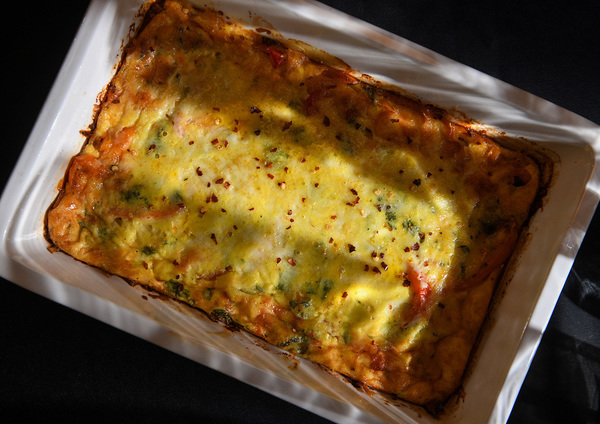
In "Dinner in French: My Recipes by Way of France," New York Times food writer Melissa Clark suggests pouring egg batter made with whole milk, creme fraiche, basil, white cheddar cheese and sliced ham over cooked red and yellow peppers redolent with garlic. The clafoutis is finished with more cheddar and Parmesan cheese.
However, the goodness does not end there. It gets a good squirt of fresh lemon juice and a sprinkling of crushed red pepper flakes, before a table (dinner's ready).
The clafoutis is simply French comfort food with a lot of style.