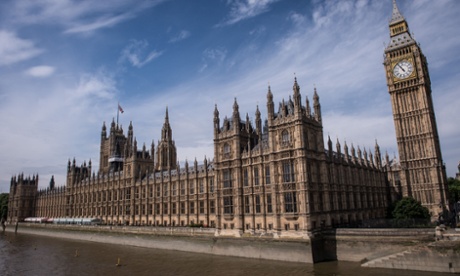
It may be fewer than 50 days now to the general election, but many civil servants are counting down to a much closer date: 30 March, when parliament dissolves and purdah comes into force.
For six short weeks there are specific restrictions on the activity of civil servants. Of course, most simply continue with their everyday jobs, unaffected by the purdah rules. Although politicians love to think they are the centre of the universe, in the real world benefits still need to be paid, taxes collected, driving licences issued, borders kept secure and much, much more across a wide panoply of public services.
With purdah comes that end-of-term feeling, a totting-up of work accomplished and work that will not now see the light of day. This can be a hugely frustrating time. There are all manner of reports knocking around the corridors of Whitehall that will now quietly be lost down the back of a ministerial sofa.
People inside and outside Whitehall who have worked hard on topics they feel could contribute to making government run more efficiently are watching that countdown to purdah, knowing valuable information is being kicked into the long grass. Not new, of course, but frustrating.
Meanwhile, civil servants have been given a mixed end-of-term report from one of the chief beaks, Sir Amyas Morse, comptroller and auditor general of the National Audit Office and a former global managing partner at PricewaterhouseCoopers. Speaking on 17 March at an event organised by the Reform thinktank, Morse gave, as you would expect, a measured assessment of the management skills and capabilities of the civil service and what he described as pervasive issues that stand in the way of faster improvement of public services.
Morse said he had seen real advances in the management capabilities of some departments, singling out HM Revenue and Customs, the Ministry of Defence and the Department for Environment, Food and Rural Affairs. But he qualified that judgment by saying he would have expected skills to have moved ahead faster. Is the civil service well-equipped to meet the challenges of greater austerity after the election, he pondered. “The answer is that it looks like a very tough test indeed.”
But Morse did let civil servants off one very important hook. For too long, they have been accused by ministers, on and off the record, of obstructing change. In 2012, for instance, Cabinet Office minister Francis Maude said there had been times when permanent secretaries had blocked initiatives agreed by ministers.
Morse stuck up for the civil service, denying the idea of deliberate resistance. But he added that staff were sometimes reluctant to admit that they did not have the skills or capacity to implement policies and so ended up with unachievable timescales on projects, Universal Credit being the obvious example.
For some civil servants, purdah will be a welcome chance to get on with some “real” work. I recently met two civil servants who couldn’t wait. Six weeks for them to get on with some real statistical analysis: bliss!
But they were fortunate; they work in an area where their figures are unlikely to be needed by politicians.
In the run-up to the election, the use of statistics, always fraught, has now become a very real battleground for politicians. Rows are already under way. The Department for Work and Pensions, for instance, has recently come under fire for dismissing research by Newcastle University into the true social cost of the bedroom tax. It’s not an isolated incident; the department has already been rebuked by the UK Statistics Authority for claiming that the benefit cap led to 8,000 more people obtaining employment.
The Alliance for Useful Evidence (and how one longs for the alliance of useless evidence – what fun those meetings would be!), which is supported by the Big Lottery Fund, the Economic and Social Research Council and the charity Nesta, recently convened a meeting of the great and the good from the world of public sector stats to urge politicians to be decent, legal, honest and truthful in their use of evidence. It’s a delightfully optimistic aim, but you might as well urge a duck to moo.
- A shorter version of this article can be found on the Civil Service World website
Sign up for your free weekly Guardian Public Leaders newsletter with news and analysis sent direct to you every Thursday. Follow us on Twitter via @Guardianpublic