The Turnbull government is proposing another amendment to its citizenship revocation laws after fresh advice from legal experts about how to lower the risk of losing a high court challenge.
The government had previously put forward amendments to reflect a suite of changes proposed by the bipartisan security committee, but now admits it needs to make additional adjustments and has delayed the bill’s passage through the lower house until next week during the final sittings of parliament.
The last-minute changes will be seen as an embarrassment for the government, given that Malcolm Turnbull said two weeks ago he was confident the amended bill would survive a high court challenge.
The legislation would allow for the revocation of the citizenship of dual nationals convicted of terrorism offences in Australia and the “automatic” removal for people who have gone offshore to fight for listed terrorist groups.
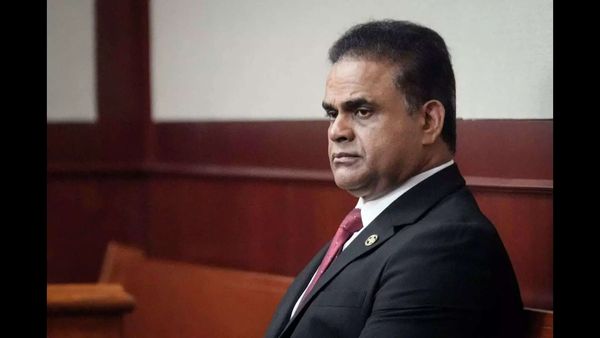
The immigration minister, Peter Dutton, attributed the further changes to “some late advice from the solicitor general around a technical amendment”. He has briefed the opposition and the chair and deputy chair of the parliamentary joint committee on intelligence and security (PJCIS), but is yet to release details.
Dutton said he did not think the new amendments were contentious, but debate had been deferred to give the Labor party time to deal with its internal processes. He expected both houses to pass the legislation before parliament rises next week for the summer break.
“Obviously the government’s intent always has been to minimise the risk as best you can,” Dutton told reporters in Canberra on Thursday.
“What you don’t want to do is open yourself up to a high court challenge risk, and with any piece of legislation that is always a possibility, so the government has taken advice and I think steps, to minimise the risk of a challenge and we will make an amendment which we think further enhances the bill, and that will be debated next week.
“I don’t believe it to be controversial but I think it clarifies some wording within a particular part of the bill and on that basis I think we have a stronger bill to defend, which is always the case with any piece of national security legislation, lawyers will challenge it.”
The attorney general, George Brandis, defended the late amendments, saying the solicitor general’s views were “solicited at various stages of the process”.
“They don’t reflect a policy change, they don’t reflect a change at substance, don’t reflect a change to the machinery or operation of the bill. They are essentially of a technical, constitutional character,” Brandis said.
The government had previously agreed to make amendments based on a report by the PJCIS, including limiting the cases in which a person would be taken to have automatically renounced their Australian citizenship without requirement for conviction.
This would ensure this automatic renunciation could apply only to people who have engaged in terrorism-related conduct outside Australia, or had done so in Australia but had left the country before being charged and brought to trial.
Under the previously agreed changes, Dutton would also have the discretion to revoke the citizenship of dual nationals who remained in Australia, but only after conviction for an offence with a prison sentence of at least six years. A person would be able to apply for a review of such a decision.
The minister’s powers would be retrospective for existing convictions where a court has imposed jail terms of 10 years or more, under the previously agreed changes.
But prominent constitutional lawyers warned that while those changes reduced the risk, the bill remained vulnerable to a high court challenge.
The Labor leader, Bill Shorten, said the opposition would “carefully consider” the further amendments.
“The government late last night sprung some last-minute changes to the arrangements which they negotiated with Labor,” he said on Thursday.
“As we always do, we will look carefully at the proposals.”
Labor’s immigration spokesman, Richard Marles, and the shadow attorney general, Mark Dreyfus, issued a statement saying the party was seeking extra information from the government about the impact of the variations.
Earlier this month, the government indicated it wanted the bill to pass both houses by the end of this week. On 10 November, the government published 13 pages of amendments to reflect the changes recommended by the PJCIS.
That prompted a procedural dispute as Labor accused the government of trying to rush the beginning of debate before the opposition had time to be properly briefed and to check the changes matched up with the PJCIS report.
At the time, Dutton said Labor had “torn themselves apart on this issue” and described the call for more time as “a ruse”.
Dutton said on 11 November that the government had “put together a bill which we think minimises the risk of any challenge in the high court”.
The same day Turnbull said: “It’s gone through a proper process now and we are confident that it would survive a high court challenge, but only time will tell.”
The constitutionality of the government’s citizenship revocation plan has been contentious from the time it was announced in February 2015.
In May, Tony Abbott emerged from a cabinet meeting to declare the legislation “within a few weeks” would give the immigration minister the discretion to strip dual nationals of their citizenship if they were deemed to be involved in terrorism, even if the person had not been convicted of an offence.
Details of a cabinet revolt was subsequently heavily leaked and there were further modifications to the government’s plan. The bill was introduced into the parliament in June but the PJCIS subsequently called for sweeping changes. The government has refused to release the solicitor general’s advice.