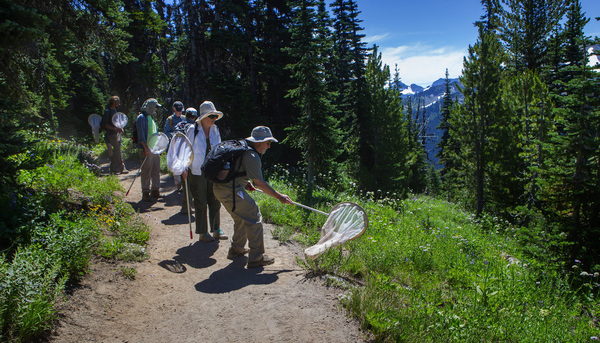
MOUNT RAINIER NATIONAL PARK, Wash. _ At the pace of a wedding march, a group of six hikers saunters down the Sunrise Rim Trail on a recent Wednesday morning. Over their left shoulders, Mount Rainier's Emmons Glacier wilts against a sapphire backdrop.
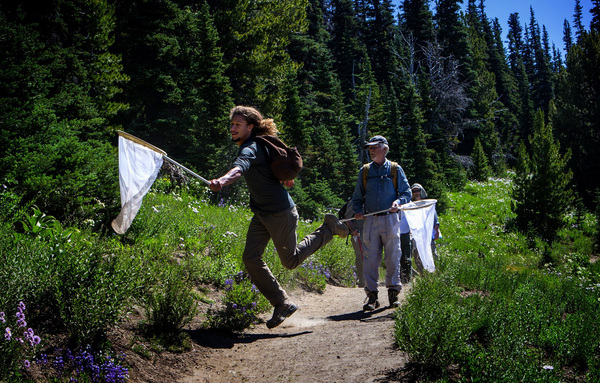
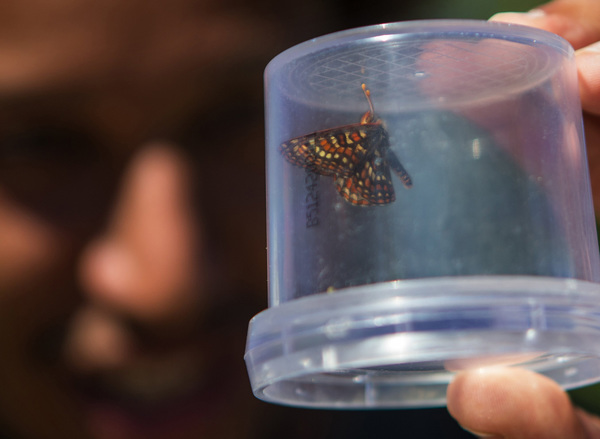
Suddenly, Tucker Grigsby, an intern with the National Park Service, lurches forward and bounds down the trail. With a snap of the wrist worthy of Roger Federer, he flicks a net through the air and captures his floating prize _ a magnificent orange and black banded butterfly.
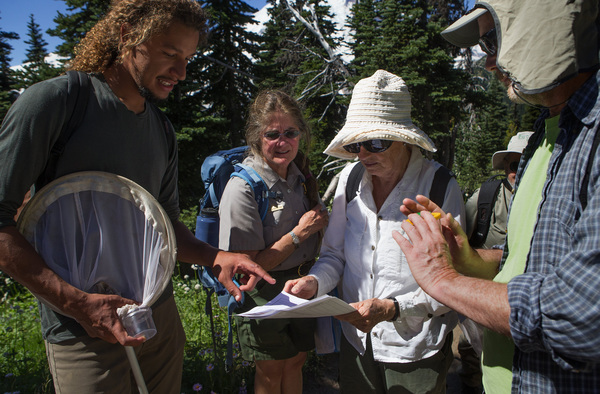
As soon as the specimen is secure, the hikers crowd around Grigsby, who holds up a ventilated bug jar.
"Can you guys tell me which one this is?" Grigsby says. Each takes a turn handling the jar.
The group studies the markings on the butterfly and determines it to be an Edith's Checkerspot _ one of five species captured that day.
No, these hikers are not collectors (no pins needed; it's catch and release). Most of them are not scientists.
They're volunteers with the Cascades Butterfly Project, learning to gather data that will help measure the impact of climate change on these important pollinators and Mount Rainier National Park itself.
Today, they're learning to walk a "transect" of about a half-mile and capture any butterflies that flutter into an imaginary 16-foot box in front of them. They also catalog plant varieties.
Volunteers will gather data each week this summer at 10 sites in the Cascades.
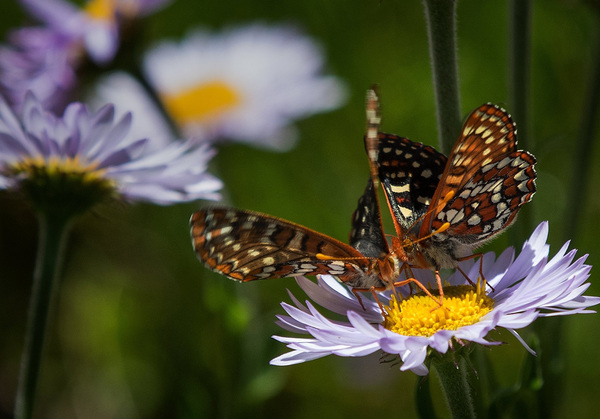
Scientists can probe the data for patterns and compare plants' growth with the emergence of the fluttering pollinators, said Regina Rochefort, science adviser at North Cascades National Park. The big question: As the climate changes, "Are plants responding at the same rate as the butterflies?"
The question mirrors what scientists worldwide are asking of any number of environmental features: How will nature adapt to a world growing warmer?
To collect the expansive data sets needed to explore climate change's thorny questions, scientists are increasingly turning to unpaid volunteers. Washington state _ with a bevy of hikers, climbers and skiers exploring the natural world _ makes for fertile recruiting ground.