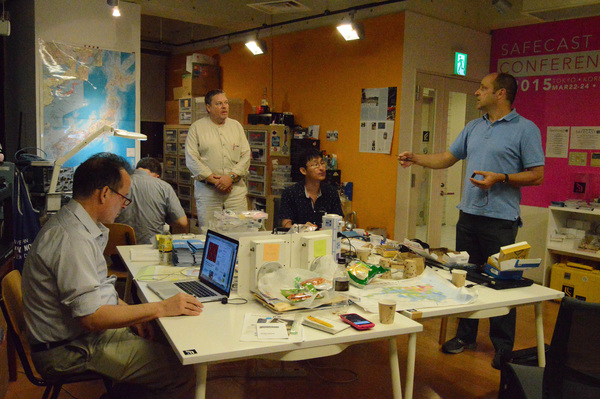
TOKYO _ As other Tokyo office workers poured into restaurants and bars at quitting time one recent evening, Kohei Matsushita went to the eighth floor of a high-rise for an unusual after-hours activity: learning how to assemble his own Geiger counter from a kit.
Hunched over a circuit board, the 37-year-old practiced his soldering technique as Joe Moross, a former L.A. resident with a background in radiation detection, explained how to fit together about $500 worth of components _ including a sensor, circuit board, digital display, GPS module, battery and case.
"My family has a house near a nuclear power plant," Matsushita said, explaining his motivation. "I want to take this there and collect data, and contribute to this pool of information."
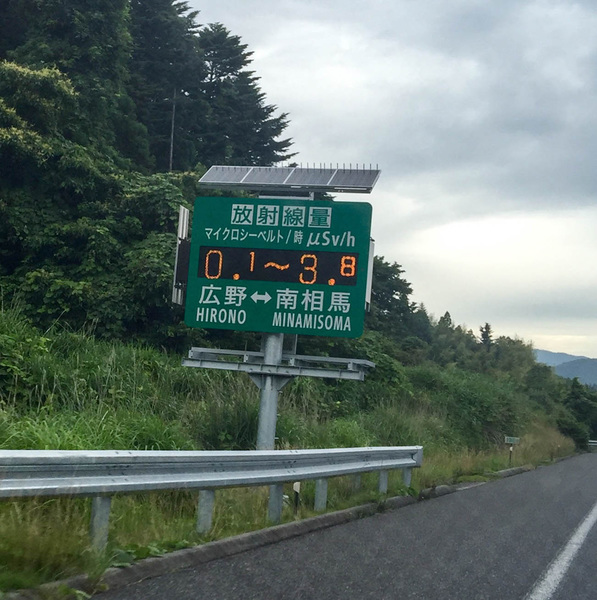
"This pool" is a stunning set of data _ 50 million readings and counting, all logged and mapped on a website anyone can see _ collected by volunteers with self-built equipment. Known as Safecast, the group was founded just days after the massive earthquake, tsunami and nuclear meltdown that shocked Japan in March 2011.
Though the immediate threat of radiation from the Fukushima Daiichi nuclear power plant has waned, interest in Safecast's data has not. The organization, which takes no position on nuclear power, is supported by foundations, grants and individual donations.
Part of the growing movement known as citizen science, the idea is to give people the knowledge and the tools to better understand their environment, and make more informed decisions based on accurate information.
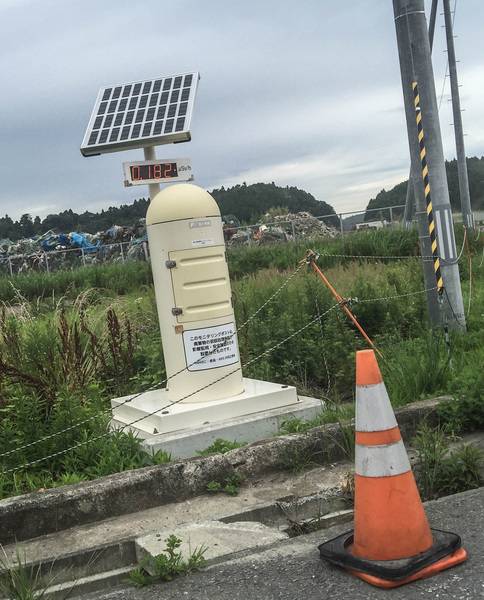
Trust in both nuclear power plant operators and the government has not fully recovered since the disaster. As authorities push ahead with the contentious process of restarting dozens of nuclear reactors taken off-line after the disaster, Japanese like Matsushita say a network of monitors controlled by ordinary people could serve as an early warning system in the event of another disaster.
Meanwhile, as Prime Minister Shinzo Abe's administration continues with its extensive effort to decontaminate areas around Fukushima Daiichi and reopen evacuated towns and villages, potential returnees say they want a way to verify official numbers that indicate radiation really has dropped to safe levels.
"They want people to come back, but there's no decontamination in the forest areas and those cover 75 percent of this village," says retired engineer Nobuyoshi Ito, 72, who in 2010 opened an eco-farm retreat in Iitate, about 20 miles southeast of the nuclear power plant. Recently, he had Safecast install a radiation monitor at the retreat, which is still in a restricted zone. "We have to check ourselves."