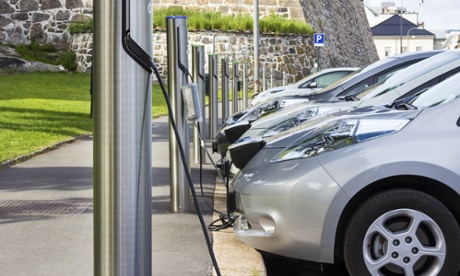
Enthusiasm and support is growing for electric vehicles across the US. An expanding list of advocates include governmental and non-governmental agencies, research institutions and, of course, consumers. Together, they create a wave of momentum for the use of electric vehicles as part of the solution to reduce carbon emissions and air pollution.
There are several indicators of a promising future for electric vehicles: greener cities, major financial incentives, growing sales and happy consumers.
Greener cities
More and more US cities are becoming environmentally conscious. One clear sign of this is that governments of major cities, such as Los Angeles, Denver and Chicago have in recent years created a new position called chief sustainability officer (CSO).
The CSO’s role? To create environmentally sustainable ways of doing business while shrinking the city’s carbon footprint. In other words, leading the city to go more green.
Hired in 2012, Jerry Tinianow is leading sustainability efforts as Denver’s CSO. Tinianow wants to build on Denver’s already solid reputation as a clean, environmentally friendly city, and he believes more electric vehicles on the road will help do that.
“We support the electrification of vehicles,” Tinianow said. “There’s no question electric vehicles cause less pollution and help improve air quality. We are committed to accelerating the cause.”
The city encourages residents to use electric vehicles as part of a larger sustainability plan, which includes promoting other gas-saving forms of transportation such as the bus, light rail, bicycle and carpooling. Specifically, Denver offers public charging stations in city-owned garages and plays up National Drive Electric Week.
Meanwhile, in Chicago this summer, the city launched a Drive Electric Chicago program designed to educate residents of electric vehicles’ benefits. A key message is that the average Chicago resident can save 70% in fuel costs and create 33% less greenhouse gas emissions per year by going electric.
Nearly 100 auto dealerships have partnered with the city of Chicago to promote the program and engage consumers. This partnership has included BMW, Chevy and Nissan offering free test drives of their latest vehicles at an all-weekend ride-and-drive event.
The money and resources Denver, Chicago and others are applying toward the promotion of electric vehicles show their commitment to healthier, more sustainable cities.
Major incentives
On average, electric vehicles cost more than the typical sedan. But various tax credits, rebates and handfuls of other incentives help make the electric vehicle a more attractive option for consumers in the long-term.
The federal government offers a $7,500 tax credit to electric-vehicle buyers. On top of that, many states add on a tax credit of their own. Colorado’s is up to another $7,500.
But as far as creating incentives for its residents, California leads the way.
Incentives include:
- Two years of free public charging for various cities (through a limited time No Charge To Charge program between Nissan and electric-vehicle charging networks)
- Up to a $2,500 purchase rebate
- Car insurance discounts and an unlimited use of the state’s high-occupancy vehicle lanes
- Up to a $3,000 rebate through the San Joaquin Valley Air Pollution Control District
Additionally, 6,239 public and private charging stations are accessible to electric-vehicle users, which is six times as many as the state with the second most charging stations (New York).
The overall number of charging stations in the US is growing significantly – from 3,300 in 2011 to 19,000 in 2013.
Do incentives work? Yes, according to a Center for Sustainable Energy’s survey of California electric vehicle owners.
Two of its top three motivators for buying an electric vehicle were “saving money” and “high-occupancy vehicle lanes”. The environment was the third motivator. Most survey respondents were Nissan Leaf owners.
Find a breakdown of each state’s incentives here.
Growing sales
Electric-vehicle sales have steadily grown from year to year. This year’s sales are five times those of 2011, when the Leaf was introduced to the market.
In the first half of 2014, 55,000 plug-in electric and battery electric vehicles sold in the US; a 35% jump over last year. May and June saw record sales.
The Nissan Leaf continues to stay atop the electric-vehicle market.
Through October 2014, Nissan Leaf has shattered the record for the most US electric-vehicle sales in a single calendar year, surpassing the previous record of 22,610 that it set in 2013. In line with the upward trend of overall electric-vehicle sales, Leaf sales in 2014 so far are 36% higher compared to the same period last year.
Said Brendan Jones, director of Nissan electric vehicle sales and infrastructure: “Since the initial launch in 2010, our primary goal is to bring electric vehicles to the mass market in a practical and fun-to-drive package, and we continue to deliver electric cars to more new buyers than anyone else.”
Happy consumers
Electric-vehicle owners are not only higher in numbers, they’re generally a satisfied group. In California, nine in every 10 plug-in drivers report overall satisfaction with their vehicles, according to a new survey from the California Center for Sustainable Energy.
California is the largest US market of plug-in vehicles with 45,000 on the road in the golden state, which makes these satisfaction results more impressive.
These results correlate with the state’s numerous incentives to help make the electric vehicle more affordable and convenient to drive. Nearly 100% of survey respondents said the vehicle rebate (up to $2,500) was an important motivating factor, to go along with the state’s 6,239-plus plug-in stations.
The electric vehicle industry is still somewhat in its infancy. But greater consumer awareness and interest, combined with a strong base of government and institutional support on which to build upon, leaves the electric vehicle well-positioned to contribute to cleaner communities and a healthier planet.
Content on this page is brought to you by Nissan Leaf. Learn more about reasons to drive an electric vehicle.