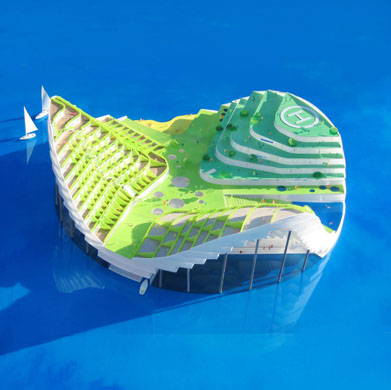
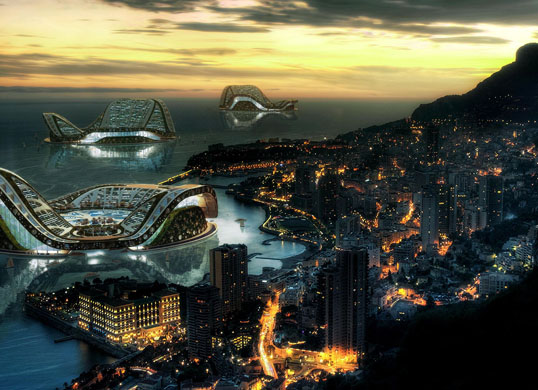
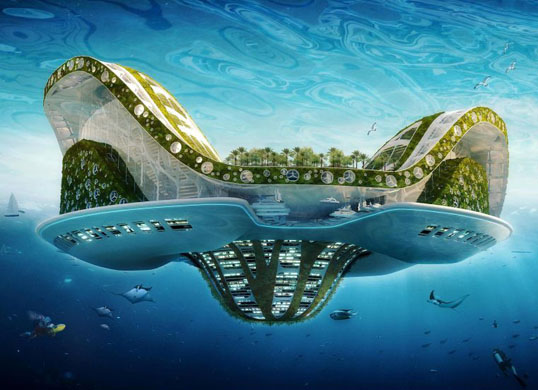
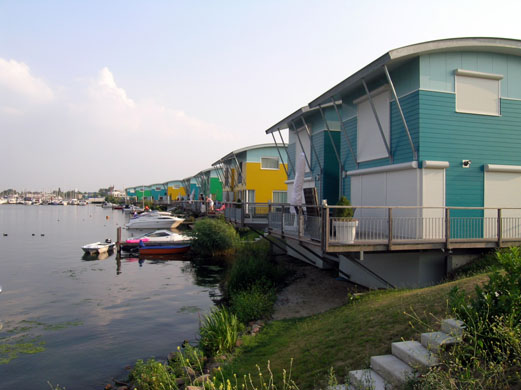
Project Lilypad, designed by Belgian architect Vincent Callebaut, is a "floating ecopolis" shaped like a giant waterlily that could house tens of thousands of peoplePhotograph: Vincent Callebaut/PRCallebaut says: "It will be one of the major challenges of the 21st century to find ways of accommodating environmental migrants." But critics point out that Project Lilypad "doesn't look like an emergency solution to a crisis - it looks like a beautiful addition to the view"Photograph: Vincent Callebaut/PRBuilding floating homes is no pipedream. Maasbommel in the Netherlands is a development of 40 three-storey homes on the banks of the river Meuse that rise and fall with flood watersPhotograph: Dura Vermeer Groep NV/PR
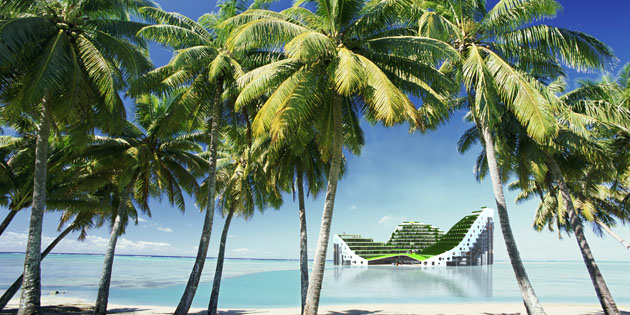
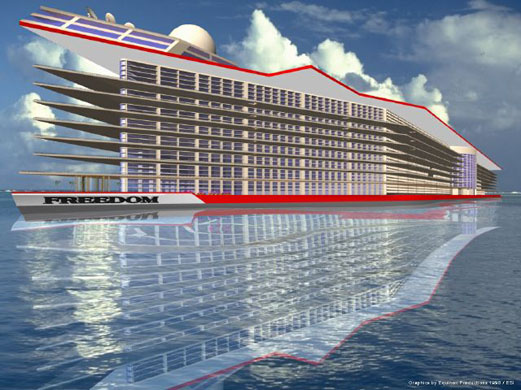
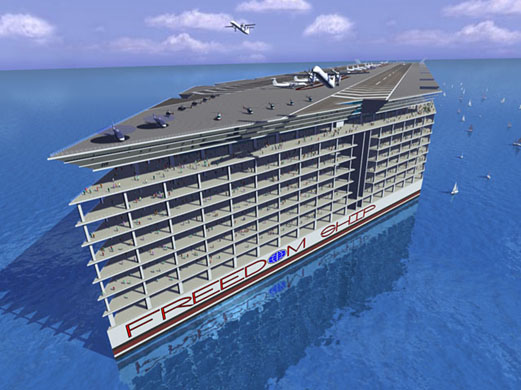
The homes at Maasbommel are tethered to the ground but go and up and down as the river floods. The solution accommodates the problem of rising water rather than trying to eliminate itPhotograph: Dura Vermeer Groep NV/PRDanish architect Julien de Smedt created project Mermaid as a floating "wellness resort". Engineering and feasibility studies have been carried out by a Middle Eastern investor, and the project could become realityPhotograph: Julien de Smedt/PRThe similarities between this and project Lilypad have not gone unnoticed – De Smedt has accused Vincent Callebaut of plagiarismPhotograph: Julian de Smedt/PRThe Freedom Ship was conceived as a floating city to house 60,000 people, according to Florida-based designer Norman Nixon. By 2002, 3,000 people had signed up to live aboard, but the project ran into financial problems and never took offPhotograph: Norman Nixon/freedom shipThe Freedom Ship was driven by the idea of a luxurious "endless retirement cruise", free of taxes and government pressures. But the idea has been reborn as an answer to rising sea levels. Whether any of these often fantastical schemes get beyond the drawing board remains to be seenPhotograph: Norman Nixon/PR
Sign up to read this article
Read news from 100’s of titles, curated specifically for you.

-3647.jpg)