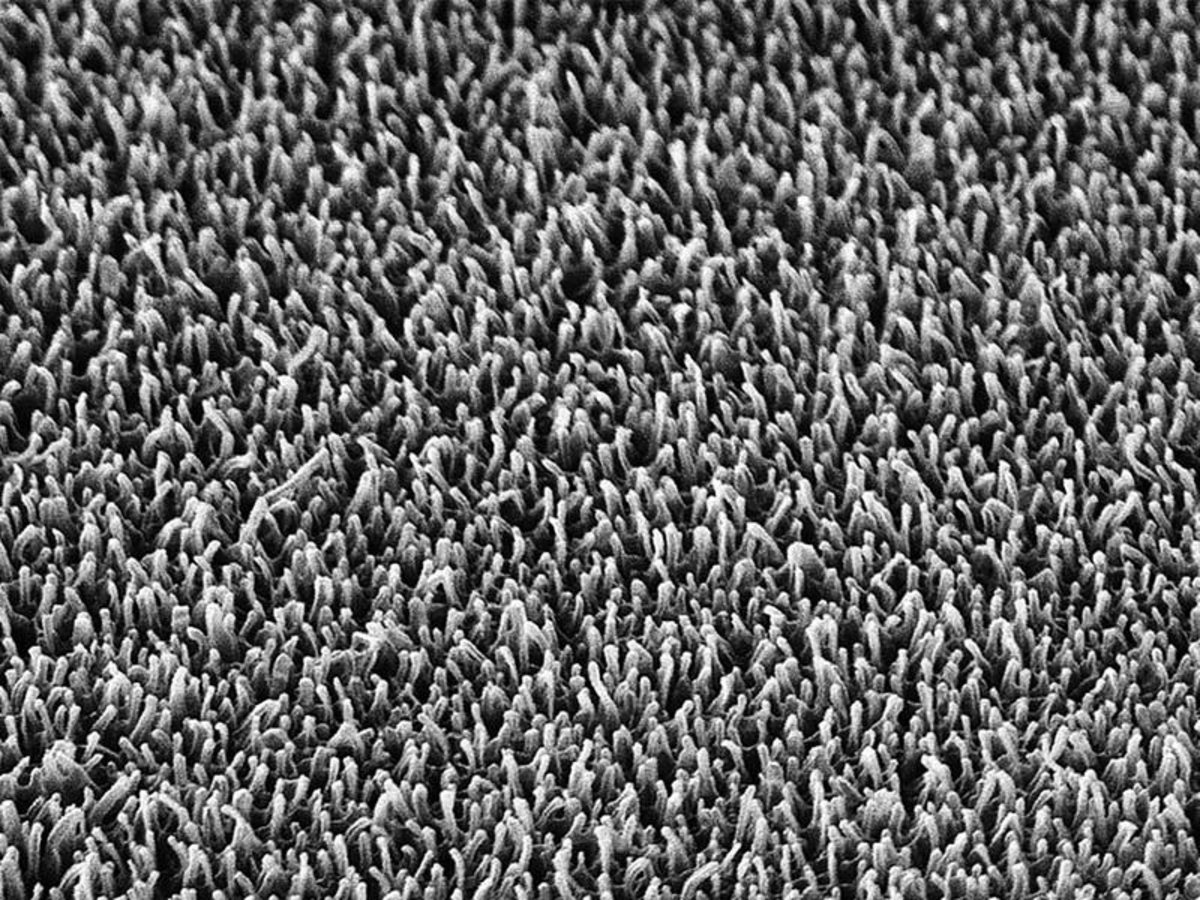
Antibacterial properties on the wings of cicadas have inspired scientists to develop a food packaging innovation with the potential to improve shelf life and reduce waste.
A team of Australian and Japanese scientists made the discovery that a lab-made nanotexture mimicking the properties of dragonfly and cicada wings kills up to 70 per cent of bacteria.
"The wings of cicadas and dragonflies (are) highly-efficient bacteria killers and could help inspire a solution, but replicating nature is always a challenge," Distinguished Professor Elena Ivanova of RMIT University said.
Dragonfly and cicada wings are covered with an array of 'nanopillars' - blunted spikes similar in size to bacteria cells.
Nanopillars kill bacteria by ripping the cells apart when they land on the surface of the insect's wings.
"It's like stretching a latex glove," Prof Ivanova said.
"As it slowly stretches, the weakest point in the latex will become thinner and eventually tear."
The nanotexturing can now be printed on plastic and mimics the bacteria-destroying qualities observed in the insects' wings.
The research shows potential for a significant reduction in food waste as the technology could extend the shelf life of exported meat, dairy and packaged products by reducing bacterial contamination.
"This is a big step towards a natural, non-chemical, antibacterial packaging solution for the food and manufacturing industry."
Prof Ivanova's team is currently working through which materials can be used with the nanotexturing technology, as softer plastic had presented limitations over metals and silicons.
The team first made the discovery of the bacteria-killing technology 10 years ago, but until recently found it difficult to reproduce the nanotexturing at a scale.
The nanotexturing can now be applied to multiple surfaces to create an antibacterial effect, including personal protective equipment.