Summary
We’re going to wrap up our live blog coverage for the day. Here’s a summary of where things stand:
- The Senate intelligence committee released hundreds of pages of a report on secret CIA torture practices conducted over seven years at hidden sites around the world after the 9/11 attacks.
- The CIA and White House had tried to block some or all of the report.
- The report contained a substantial amount of never-before-revealed information about the Bush-era torture program, including the number of CIA detainees (119), certain techniques (rectal feeding and hydration) and new details in cases of specific detainees.
- Key findings of the report, as presented by intelligence committee chairwoman Dianne Feinstein (video), included that “the CIA’s ‘enhanced interrogation techniques’ were not effective” and “the CIA’s management of the program was inadequate and deeply flawed”.
- The report also found that the CIA had misled Congress, the Bush administration and the public in testimony and classified meetings to talk about the program.
- The UN special rapporteur on counter terrorism called for a criminal prosecution, saying, “The individuals responsible for the criminal conspiracy revealed in today’s report must be brought to justice.”
- US president Barack Obama said in a statement that the report “documents a troubling program” that “did significant damage to America’s standing in the world”.
- CIA director John Brennan released a statement rebutting the report and saying the practices “did produce intelligence that helped ... save lives”.
-
Read our latest news story on the Senate report, “Shocking cases in CIA report reveal an American torture program in disarray.” Here’s a section, by Guardian national security editor Spencer Ackerman (@attackerman):
By October 2004, Gul’s accuser recanted. It is unclear if that accuser gave up Gul in the first place after he was himself tortured. The CIA transferred Gul to an unknown foreign partner, and he was ultimately freed.
As Gul’s previously unknown case indicates, years of leaks and occasional official disclosures about the CIA’s post-9/11 torture efforts did not reveal a program as brutal, unaccountable and even chaotic as the one portrayed by the Senate intelligence committee on Tuesday. The committee’s report portrays a feedback loop: the CIA embraced torture, then failed to question and review its value.
“Having initially cited Gul’s knowledge of the pre-election threat, as reported by the CIA’s source, the CIA began representing that its enhanced interrogation techniques were required for Gul to deny the existence of the threat, thereby disproving the credibility of the CIA source,” the report found.
Read the full piece here. And here’s a link to a Guardian editorial on the release of the report:
"Senate's decision to publish the torture report should not cause outrage....But its contents must do." http://t.co/VeMBEQE7Zf
— Stuart Millar (@stuartmillar159) December 9, 2014
If you prefer to take your news aurally, this is an informative WBEZ news spot, with commentary by Katherine Hawkins, a national security fellow at @openthegov:
"Just call it torture." says @Krhawkins5 to the Media #CIA #TortureReport @OpenTheGov http://t.co/W2JQmTCAwD
— WBEZ Worldview (@WBEZWorldview) December 9, 2014
The Senate didn’t get to look at everything. The White House invoked executive privilege to block staffers from seeing thousands of documents potentially related to torture, the report says:
White House, helming Most Transparent Administration in History, withheld over 9000 CIA torture documents to Senate. pic.twitter.com/QejVkuoCE3
— Spencer Ackerman (@attackerman) December 9, 2014
Here’s a key to the color code in the Senate report, via the Washington Post:
Decoding the secret black sites on the Senate’s CIA report: http://t.co/d6LR2UMRRu pic.twitter.com/FAQrjhVJpG
— Washington Post (@washingtonpost) December 9, 2014
The CIA gave inaccurate information to journalists in order to mislead the public about the efficacy of its interrogation program, the Senate report reveals. The report also details how the CIA competed with the FBI over how much credit each agency would receive in the media for their achievements, real or imagined, the Guardian’s Nicky Woolf (@nickywoolf) reports:
“In seeking to shape press reporting … CIA officers and the CIA’s Office of Public Affairs (OPA) provided unattributed background information on the program to journalists for books, articles and broadcasts, including when the existence of the CIA’s Detention and Interrogation Program was still classified,” the report said. [...]
Many of the inaccuracies the CIA fed to journalists, the report says, were consistent with inaccurate information being provided by the agency to policymakers at the time. The deputy director of the CIA’s counter-terrorism center explained to a colleague, according to the report, that “when the Washington Post or the New York Times quotes a ‘senior intelligence official’, it’s us.”
Read the full piece here.
We asked the experts – terrorism prosecutors, former spies, doctors and human rights lawyers – to comb through hundreds of pages and expose the new truths that matter most to history:
Reading between redactions w/ David Iglesias @stevenwhawkins @emptywheel @Krhawkins5 & a doc: http://t.co/1d9ZVaIYA7 pic.twitter.com/fyu7RBC5Co
— Matt Sullivan (@sullduggery) December 9, 2014
Here’s some of what they highlighted:
- A prosecutor’s Eureka moment: I never got specifics because they didn’t exist
- Human rights violations, rewarded with CIA cash
- Doctors were used to create a fiction of safe, legal and effective
- Anal probes as punishment for hunger-striking? So how is force-feeding not torture now?
Read the full piece here.
Video: CIA interrogation techniques were not effective. Here’s further footage of Dianne Feinstein’s address this morning on the Senate floor:
[The report] finds that coercive interrogation techniques did not produce the vital otherwise unavailable intelligence the CIA has claimed”:
More graphic detail from the report on the torture of Khalid Sheikh Mohammed:
Remember when torturers said KSM was just subjected to some pours? "abdomen somewhat distended & expressed water when abdomen pressed" 86
— emptywheel (@emptywheel) December 9, 2014
The Senate report poses a challenge for Europe to come clean about its own complicity in CIA-managed torture, Natalie Nougayrède writes in Comment Is Free:
As the world awaited the US Senate report on the CIA’s detention and interrogation programme under the George W Bush administration, there was very little introspection in Europe. As if European countries had nothing to do with what went on in the hunt for al-Qaida in the years after 9/11. In fact, many of America’s European allies were deeply involved in the CIA programme. And they have managed to stay very quiet about it. Could this change now?
Under President Bush the CIA used a web of European airports and bases for its extraordinary rendition flights, secretly transferring terror suspects across borders for interrogation. Some European states helped the CIA to carry out kidnappings. Others hosted CIA “black sites” – in effect, torture chambers – on their territory. The 600-page redacted summary of the 6,000-page report, published on Tuesday by the Senate intelligence committee, will no doubt be scrutinised to see what it may reveal of the continent’s involvement in these abuses.
In 2007 a special investigator for the Council of Europe, Dick Marty, concluded that there was “enough evidence to state” that American secret prisons existed in Poland and Romania. He added that the “illegal deportation of suspects by CIA kidnapping teams in Europe” amounted to “a massive and systematic violation of human rights”.
Read the full piece here.
Things Michael Hayden says in public don’t seem to age well.
The torture report ends with ~30 pages of testimony from Michael Hayden side-by-side with proof that what he said was false or misleading.
— Trevor Timm (@trevortimm) December 9, 2014
A web site rebutting the Senate report went live today at the URL ciasavedlives.com. The site doesn’t identify its authors except to say “This website was created by a group of former CIA officials with hundreds of years of combined service. They all have first-hand knowledge that the CIA’s interrogation program was authorized, legal and effective. They also have in common that during its 5+ year investigation, the SSCI did not bother to contact them and seek their views.”
The web site offers a timeline purporting to show how the legal framework for the law evolved. It links to documents puporting to show that torture was effective, including books by former CIA director George Tenet and former CIA counter-terrorism chief Jose Rodriguez.
The site also repeatedly asks why Senate staffers did not seek to interview CIA officials about the program:
We, as former senior officers of the Central Intelligence Agency, created this website to present documents that conclusively demonstrate that the program was: authorized by the President, overseen by the National Security Council, and deemed legal by the Attorney General of the United States on multiple occasions. None of those officials were interviewed either. None. CIA relied on their policy and legal judgments. We deceived no one. You will not find this truth in the Majority Report.
The CIA extracted false information about terrorist plots against Heathrow airport and London’s Canary Wharf business district from al-Qaida mastermind Khalid Sheikh Mohammed, and then used it to justify its use of waterboarding, the US Senate intelligence committee report on the CIA’s use of torture concluded.
The Guardian’s Ian Cobain (@iancobain) and Richard Norton-Taylor (@nortontaylor) report:
While a different prisoner said there had been a fledgling plan to attack each of the London targets, this had not been developed because those responsible had been apprehended, the report says.
Despite this, Mohammed began to deliver up elaborate details of the plots once his interrogators began to subject him to waterboarding, according to the committee’s examination of secret CIA files. The agency then decided to increase the number of times that Mohammed was subjected to the torture technique in order to induce him to confess to supposed plots within the US.
The CIA then began to highlight the “intelligence” about the London attacks to argue that waterboarding had not only proved invaluable, but must be allowed to continue. [...]
Once the waterboarding ceased, Mohammed felt able to admit that the details he had provided about the plots against London had been false.
Read the full piece here.
Poland says report 'will not harm relations'
The Guardian’s Remi Adekoya (@remiadekoya1) reports from Warsaw:
Polish prime minister Ewa Kopacz has said that “irrespective” of what is in the freshly-released US Senate report on the CIA, “it will not harm US-Polish relations.” Kopacz made the comments to journalists at the Visegrad summit in Bratislava, Slovakia, after the release of the report today. The Polish PM said she had shared her position with US President Barack Obama in a phone call yesterday.
The two leaders were said to have spoken at the request of Mr Obama. Polish deputy PM and defense minister Tomasz Siemoniak, who was present during the call, said the Polish prime minister and the US president had agreed that the publication of the report “would in no way affect US-Polish relations negatively.”
Poland is one of the countries that has been accused of hosting so-called CIA black sites but the Polish government has never openly admitted the fact.
Prosecutors in Poland are in the process of conducting an investigation into the alleged CIA facilities in the country but appear stuck in preliminary proceedings. Kopacz said the Polish prosecutors would now decide “how useful” the released US report is to their work. She added that she hoped for a “swift ending and resolution of this whole issue.”
The hidden history of the CIA’s prison in Poland http://t.co/woEdmSuJu4 (my story from January 2014)
— Adam Goldman (@adamgoldmanwp) December 9, 2014
Redacted at footnote 383: what size "gift" we had to give Poland to decide to let us torture there. Did it go to one individual?
— emptywheel (@emptywheel) December 9, 2014
Updated
‘So he thanked us for bringing him to that point’:
A CIA officer testified that Abu Zubaydah thanked agents for torturing him; no CIA records support this testimony. pic.twitter.com/czavbTwnVT
— Alan Yuhas (@AlanYuhas) December 9, 2014
Hayden: Feinstein 'incorrect' on alleged CIA deception
In discussing key finding No. 2 – that the CIA misled Congress and the public about torture – today on the Senate floor, Dianne Feinstein said “This conclusion is somewhat personal for me.”
Feinstein went on to tell a story about a meeting with then CIA-director Michael Hayden in which she says Hayden downplayed the “enhanced interrogation techniques” the CIA was using with talk about a “tummy slap”.
Hayden now has said Feinstein was “incorrect” in her characterization of the meeting. He spoke today with NewsMaxTV, in an interview flagged by BuzzFeed:
NewsMaxTV: General, did you lie to the Committee in 2006 — I believe September of 2006 — the entire Committee, when you spoke to them?
Hayden: No, would be the straightforward and simple answer.
NewsMaxTV: Did you ever lie to that Committee?
Hayden: No, of course not. Look — first of all, it’s a felony. A couple other points to be made, Steve, alright? That briefing took place because Mike Hayden and the Agency wanted it to take place. This was our work, in the summer of 2006, to convince the Administration that we had to brief the entire Committee on the entire detention and interrogation program. And so I ask you — I’m fighting with the administration, CIA’s in the adminstration, to get an audience to Congress so we can lie to them? I’m, you know …
NewsMaxTV: So when Dianne Feinstein today says you lied, is she lying?
Hayden: Uh, I’ll go so far as to say she’s incorrect. I mean, lying is intentionally misleading someone, alright? Let me make another distinction: telling people something they don’t want to hear is not the same thing as telling people something that is untrue.
UPDATE:
The torture report ends with ~30 pages of testimony from Michael Hayden side-by-side with proof that what he said was false or misleading.
— Trevor Timm (@trevortimm) December 9, 2014
Updated
The Guardian view: America’s shame and disgrace
Here’s a portion of a just-published Guardian editorial on the Senate report :
In one sense, it is a tribute to the US that it has published such a report. It is certainly a huge contrast to the cosy inadequacy of UK policy, practice and accountability – shortcomings that parliament must address. But it is a report about state crimes that should never have been committed, should never have been authorised, should never have been ignored by the US’s allies – and which remain unpunished. Moreover, the report has only been published now because, next month, a change of political control in the US Senate would have led to its suppression by the Republicans.
Read the full editorial here.
“It wasn’t that bad, we’ve been told, over and over again, for more than a decade,” Trevor Timm writes in his new Comment Is Free piece, Stop believing the lies: America tortured more than ‘some folks’ – and covered it up:
“We only waterboarded three people” goes the line American officials have been force-feeding the world for years. “We tortured some folks,” Barack Obama admitted recently, still downplaying war crimes committed in America’s name. But we now know those statements do not even begin to do justice to the horrific activities carried out by the CIA for years – atrocities that now have been exposed by the US Senate’s historic report on the CIA’s torture program, finally released on Tuesday after years of delay.
There are stories in the CIA torture report of “rectal rehydration as a means of behavior control”, threats to murder and “threats to sexually abuse the mother of a detainee” – or cut a mother’s throat. There are details about detainees with broken bones forced to stand for days on end, detainees blindfolded, dragged down hallways while they were beaten. There were even torture sessions that ended in death. The list goes on and on, and on and on.
But beyond all the the depravity, perhaps the most shocking part of this exposed history is the action of US officials who knew these horrors were unfolding – and covered them up.
Read the full piece here.
Further horrific detail from the report. The Guardian’s Kayla Epstein (@kaylaepstein) and Sarah Galo (@sarahevonne) have put together a thorough roundup of these kinds of excerpts – read it here.
Horrific detail: interrogator only had to raise his eyebrow for Abu Zubaydah to take place at water table. #1984 pic.twitter.com/HufupP97SK
— Martin Hodgson (@MartinxHodgson) December 9, 2014
CIA torture report: agent threatened to cut throat of detainee's mother – live http://t.co/ZyjQeVcNQD pic.twitter.com/SCcaO39bPS
— dominic rushe (@dominicru) December 9, 2014
Handcuffed CIA prisoner hanging from bar 22 hours a day for two days. "was wearing a diaper and had no access to toilet facilities".
— Ewen MacAskill (@ewenmacaskill) December 9, 2014
Updated
Here’s a clip from Senator Dianne Feinstein’s speech on the Senate floor this morning in disclosing the CIA torture report, which she said revealed actions that are “a stain on our value and on our history.”
The release of this 500-page summary cannot remove that stain. But it can and does say... that America is big enough to admit when it’s wrong”
(thx @maeryan)
Cash for “consistently superior work”:
After an officer's orders led to a detainee freezing to death, the CIA recommended giving him a $2500 "cash reward" pic.twitter.com/OCNMF9Wkmh
— Trevor Timm (@trevortimm) December 9, 2014
National security writer Marcy Wheeler notes it’s uncanny that the Senate report uses pseudonyms for the two psychologist architects of the CIA torture program, James Mitchell and Bruce Jessen, whose identities have been public knowledge for five years.
5 years ago, we were mature enough to know Mitchell and Jessen's names. We're no longer that mature. SWIGERT and DUNBAR.
— emptywheel (@emptywheel) December 9, 2014
SWIGERT and DUNBAR. An embarrassing, inexcusable fiction in a democracy.
— emptywheel (@emptywheel) December 9, 2014
CIA director: 'techniques' helped save lives
CIA director John Brennan has released a statement rebutting the Senate report. The statement asserts that the torture practices, called EITs for “enhanced interrogation techniques”, “did produce intelligence that helped ... save lives”. It reads in part:
As noted in CIA’s response to the study, we acknowledge that the detention and interrogation program had shortcomings and that the Agency made mistakes. The most serious problems occurred early on and stemmed from the fact that the Agency was unprepared and lacked the core competencies required to carry out an unprecedented, worldwide program of detaining and interrogating suspected al-Qa’ida and affiliated terrorists. In carrying out that program, we did not always live up to the high standards that we set for ourselves and that the American people expect of us. As an Agency, we have learned from these mistakes, which is why my predecessors and I have implemented various remedial measures over the years to address institutional deficiencies.
Yet, despite common ground with some of the findings of the Committee’s Study, we part ways with the Committee on some key points. Our review indicates that interrogations of detainees on whom EITs were used did produce intelligence that helped thwart attack plans, capture terrorists, and save lives. The intelligence gained from the program was critical to our understanding of al-Qa’ida and continues to inform our counterterrorism efforts to this day.
We also disagree with the Study’s characterization of how CIA briefed the program to the Congress, various entities within the Executive Branch, and the public.
The full CIA statement is here.
Senior administration officials say they are spending "an awful lot of time on the morale of the [CIA] workforce right now".
— Dan Roberts (@RobertsDan) December 9, 2014
Cameron: 'torture is always wrong'
British prime minister David Cameron has spoken to reporters about the Senate report. “Torture is wrong, torture is always wrong,” he said:
Those of us who want to see a safer and more secure world, who want to see extremism defeated, we won’t succeed if we lose our moral authority, if we lose the things that make or systems work and countries successful.
After 9/11 there were things that happened that were wrong and we should be clear about the fact that they were wrong.
In Britain we have had the Gibson inquiry that has now produced a series of questions that the intelligence and security committee will look at.
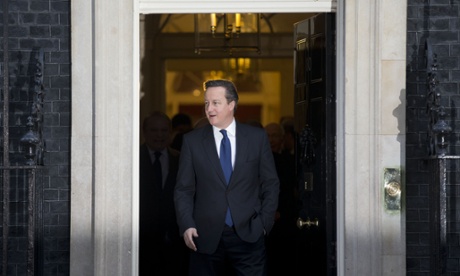
But I am satisfied out system is dealing with all of those issues and I as prime minister have issued guidance to all of our agents and others working around the world about how they have to handle these issues in future.
I am confident this issue has been dealt with from a British perspective and I think I can reassure the British public about that. But overall we should be clear torture is wrong.
Updated
Guardian interview with architect of torture program
Contractor psychologists James Mitchell and Bruce Jessen played a critical role in establishing the torture program in 2002, according to today’s disclosures. A company the pair formed received $81m in payouts by 2009, Feinstein said on the Senate floor.
The Guardian interviewed Mitchell, a retired air force psychologist, in April 2014. “I’m just a guy who got asked to do something for his country,” he said at the time:
[Mitchell] insists he is not the monster many have portrayed him to be.
“The narrative that’s out there is, I walked up to the gate of the CIA, knocked on the door and said: ‘Let me in, I want to torture people, and I can show you how to do it.’ Or someone put out an ad on Craigslist that said, ‘Wanted: psychologist who is willing to design torture program.’ It’s a lot more complicated than that,” Mitchell told the Guardian in his first public comments since he was linked to the CIA’s enhanced interrogation program seven years ago.
“I’m just a guy who got asked to do something for his country by people at the highest level of government, and I did the best that I could.”
A well-paid guy whatever the case. Read the full report here.
"I served my country & now I'm done" - our interview with the psychologist who devised the CIA torture programme http://t.co/abYtV7XnWG
— Martin Hodgson (@MartinxHodgson) December 9, 2014
Despite being one of the countries entangled in the CIA’s post-2001 secret war on terror, Pakistan showed little interest in the publication of the Senate committee’s historic report, the Guardian’s Jon Boone (@jon_boone) reports from Islamabad:
The country’s boisterous news channels remained focussed on domestic political dramas, in particular a deadly clash between pro and anti-government demonstrators that took place on Monday.
Many hours after digital copies of the full report had flooded the internet the country’s ministry of foreign affairs said no one had yet read the document.
“I can’t comment until we have read it in the morning,” said Tasneem Aslam, the foreign ministry spokesperson.
“What is clear is that whatever assistance we may have rendered was in line with our commitment to fighting terrorism and our obligations under the relevant UN Security Council resolutions.”
White House officials are continuing to draw focus to heightened security at US outposts worldwide, the Guardian’s Dan Roberts reports:
"The protection of our people is our top priority," says senior admin official. State Dept put every post in the world on security standby.
— Dan Roberts (@RobertsDan) December 9, 2014
On Friday, Secretary of State John Kerry called Senator Dianne Feinstein – the California Democrat who spearheaded the inquiry – to urge consideration of what spokeswoman Jen Psaki called the “foreign policy implications” of the report’s timing, suggesting it could inflame anti-American outrage worldwide. (h/t: @attackerman)
Disturbing revelations about just what “enhanced interrogation” meant continue to emerge:
We will rape your mother in front of you. -US gov't to detainee al-Nashiri pic.twitter.com/PAM5GpHclS
— Ali Gharib (@Ali_Gharib) December 9, 2014
Summary
As our live blog coverage continues, here’s a summary of where things stand:
- The CIA conducted a torture program that was “far more brutal than people were led to believe” and misled Congress, the White House and the public as to the existence of the program from late 2001 through 2009, according to portions of a Senate report on the program released Tuesday.
- The approximately 500 pages of Senate findings released Tuesday constituted the most detailed look yet at the US practice of torture in the aftermath of the 9/11 attacks.
- The Senate report detailed previously undisclosed torture techniques used by the CIA on detainees, which were revealed to number 119 – a higher number than previously disclosed. The newly revealed techniques included rectal feeding and rehydration as a form of manipulation.
-
Key findings of the Senate report, presented by intelligence committee chairwoman Dianne Feinstein on the floor of the Senate, included that “the CIA’s ‘enhanced interrogation techniques’ were not effective” and “the CIA’s management of the program was inadequate and deeply flawed”.
- Read a news story here summarizing the Senate’s report on the CIA torture program.
-
The report was greeted with international calls for prosecutions. “The individuals responsible for the criminal conspiracy revealed in today’s report must be brought to justice,” the UN counterterrorism rapporteur said.
- US president Barack Obama said in a statement that the report “documents a troubling program” that “did significant damage to America’s standing in the world”.
- The director of national intelligence pushed back against the report, calling it “fraught with controversy and passion” and saying it was not “neutral”.
Updated
Amnesty International has echoed the UN call for the prosecution of architects of the torture program. The USA ‘must...hold perpetrators accountable,” Amnesty International Americas director Erika Guevara Rosas says in a statement:
“This report provides yet more damning detail of some of the human rights violations that were authorised by the highest authorities in the USA after 9/11.
The declassified information contained in the summary, while limited, are a reminder to the world of the utter failure of the USA to end the impunity enjoyed by those who authorised and used torture and other ill-treatment.
This is a wake-up call to the USA, they must disclose the full truth about the human rights violations, hold perpetrators accountable and ensure justice for the victims. This is not a policy nicety, it is a requirement under international law.”
Guardian Washington bureau chief Dan Roberts is taking in a briefing by White House officials on the torture report:
Washington's mysteriously anonymous 'senior administration officials' are now briefing reporters on their view of the Senate torture report.
— Dan Roberts (@RobertsDan) December 9, 2014
CIA torture report: who's who
The Guardian’s Spencer Ackerman and Alan Yuhas have assembled a list of key figures attached to the Senate report released today, including officials, torturers, tortured detainees and other detainees held at black sites and at Guantanamo Bay.
Here are three selections from the piece:
Cofer Black – CIA counter-terrorism chief
Black was the head of the CIA Counterterrorist Center on 9/11 and when the torture program was incubated for testing on Abu Zubaydah. Black gained a degree of notoriety in 2002 for telling Congress that after 9/11 “the gloves come off”. He shrugged off criticism of the torture program in 2008: “I’m not a big fan of interrogations, but you know, life’s tough and there are no easy answers. The American people have to decide if they want interrogations done or not.”
Jose Rodriguez – CIA counter-terrorism chief
Black’s successor as head of the CIA Counterterrorist Center and later deputy director of operations. Rodriguez destroyed approximately 100 videotapes of interrogations – even using machine tools to do so. His actions, which he maintains were entirely his own and not prompted by any orders, prompted the Senate torture inquiry.
Abu Zubaydah
A Saudi Arabian who at some point before his capture suffered a form of “cognitive impairment” from a head injury, Zubaydah was arrested in Pakistan in March 2002. He is accused of acting as a senior lieutenant in al-Qaida.
Zubaydah was the first person tortured by the CIA, and waterboarded at least 83 times. He has been held at Guantánamo Bay for more than eight years. The most recent photo of him shows an eye-patch over his left eye, which he was not wearing when he was arrested.
Read the full piece here.
Several analysts are picking up on an acknowledgment in the report that at least one person who died from torture in CIA custody was a case of mistaken identity:
UPDATE 1.59pm ET: It’s possible that this report about a case of mistaken identity may itself mistake an identity. We’re working to clarify. Contents of original post below.
A *second* Gul Rahman was held by CIA (#101). This one held in 2004 for about a month; 1st one died in 2002. Not sure which is mistaken ID.
— Spencer Ackerman (@attackerman) December 9, 2014
UPDATE 4.35pm ET: It appears that the Gul Rahman who was held as a result of mistaken identity was not the one who died but the second man named Gul Rahman who was held for a month:
I trust Julie's diligence. RT @JulieATate: @attackerman @AliWatkins Mistaken ID is the second one.
— Spencer Ackerman (@attackerman) December 9, 2014
To avoid further confusion we’ve deleted the original contents of this block featuring two tweets by experts saying that the Gul Rahman who was killed was also a case of mistaken identity.
UPDATE 5.09pm ET: All now agree that the detainee held in a case of mistaken identity was not the Gul Rahman who died in custody. The other one however did.
I'm incorrect that Gul Rahman who was killed was mistaken ID. That was a DIFFERENT Gul Rahman, held for 1 mo. Thanks to all for correx.
— emptywheel (@emptywheel) December 9, 2014
Updated
Representative Mike Rogers, the retiring chairman of the House intelligence committee who has vociferously objected to the report’s release, continues to do so. “I regret that the Senate Intelligence Committee has publicly released this report,” Rogers says in a statement that continues:
Though it is wholly appropriate for the congressional intelligence committees to conduct rigorous review of classified programs, I fear that publicizing the details of this classified program – which was legal, authorized, and appropriately briefed to the intelligence committees – will only inflame our enemies, risk the lives of those who continue to sacrifice on our behalf, and undermine the very organization we continuously ask to do the hardest jobs in the toughest places. In the months and years after 9/11, the men and women of the CIA answered America’s demand for action by leaving their families and risking their lives to protect the rest of us. For that, they deserve America’s highest praise and thanks.”
Updated
The Guardian’s Oliver Laughland (@oliverlaughland) has compiled a report, “Rectal rehydration and waterboarding: how the CIA tortured its detainees”.
Here’s the top of Oliver’s report, describing the CIA practice of rectal feeding and rehydration of detainee:
Rectal feeding and rehydration
The torture report contains new information on the CIA’s use of rectal feeding and rehydration. At least five detainees were subjected to the process, the report states. The report details how accused USS Cole bomber Abd al-Rahim al-Nashiri was placed “in a forward facing position (Trendlenberg) with head lower than torso”, whilst undergoing rectal feeding.
Another detainee, Majid Khan, a legal resident of the United States and accused confident of Khalid Sheikh Mohammed, was also subjected to rectal feeding. According to a CIA cable released in the report his “‘lunch tray’ consisting of hummus, pasta with sauce, nuts and raisins was ‘pureed and rectally infused’”.
Mohammed was also subjected to rectal rehydration “without a determination of medical need”. Mohammed’s chief interrogator described use of the process as emblematic of their “total control over the detainee”.
Read the full piece on what we know about torture techniques used by the CIA here.
Guardian national security editor Spencer Ackerman (@attackerman) has filed a news story on the contents of the CIA torture report. The story names the contractor psychologists paid by the CIA to establish and carry out the torture program. The story reads in part:
The torture that the CIA carried out was even more extreme than what it portrayed to congressional overseers and the George W Bush administration, the committee found. It went beyond techniques already made public through a decade of leaks and lawsuits, which had revealed that agency interrogators subjected detainees to quasi-drowning, staged mock executions, and revved power drills near their heads.
At least 39 detainees, the committee found, experienced techniques like “cold water dousing” – different from the quasi-drowning known as waterboarding – which the Justice Department never approved. The committee found at least five cases of “rectal rehydration”, and cases of death threats made to detainees. CIA interrogators, the committee charged, told detainees they would hurt their children and “sexually assault” or kill their wives.
At least 17 were tortured without the approval from CIA headquarters that ex-director George Tenet assured the Justice Department would occur. And at least 26 of the CIA’s estimated 119 detainees, the committee found, were “wrongfully held”.
Contractor psychologists James Mitchell and Bruce Jessen played a critical role in establishing the torture program in 2002. A company they formed to contract their services to the CIA was worth more than $180m, and by the time of the contract’s 2009 cancellation, they had received $81m in payouts.
Read the full piece here.
UN counterterror chief calls for prosecution of torture architects
The UN special rapporteur on counter terrorism and human rights, Ben Emmerson, has released a statement saying “It is now time to take action” and “The individuals responsible for the criminal conspiracy revealed in today’s report must be brought to justice.” The statement reads in part:
The summary of the report which was released this afternoon confirms what the international community has long believed - that there was a clear policy orchestrated at a high level within the Bush administration to commit systematic crimes and gross violations of international human rights law. The identities of the perpetrators, and many other details, have been redacted in the published summary report but are known to the Select Committee and to those who provided the Committee with information on the programme. It is now time to take action.
The individuals responsible for the criminal conspiracy revealed in today’s report must be brought to justice, and must face criminal penalties commensurate with the gravity of their crimes. The fact that the policies revealed in this report were authorised at a high level within the US Government provides no excuse whatsoever. Indeed, it reinforces the need for criminal accountability.
International law prohibits the granting of immunities to public officials who have engaged in acts of torture. This applies not only to the actual perpetrators but also to those senior officials within the US Government who devised, planned and authorised these crimes. As a matter of international law, the US is legally obliged to bring those responsible to justice.
UN Special Rapporteur Ben Emmerson calls for those involved in "criminal conspiracy" exposed by #TortureReport to be "brought to justice"
— Julian Borger (@julianborger) December 9, 2014
Updated
John McCain, the Republican senator from Arizona who was tortured as a prisoner of war in Vietnam, takes the floor after Feinstein. He praises the release of the report. He says “the American people are entitled” to know what is done “in their name.”
He says the torture program “stained our national honor, did much harm and did little practical good.”
“The American people need answers to these questions,” McCain continues. “The committee has empowered the American people to come to their own decisions... this report strengthens self-government and ultimately, I believe, America’s ... stature in the world.”
“I know from personal experience that the abuse of prisoners will produce more bad than good intelligence,” McCain says.
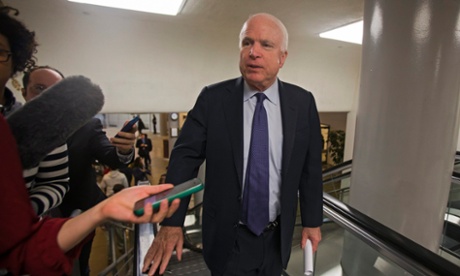
“I know that bad things happen in war,” McCain says. “I know that those who approved [torture] and those who used [torture]... I know their responsibilities were grave and urgent... But I dispute wholeheartedly that it was right for them to use these methods.”
James Clapper, director of national intelligence, has issued a statement on the Senate report, which he says is “fraught with controversy and passion”. Here’s part of the statement:
In all of my experience in intelligence, I am hard-pressed to recall another report—and the issues surrounding it—as fraught with controversy and passion as this one. Virtually no one who has any familiarity with the report and what it describes is “neutral.” The rebuttal to the majority report issued by the minority on the Committee is but one example of strong alternative views. Proponents of publication ardently believe that the report must be issued to cleanse a stain on the pages of our history, and to ensure that the practices it describes are never repeated. Others, with equal conviction, believe that the report is unfair and biased; fails to account for the immediate impact of the attacks on 9/11—on American citizens and on those in government charged with protecting the country; and will result in greater jeopardy to American citizens, facilities and interests overseas.
The officers who participated in the program believed with certainty that they were engaged in a program devised by our government on behalf of the President that was necessary to protect the nation, that had appropriate legal authorization, and that was sanctioned by at least some in the Congress. But, as President Obama has made clear, some things were done that should not have been done —and which transgressed our values. We recognized this ten years ago and stopped the program as it was originally conducted; even more important, we have since enacted laws, implemented Presidential orders and established internal policies to ensure that such things never happen again.
Feinstein says that following revelations of abuses in facilities including Abu Ghraib prison in Iraq overseen by the Pentagon, Congress was assured that the CIA did not engage in any comparably brutal abuse.
“This of course was false,” she says.
CIA detainees in one facility were held in “a dungeon” crowded in a cell with loud music and “only a bucket to use for waste.” A US official visited and said they had “never been in a facility where individuals are so sensory deprived,” Feinstein says.
“Multiple CIA detainees exhibited psychological... issues,” she says, including attempts at self-harm and self-mutilation.
“The summary includes far more detail than I’m going to provide here, and the summary itself contains only a subset of the treatment of the 119 detainees. .. There is far more detail.”
Feinstein is describing interrogation in the Cobalt facility.
One technique: Rough takedowns, in which a detainee dragged from cell, clothes cut off, hooded and dragged in dirt. Agents told detainee Abu Zubaydah that “he would only leave in a coffin-shaped box.” They planned to cremate him if he died, she says, quoting a CIA cable.
Feinstein moves to the report’s fourth key finding, “The CIA program was far more brutal than the CIA represented to policymakers and the American public.”
Feinstein: CIA paid 2 contractors $80m to torture
Feinstein describes two CIA contractors who personally tortured the “highest-value” detainees including Khalid Shiekh Mohammed, Abu Zubaydah and Nishiri (you can read more about them here).
In 2005, the two contractors formed a company to expand their activities with the CIA, she says, and from 2005-2008, they had a contract for more than $180m to carry out these activities.
“THe CIA has paid these two contractors and their company more than $80m,” she says.
Feinstein moves to the report’s third Key Finding, that “the CIA’s management of the program was inadequate and deeply flawed.”
No single individual or office was in charge of the program until January 2003, at which point at least 1/3 of detainees had been detained and interrogated, she says.
She recounts the death of a detainee at an undisclosed probably of hypothermia in 2002. “CIA’s leadership acknowledged that they had little or no knowledge of operations” at this particular site, code named Cobalt.
“The CIA used poorly trained and non-vetted personnel,” she says. “It’s a clear fact that the CIA deployed officers who had histories of personal, ethical and professional problems of a serious nature.”
Some CIA officials overseeing torture program "had reportedly admitted to sexual assault." pic.twitter.com/67rlPccMvs
— Matt Ford (@fordm) December 9, 2014
Here is a link to download a rebuttal by Republicans on the Senate intelligence committee to today’s report. Authors include the incoming chairman of the committee, Senator Richard Burr of North Carolina:
GOP Torture Report Rebuttal: http://t.co/lHppjo0RfG
— Ali Watkins (@AliWatkins) December 9, 2014
Feinstein reads the restrictions on paper on CIA interrogation techniques. None was observed, she says.
“None of these assurances which the department of justice relied on to form its legal opinions were [sic]... carried out,” Feinstein says.
Now Feinstein is talking about how the CIA misled Congress, the administration and the public as to the nature of the torture program.
“This conclusion is somewhat personal for me,” she says. She recalls a September 2006 committee meeting in which former CIA director Michael Hayden referred to a “tummy slap” in describing the “enhanced interrogation techniques.”
“The constraints that existed on paper in Washington did not match how the techniques were used around the world,” Feinstein says. She begins to talk about “nonstop abuse” over 17 days of Abu Zubaydah.
The “interrogation techniques” did produce bad or false intelligence, however, Feinstein says. In some cases CIA agents knew they were being lied to; in others they did not, she says.
Feinstein is describing 20 claims the CIA made for the value of intelligence gleaned through torture. None of these claims held up under examination. “The CIA’s claims that the EITs were necessary ... that’s a claim we conclude is inaccurate,” she says:
We took 20 examples that the CIA itself claimed to show the success of these interrogations. The CIA used these examples in presentations to the White House, testimony to Congress and... ultimately to the American people.
“Our staff reviewed every one of the 20 cases and not a single case holds up,” Feinstein says.
The study doesn’t claim no intelligence was gained, but that “actionable intelligence that was otherwise unavailable” was not obtained, she says.
Feinstein: CIA torture 'morally misguided'
Feinstein says the report found that the torture program was “morally, legally and administratively misguided and that this nation should never again engage in these tactics.”
The CIA program “was far more brutal than people were led to believe,” she says.
Drafts of the report were done by late 2011 and the final report was done at the end of 2012 and approved 9-6, Feinstein says. Then the committee sent the report to the White House, she says.
The Senate took advice from the CIA, some of which it included. The committee then voted 12-3 to declassify and release the summary of findings and conclusions.
Feinstein said the committee rejected a White House redacted version.
“It was immediately apparent that the redaction of our report prevented a clear and understandable reading of our study,” she says.
Feinstein says they were unable to interview key figures in the CIA about the agency’s torture activities, but Senate staffers did draw on transcripts of interviews with the key figures about the program.
The figures she names and their former posts:
George Tenet, CIA director
Jose Rodriguez, director, CIA counter-terror program
Scott Muller, CIA general counsel
John Rizzo, CIA acting counsel
John Mclaachlin, CIA deputy director
As you listen to Feinstein on CSPAN, you might follow Trevor Timm and Spencer Ackerman on Twitter as they unpack the document:
CIA leadership refused to punish officer who literally killed a detainee during torture session. pic.twitter.com/8Jsm9P52nw
— Trevor Timm (@trevortimm) December 9, 2014
CIA official or Cersei Lannister? pic.twitter.com/vlh86ZuNCQ
— Spencer Ackerman (@attackerman) December 9, 2014
“A surprisingly few people were responsible for designing... and carrying out this program,” Feinstein says. Two contractors designed it, she says, and thenceforth the program had “little oversight”.
The report “exposes brutality in stark contrast to our values as a nation,” she says. It covers CIA activities from late 2001 through January 2009, and includes detail on CIA interaction with White House, defense and state departments and the intelligence committee.
Potentially related:
BREAKING: Justice Dept. has no plans to reopen criminal investigation into CIA interrogation program, law enforcement official says.
— Reuters Top News (@Reuters) December 9, 2014
Feinstein calls the torture program a “stain” on the national character.
“The release of this 500-page summary cannot remove that stain, but it can say to our people and the world that America is big enough to admit when it’s wrong...
Feinstein says releasing the report is a step toward “reclaiming our values.”
Previous estimates of the number of prisoners in the CIA’s secret rendition, detention and interrogation program had run to about 100. Today the number, made public for the first time, is 119:
CIA to DOJ, 2005: 94 detainees, 28 tortured. Senate, today: at least 119 detainees, at least 39 tortured, at least 26 "wrongfully held"
— Spencer Ackerman (@attackerman) December 9, 2014
Here are the names of the 119 prisoners who were detained in the CIA's secret prisons program http://t.co/qUe7Ljp7dL
— Adam Goldman (@adamgoldmanwp) December 9, 2014
Updated
Feinstein: 'History will judge us'
Feinstein says an executive summary of 500 pages from the report to be released today documents “enhanced interrogation” carried out by the CIA on “at least 119 individuals... in some cases amounting to torture.”
“I’ve gone through a great deal of introspection about whether to delay the release of this report,” she says. Unfortunately there may never be a good time, she says.
“History will judge us by our commitment to a just society governed by law and our willingness to confront the ugly truth and say, ‘Never Again’.”
“This report is too important to shelve indefinitely.”
Updated
Reid continues: “What took place in the torture program was not in keeping with our country.”
Now it’s Feinstein.
Guardian national security editor Spencer Ackerman (@attackerman) is making a first pass through the report.
In addition to evaluating the “efficacy” of the torture program, the Senate details the nature of the torture itself. Here’s one passage:
"Rectal rehydration" pic.twitter.com/gg5USSlnTw
— Spencer Ackerman (@attackerman) December 9, 2014
Senate Majority leader Harry Reid takes the floor.
“Today for the first time the American people are going to learn the full truth about the torture that went on under the CIA...” he begins.
Unlike the president, Reid calls it “torture”.
He’s introducing Feinstein. “She’s persevered and overcome obstacles that have been significant to make this study available to the American people”.
Feinstein hasn’t even begun speaking yet and already the White House has released a statement on the report she is disclosing.
It’s a longish statement, attributed to President Barack Obama. He calls the program “troubling”. It says “I unequivocally banned torture when I took office,” but it does not directly refer to the CIA activities as “torture”.
Here are the last two paragraphs (via @robertsdan):
Today’s report by the Senate Select Committee on Intelligence details one element of our nation’s response to 9/11—the CIA’s detention and interrogation program, which I formally ended on one of my first days in office. The report documents a troubling program involving enhanced interrogation techniques on terrorism suspects in secret facilities outside the United States, and it reinforces my long-held view that these harsh methods were not only inconsistent with our values as nation, they did not serve our broader counterterrorism efforts or our national security interests. Moreover, these techniques did significant damage to America’s standing in the world and made it harder to pursue our interests with allies and partners. That is why I will continue to use my authority as President to make sure we never resort to those methods again.
As Commander in Chief, I have no greater responsibility than the safety and security of the American people. We will therefore continue to be relentless in our fight against al Qaeda, its affiliates and other violent extremists. We will rely on all elements of our national power, including the power and example of our founding ideals. That is why I have consistently supported the declassification of today’s report. No nation is perfect. But one of the strengths that makes America exceptional is our willingness to openly confront our past, face our imperfections, make changes and do better. Rather than another reason to refight old arguments, I hope that today’s report can help us leave these techniques where they belong—in the past. Today is also a reminder that upholding the values we profess doesn’t make us weaker, it makes us stronger and that the United States of America will remain the greatest force for freedom and human dignity that the world has ever known.
Conspicuously missing from President Obama's statement: Any reference to the torture statute, the War Crimes Act, or the rule of law.
— Jameel Jaffer (@JameelJaffer) December 9, 2014
Updated
Senate report on CIA torture: read full summary
If you would like to download the pieces of the report that are being released today you may do that at the link below.
Note that it’s a large file.
Here it is, the full summary of the Senate's CIA torture report: http://t.co/juWF2GMgVd
— Trevor Timm (@trevortimm) December 9, 2014
#ff
Speaking on Senate floor momentarily about the Intel Cmte report on CIA detention and interrogation program. Watch: http://t.co/sNwepjoqwV
— Sen Dianne Feinstein (@SenFeinstein) December 9, 2014
Feinstein release: 4 'key findings' of torture report
Follow the link to read a Feinstein press release on what she is about to say.
Feinstein's press release on her imminent floor statement: https://t.co/dTdACEAMRJ
— Ali Watkins (@AliWatkins) December 9, 2014
The press release says the executive summary of the report and additional material will be on the senator’s web site but it doesn’t appear to be there yet.
The news release presents “key findings”:
Key findings
The study’s 20 findings and conclusions can be grouped into four central themes, each of which is supported extensively in the Executive Summary:
1. The CIA’s “enhanced interrogation techniques” were not effective.
2. The CIA provided extensive inaccurate information about the operation of the program and its effectiveness to policymakers and the public.
3. The CIA’s management of the program was inadequate and deeply flawed.
4. The CIA program was far more brutal than the CIA represented to policymakers and the American public.
To say that the speech we are about to hear – expected to explain why the Senate has decided to share with the public what it has learned about CIA torture – has been a long time coming is to understate the matter.
Guardian Washington bureau chief Dan Roberts (@robertsdan) has traced the evolution of the Senate investigation into the CIA torture program, beginning with the election of Barack Obama, who as a candidate promised that “nobody is above the law”:
Only the most cynical could have guessed back then that it would take six years even for a limited official account of what happened to emerge, that it would be Obama’s own administration that stood in the way of its publication and that no one would end up taking personal responsibility for the crimes or the cover-up.
But, like the practice of enhanced interrogation itself, this dark addendum to the story of the US war on terror has served mainly to illustrate the compromises of power rather than shed meaningful light on its uses.
Some of the arguments over “compromises of power” were more colorful than others:
Obama’s first chief of staff and Chicago confidant Rahm Emmanuel reportedly dressed down former defense secretary Leon Panetta for agreeing to co-operate with the Senate inquiry.
“I was summoned to a meeting in the Situation Room, where I was told I would have to ‘explain’ this deal to Rahm … It did not take long to get ugly,” Panetta claimed in his memoir, Worthy Fights. “’The president wants to know who the f**k authorized this to the committees,’ Rahm said, slamming his hand down on the table. “I have a president with his hair on fire and I want to know what the f**k you did to f**k this up so bad.”
Read the full piece here.
"It hasn't been easy getting to this point," Sen. Feinstein tells CNN, and she'll make that clear in her upcoming speech on Senate floor.
— Carrie Johnson (@johnson_carrie) December 9, 2014
Updated
Senator Dianne Feinstein, the Democrat from California who is about to lose the gavel of the intelligence committee as Republicans take the majority, is on the Senate floor.
The Senate is conducting a roll call vote on a cloture motion (a vote to end debate) in the nomination of Virginia Tyler Lodge to join the board of directors of the Tennessee Valley Authority. You can watch it live on C-SPAN here.
Updated
Hello and welcome to our live blog coverage of the anticipated release of a major new chapter in the secret history of a torture program operated by the CIA at clandestine sites around the world in the aftermath of the 9/11 attacks.
Senate intelligence committee chair Dianne Feinstein is scheduled to deliver remarks about the CIA torture report on the Senate floor at approximately 11am ET.
It is expected that Feinstein will announce the release of part of a 6,000-page report on the torture program. The report was assembled by Senate staffers who spent four years reviewing millions of CIA documents (but who reportedly did not interview key prisoners who were tortured, or their CIA interrogators).
It is the most thorough public accounting yet of torture conducted by the CIA. The report describes how detainees swept up in the US search for terrorism suspects beginning in 2002 were confined at so-called “black sites” and subjected to torture practices including waterboarding, beatings, threats, confinement in a box, chilling, sleep deprivation, stress positions and forced nudity.
The report confronts the questions of what interrogators learned by using torture and the extent to which the activities were hidden from George W Bush administration officials and Congress. The Senate inquiry, led by intelligence committee chairwoman Dianne Feinstein, was not a criminal investigation and is not considered likely to result in criminal charges.
The creation and now release of the report has been marked by fierce infighting between the CIA and the Senate and the Senate and the White House. In July, CIA director John Brennan appeared on Capitol Hill to apologize for spying on Senate staffers as they worked. In August, the Senate rejected a proposal by the Obama administration to release a version of the report more heavily redacted than the version released today.
Former president Bush stepped forward to defend the CIA in advance of the report’s release. “We’re fortunate to have men and women who work hard at the CIA serving on our behalf,” Bush told CNN on Sunday. “These are patriots and whatever the report says, if it diminishes their contributions to our country, it is way off base.”
Guardian reporters led by national security editor Spencer Ackerman (@attackerman) will be working through the day to explain what’s in the report. We’ll carry reaction from the White House on down and bring you all the latest updates in today’s live blog.
Updated