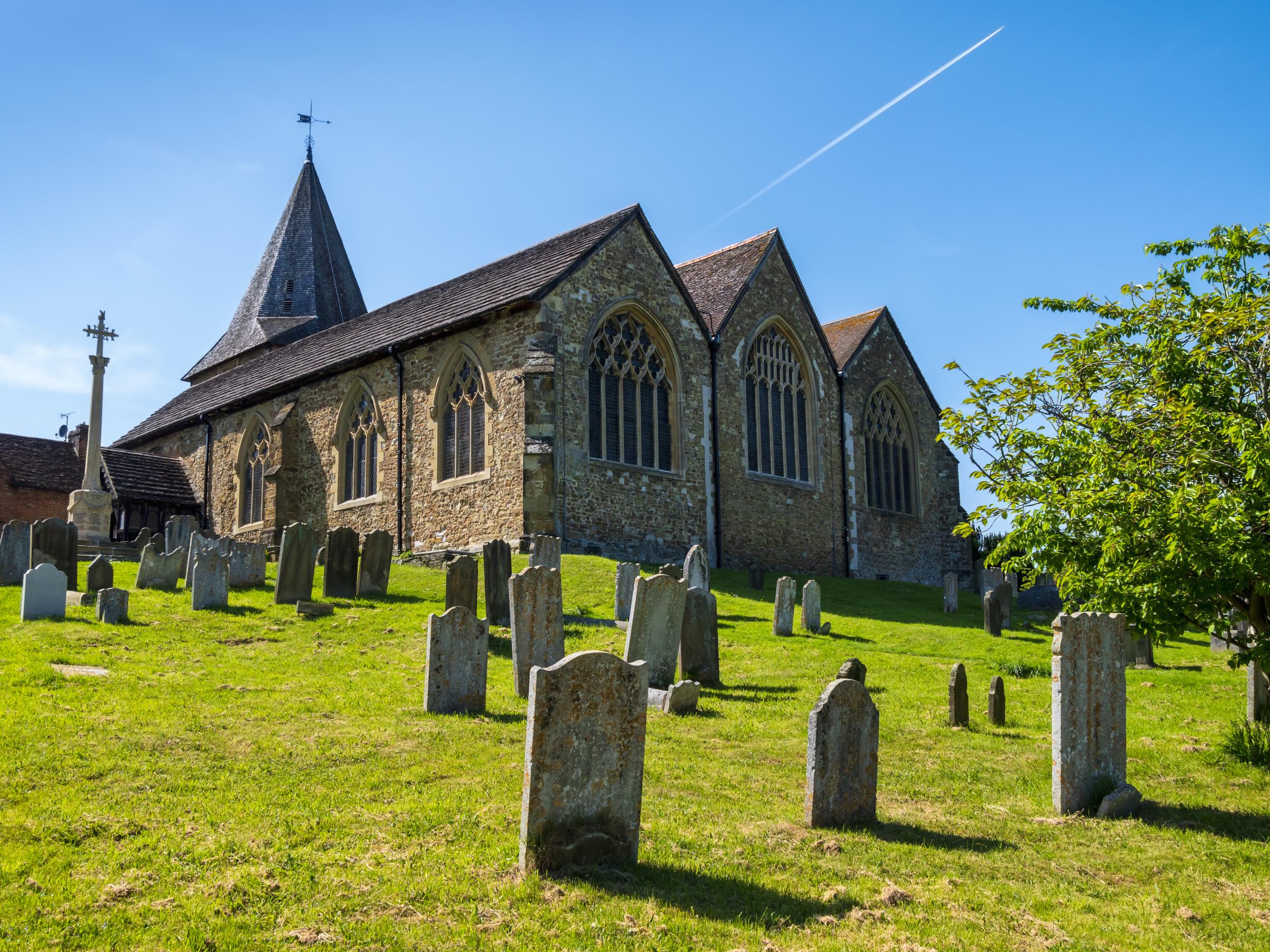
Rural churches are no longer obliged to hold Sunday services after the Church of England (CofE) voted to change canon law.
Previously, all parish churches had to host a weekly service on the Sabbath, under strictures dating to 1603 that were written into modern canon law in the 1960s.
But decades of falling church attendance and dwindling religious observance have left some priests looking after up to 20 rural churches – making it impossible to hold a Sunday service in every one.
Such groupings are known as multi-parish benefices.
The CofE’s general synod approved the change by a vote of 20 bishops to zero, 92 clergy to zero and 118 laity in favour, two against and one abstention.
The proposal was first made by the Bishop of Willesden, the Rt Rev Pete Broadbent in 2016, the head of a task force charged with simplifying the way the church functions, which was formed in 2014.
The task force aims to bring forward proposals for simplifying the process of the Church of England.
According to figures published in 2016, 71 per cent of parishes contained multiple churches in 2011, compared with 17 per cent in 1960.
Following the vote, Rev Broadbent said: “You’re meant to get a dispensation from the bishop, this just changes the rules to make it easier for people to do what they’re already doing. It stops the bureaucracy.”
Under canonical requirements, every priest was required to hold a morning and evening prayer and a communion service, every Sunday in every church they looked after.
Rev Broadbent said: “That doesn’t happen. This is tidying up what does happen. This was just one [amendment] where we said, ‘out of date, doesn’t work, we’re operating differently in the countryside now therefore lets find a way of making it work’.”
When asked if the decision would affect elderly churchgoers in rural locations, who may have to travel further to attend a service, Rev Broadbent said: “No, because at the moment this is already regularised and it’s already happening.
“If you’ve got 20 churches, you’ve got a pattern of services on a Sunday where you say, ‘Well we’ll have a communion over there on the first Sunday, and communion over there on the second Sunday’ ... this is just making that clear.”
Additional reporting by PA