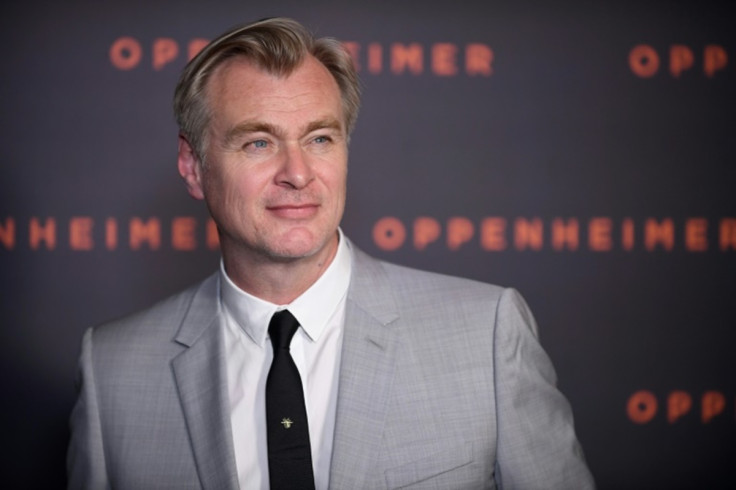
Visionary director and Oscar-winning director, Christopher Nolan, has broken his silence regarding the controversial casting of rapper Travis Scott in his upcoming £250 million production of The Odyssey.
Addressing a wave of online backlash, the filmmaker argued that the 'Sicko Mode' artist is uniquely qualified to portray an ancient Greek bard because modern rap serves as the direct descendant of Homeric oral tradition.
Nolan Responds to Criticism
The announcement that Scott would join an elite ensemble featuring Matt Damon and Anne Hathaway sparked immediate debate amongst cinephiles and classical scholars alike. Many critics dismissed the move as 'stunt casting' designed to lure younger audiences to a three-hour Greek epic. However, speaking to TIME, Nolan dismissed these concerns as a misunderstanding of the source material's origins.
'I cast him because I wanted to nod towards the idea that this story has been handed down as oral poetry, which is analogous to rap,' Nolan stated.
The director explained that in the Bronze Age, stories were not read from pages but performed through rhythm and vocal cadence to keep them alive in the collective memory. By placing a contemporary titan of rhythm into the role of the storyteller, Nolan intends to strip away the 'stuffy' museum-quality often associated with period pieces, making Scott perfect for the film.
Christopher Nolan defends casting rapper Travis Scott to star in ‘The Odyssey.’
— Oli London (@OliLondonTV) May 13, 2026
“I cast him because I wanted to nod towards the idea that this story has been handed down as oral poetry, which is analogous to rap.”
The film, based on Greek mythology, also stars trans actress… pic.twitter.com/tDUDyVnHZm
A Modern Voice for an Ancient Tale
According to TIME, Nolan's vision for the film is rooted in the transition of Greece from a literacy-rich era into a dark age of oral history. Scott's character appears early in the film, reportedly delivering a haunting narration regarding the fall of Troy to Telemachus, played by Tom Holland.
This is not the first time the two have collaborated. Scott previously provided 'The Plan' for Nolan's 2020 thriller Tenet. At the time, the director praised the rapper's 'profound' insights into narrative mechanisms.
For The Odyssey, Nolan is taking this partnership further, using Scott's gravelly, rhythmic delivery to bridge the three-thousand-year gap between the Mediterranean coastline and modern performance art.
Breaking Records with IMAX and Practical Effects
On top of it, The Odyssey is the first feature-length film to be shot entirely on IMAX cameras. To achieve this, Nolan worked with cinematographer Hoyte van Hoytema to develop a lighter, quieter version of the massive cameras, allowing them to capture intimate character moments alongside sweeping naval battles.
Production took the cast to five countries, including the rugged coasts of Iceland and the deserts of Morocco. Staying true to his preference for practical effects, Nolan opted to build a physical, sinking Trojan Horse rather than relying on digital animation.
'If the horse were sinking into the sand and about to be swept away by the tide, the Trojans would never believe there could be anybody in there,' Nolan told TIME.
A Soundscape of Bronze and Synthesisers
The film's subversion of expectations extends to its score. Three-time Academy Award winner Ludwig Göransson has reportedly eschewed the traditional Hollywood orchestra. Instead, the soundtrack relies on 35 custom-made bronze gongs and synthesisers to evoke a world that feels both ancient and alien.
Despite the 'online quibbles' regarding Scott's involvement, industry analysts expect The Odyssey to be one of the biggest successes of 2026.
Nolan's Confidence Ahead of Release
With a release date set for 17 July, Nolan appears confident that the final product will win over critics sceptical of his creative approach with the 3,000-year-old poem. He remains assured that his adaptation will breathe new life into the classic tale.
'Hopefully they'll enjoy the film, even if they don't agree with everything. We had a lot of scientists complain about Interstellar. But you just don't want people to think that you took it on frivolously,' he concluded.