The expert whose modelling helped instigate the first coronavirus lockdown said he does not think restrictions will be needed this Christmas.
Professor Neil Ferguson, a member of the Scientific Advisory Group for Emergencies (Sage), said he feels it is "unlikely" Britain will see a "catastrophic winter wave" similar to that seen last year, which led to months of further lockdown across the country.
With high levels of Covid immunity and a strong booster vaccination programme, the epidemiologist said he "very much" hopes a clampdown of the sort being ordered in some parts of Europe can be avoided in the UK.
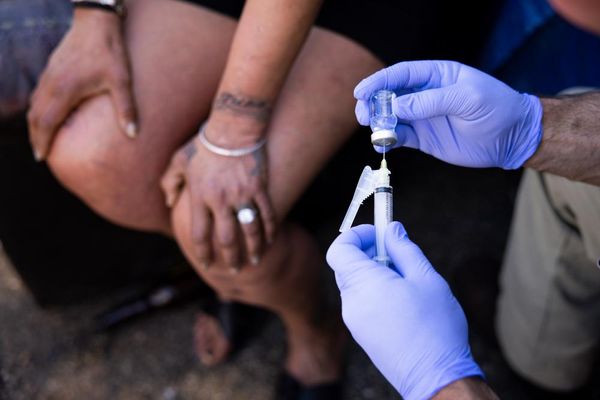
The Imperial College London academic also said he would be in favour of booster vaccinations being rolled out to "younger age groups", once the most vulnerable have been given top-up jabs, in order to slow transmission.
He said modelling from the London School of Hygiene & Tropical Medicine has indicated that expanding eligibility for the booster shots could help "drive down transmission to low levels".

The prediction comes after Prime Minister Boris Johnson warned on Friday that "storm clouds" of a new coronavirus -1>coronavirus wave are gathering over parts of Europe.
Many European countries are seeing an increase in cases and preparing to step up restrictions.
The Netherlands has confirmed a three-week partial lockdown amid surging cases, Austria is set to impose a lockdown on unvaccinated people, while German politicians are considering legislation that would pave the way for new measures at the same time as the country's disease control centre is urging people to cancel or avoid large events.

Prof Ferguson - dubbed "Professor Lockdown" in some sections of the media - said the UK is in "quite a different situation" to its European counterparts due to having a greater level of immunity among its population following months of high virus prevalence.
He said the fast rollout of booster jabs has also given the UK an advantage in the fight to control Covid.
Acknowledging, however, that the UK is seeing a "hint of an uptick in the last few days" following weeks of declining case numbers and hospital admissions, he told BBC Radio 4's Today programme: "We've had very high case numbers - between 30,000 and 50,000 a day - really for the last four months, since the beginning of July.

"That has obviously had some downsides.
"It has also paradoxically had an upside of boosting the immunity of the population compared with countries like Germany, the Netherlands and France, which have had much lower case numbers and are only now seeing an uptick."
Prof Ferguson said he hopes the immunity levels mean the UK can "avoid" returning to social distancing restrictions this winter.
He added: "I think it is unlikely we will get anything close to what we had last year, that catastrophic winter wave.
"We might see slow increases as we did in October, for instance, but not anything as rapid as we saw last year.
"We can't be complacent, but at the moment I don't think we'll be in a situation the Netherlands is coming into where they really do need to get on top of rising case numbers using social distancing.
"I very much hope we can avoid that in this country."
New data from the Office for National Statistics (ONS) has suggested infection levels are continuing to fall across the UK.
The figures show about one in 60 people in private households in England had Covid-19 in the week to November 6, down from one in 50 the previous week.
In Wales, about one in 45 people is estimated to have had the virus in the week to November 6, down from one in 40 the previous week.
In Northern Ireland, the figure is about one in 75 people, down from one in 65 the previous week, while in Scotland it is one in 85 - down from one in 80.
Meanwhile, the i newspaper has reported that the Government does not expect the pandemic to be over for at least another year, and in a worst case scenario lockdowns could be needed until 2026.
It said officials are working to three scenarios of how the pandemic might play out - optimistic, middle and pessimistic - with the most positive scenario predicting the virus will move into being treated like a routine infectious disease sometime between this year and 2023.
A Government spokesman said it is preparing "for all eventualities" with "contingency planning" when it comes to dealing with the virus.



.png?w=600)