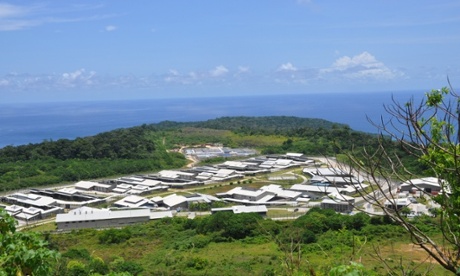
An asylum seeker on Christmas Island was placed in solitary confinement without approval being granted by the immigration department, in breach of its own policy.
Guardian Australia understands the asylum seeker was placed into a part of the Christmas Island facility previously known as the “red compound” overnight last Thursday, where they were left in isolation for at least 12 hours.
The room has been described by the Australian Human Rights Commission as “essentially a small cell” with CCTV cameras and furniture that is nailed to the ground, and has previously raised concerns about the use of the room.
A spokeswoman for the immigration department said: “The person was placed in the support unit for their own protection and was subsequently moved on Friday morning once other accommodation allocations were completed.
“The regional manager subsequently reviewed this placement and endorsed that it was appropriate.”
The revelation comes before a Senate inquiry that is set to hold hearings on Thursday into a bill that would allow immigration staff to gain greater powers to use force – which would include the use of restraints and seclusions – on asylum seekers in immigration detention.
The bill would also grant immunity to the federal government and private contractors in instances where force was used “in good faith”.
The department has strict policies around the use of solitary confinement in detention centres, which were not followed for the asylum seeker on Christmas Island.
The most recent version of the department’s policy on the use of seclusions says that for placement in these types of centres “approval is required from the DIAC [Department of Immigration and Citizenship] regional manager or DIAC centre manager for an initial placement period of up to 24 hours”.
Placements exceeding this timeframe must be escalated to an assistant secretary for approval.
The use of solitary confinement in immigration detention centres has faced heavy criticism from health professionals and the United Nations. Unlike in mental health facilities, approval is granted by department staff rather than officers with medical training.
In mental health facilities there is a clear commitment to reduce the use of seclusion, but documents obtained freedom of information laws show that seclusion use has risen in immigration detention facilities such as Villawood in Sydney.
In a 2012 report on Christmas Island, the Australian Human Rights Commission wrote it had “concerns that people with vulnerabilities could be detained in such a restrictive facility for any period of time”.
The use of the isolation room follows a period of heightened tensions at the Christmas Island centre, with the risk rating of the centre upgraded to medium last week.