Ghost stories can be Gothic of course, but ghosts are far from compulsory in a Gothic tale. Here are some other ingredients you might find useful…
1. Location, location, location
Location can feature as a character in your Gothic story. How about using the idea of a troubled house – not so much haunted, as disturbed? Edgar Allan Poe’s House of Usher is such a house. See also Shirley Jackson’s Hill House and the Overlook Hotel in Stephen King’s The Shining.
2. But why will you say that I am mad?
Gothic always teeters on the edge of madness. The narrator in Poe’s The Tell-Tale Heart is sure he can hear the heart of the old man he has killed, beating beneath the floorboards. How about a madmen under the influence – like Renfield possessed by Dracula or Jack Torrance by the Overlook Hotel in The Shining.
3. A warning to the curious
Inquisitive souls don’t fair well in Gothic stories. M. R. James seems to delight in punishing in fiction academic rationalists like himself, who poke around in places they should not. See also Victor Frankenstein…
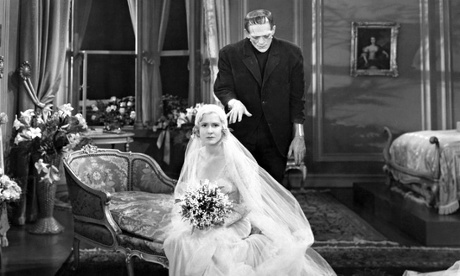
4. Mad, bad and dangerous to know
Why not have a Byronic anti-hero? Mean and moody like Heathcliff in Wuthering Heights or Mr Rochester in Jane Eyre. Or perhaps the most Byronic anti-hero of all: the creature in Frankenstein.
5. Children of the night
Children are often in danger in Gothic novels, left in the care of very inappropriate adults. Like the alchemist in M. R. James’s Lost Hearts who has a unsavoury interest in his young guest, or Peter Quint, who seems to have been a shocking influence on young Miles in Henry James’s The Turn of the Screw.
6. Skeletons in the closet
How about having a family curse hang over your characters, as it does in Walpole’s The Castle of Otranto and several Poe stories? Sir Richard in M. R. James’s The Ash Tree is being horribly punished for his ancestors persecution of a witch.
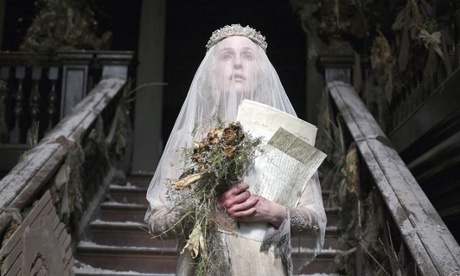
7. A woman in white
How about a doomed bride like poor Elizabeth in Frankenstein, or a jilted one like Miss Havisham in Great Expectations. Perhaps a shrouded heroine, like Lady Madeline Usher, prematurely buried – or a vampire lover fresh from the tomb?
8. A woman in black
Determined to have a Gothic ghost? Bitter and twisted Mrs Drablow in Susan Hill’s novella is the ultimate Woman in Black, but how about a black-clad sobbing spectre like Miss Jessel in The Turn of the Screw?
9. Make mine a double
Can’t decide whether you want to have a sympathetic or unsympathetic lead? What about having both? Poe’s William Wilson is tormented by his doppelgänger. Dr Jekyll self-medicates his way to his brutish alter-ego, Mr Hyde.
10. Once upon a midnight dreary
Why not tell your story as true, as Arthur Kipps does in The Woman in Black or Captain Walton in Frankenstein? Or have a character tell the story to others as the anonymous narrator does in The Turn of the Screw? After all, Frankenstein was born out of an evening telling ghost stories…
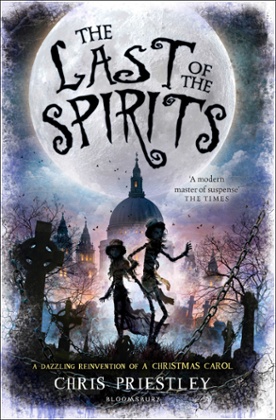
- Chris Priestly’s The Last of the Spirits is published on 6 November 2014.