A few notes and observations heading into the NBA playoffs’ second round …
Jamahl Mosley out in Orlando
The Magic fired head coach Jamahl Mosley on Monday, ending Mosley’s five-year run with the team hours after a disappointing Game 7 loss in Detroit. The decision was expected: Orlando underachieved this season, finishing with 45 wins and having to scramble to beat Charlotte in the play-in finale just to make the playoffs. An early series surge offered a glimmer of hope that Mosley could keep his job, but the Magic’s anemic offense over the final two games of the first round likely sealed his fate.
An Orlando opening is a coveted one. Rival coaches look at the Magic as a team ready to win, especially in the Eastern Conference, where simply rediscovering a defensive identity—Orlando, a top-three defensive team in each of the last two seasons, finished 13th in this one, per NBA.com—should be enough to push the Magic into the top five next season. Orlando has to add shooting (Jalen Suggs shot a dreadful 24.1% from three in the first round) and the jury is out on whether Paolo Banchero is a true franchise player. Still, with the core of the team under 25, this job opening will generate a lot of interest.
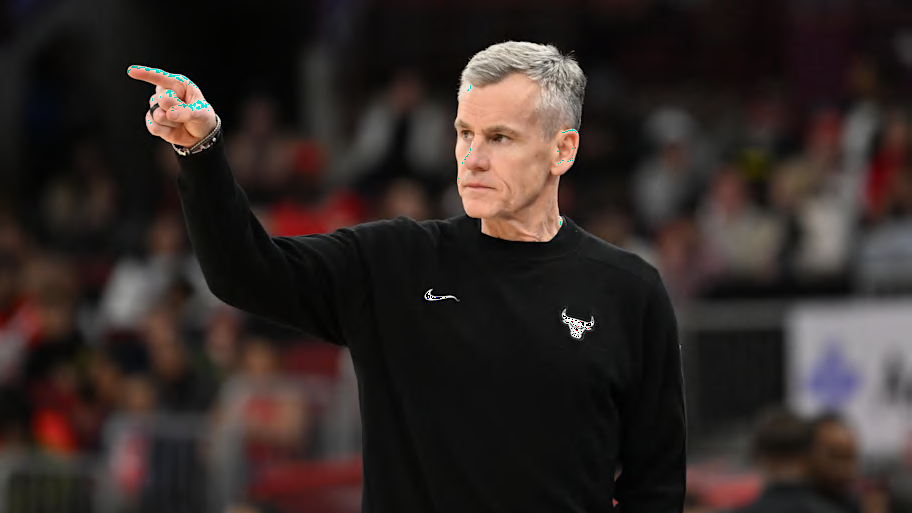
What kind of coach will the Magic want? Billy Donovan, who has been linked to Orlando in the past, recently parted ways with the Bulls and is believed to be interested in the job. Spurs associate head coach Sean Sweeney is the hot name in the assistant ranks. Sweeney has had a hand in developing some of the NBA’s top stars, including Giannis Antetokounmpo and Luka Dončić. As part of Mitch Johnson’s staff in San Antonio, he’s worked with Stephon Castle and Dylan Harper, along with that Wembanyama guy. Sweeney has interviewed for several head coaching jobs in recent years, and it’s considered a matter of time before he lands one.
Mavs land a big fish
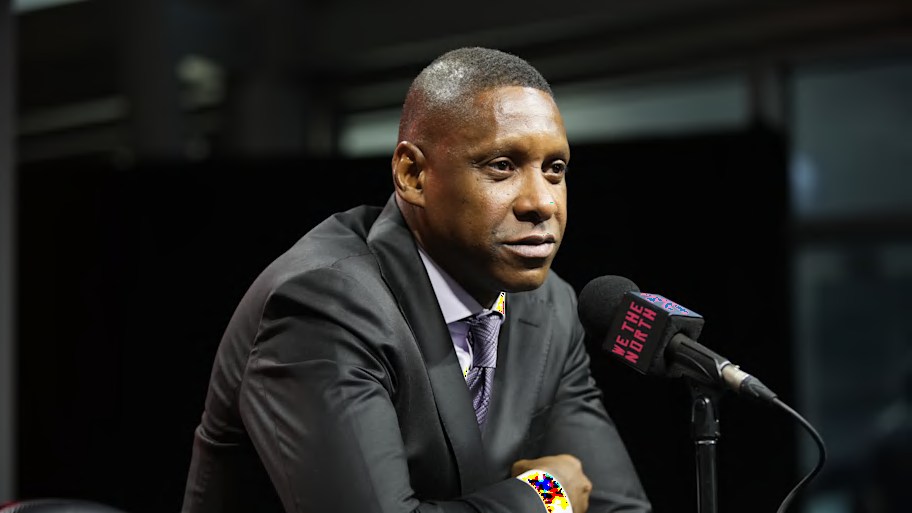
The Mavericks hired Masai Ujiri as their new president of basketball operations, the team announced Monday. Ujiri, the longtime Raps exec who engineered the bold trade to bring Kawhi Leonard to Toronto, a deal that resulted in the franchise’s first championship, parted ways with the Raptors in 2025. Ujiri will also serve as the Mavericks’ alternate governor.
“The Dallas Mavericks are committed to being a world-class organization with a strong culture and focused on winning championships,” said Mavericks governor Patrick Dumont. “Masai Ujiri is one of the great basketball leaders of this generation and his addition to our franchise is a critical step in meeting our goals. We are honored to have him join the Mavs family. We welcome his energy and determination along with his leadership, experience and many accomplishments as a basketball executive. We are very excited about the future of our team.”
Said Ujiri, “I’m honored to join the Dallas Mavericks and step into this role at such an important time for the organization. This is a franchise with a proud history, passionate fans and a commitment to winning. I look forward to working with our players, coaches and leadership team to build something that reflects that standard and competes at the highest level. We will win in Dallas.”
Dallas cast a wide net in its search for a top basketball exec. As Sports Illustrated previously reported, Dumont prioritized executives with a proven track record for the job, with names like Sam Presti, Brad Stevens and Bob Myers being kicked around. The Mavericks had strong interest in Tim Connelly, Minnesota’s president of basketball operations, but there are indications Connelly will stick around the Timberwolves for at least another year. Dennis Lindsey, the Pistons’ VP of basketball operations, had been a co-finalist with Ujiri, and internally there had been advocates for Matt Riccardi and Michael Finley, who took over as co-general managers following the midseason firing of Nico Harrison, to continue running basketball operations.
Still, Ujiri, 55, offers the kind of cache Dumont has been looking for. He is a former Executive of the Year who built a 57-game winner in Denver before leaving for Toronto, where he delivered a championship in 2019. Ujiri takes over a team in chaos—was it really just 15 months ago the Mavs traded Dončić?—but not one in disrepair. Dallas has a bona fide franchise player in Cooper Flagg, the recently crowned Rookie of the Year, and two first-round picks in June’s draft.
Ujiri’s first roster decision will be what to do with Kyrie Irving. Irving sat out all of last season recovering from knee surgery and has two years left on his contract (the last year is a player option). The previous administration telegraphed that they wanted Irving to stick around, believing his skills would complement Flagg’s. Will Ujiri feel the same? The alternative is auctioning off Irving, who is still one of the better lead guards in the NBA.
Will the Rockets run it back?
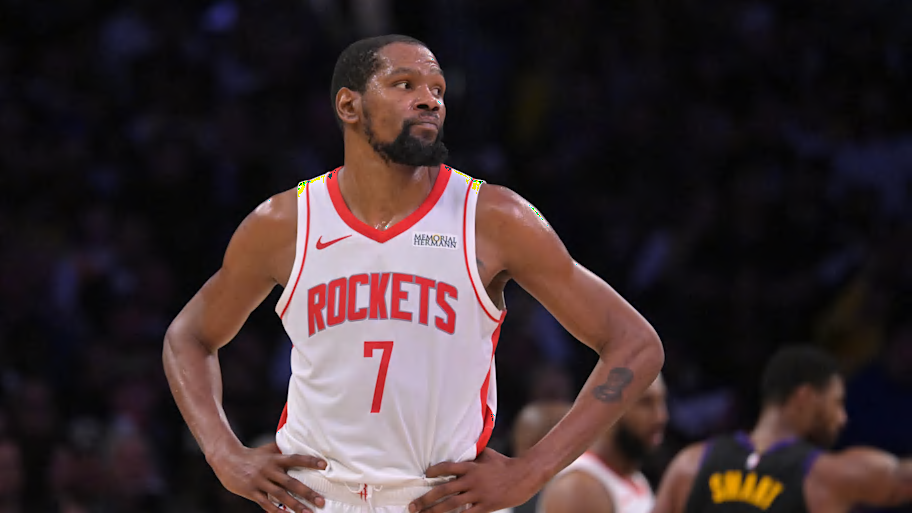
Trade Kevin Durant? Come on. The first-round loss to the Lakers was disappointing but Houston was without 60% of its preseason starting lineup (Durant, Fred VanVleet and Steven Adams) for most of the series (Durant suited up for one game). Durant played at an All-NBA level this season, VanVleet will be back to stabilize the point guard position and Adams’s physicality was part of the Rockets’ identity until he went out midseason. Meanwhile Houston’s young talent (Amen Thompson, Jabari Smith Jr. and Reed Sheppard) will have another offseason to improve.
There could be changes. Houston has the assets to make a play for an available star (Antetokounmpo, Kawhi Leonard, etc.) And Tari Eason, a restricted free agent this summer, could be a cap casualty. But if healthy, I like the Rockets’ chances of being back in the mix for a top-three seed next season.
Joe Mazzulla under fire
It had to have been maddening for some Celtics fans to hear Jayson Tatum describe the injury that sidelined him for Game 7 on Saturday as “inevitable,” citing the minutes he was playing the last few weeks. Tatum played 27 minutes in his return from a ruptured Achilles on March 6. In April, he averaged 36.2 minutes per game, playing 39 and 40 minutes, respectively, in his final two games of the regular season. In healthy years, that’s a normal workload for Tatum. Given his injury, it’s fair to wonder why he was being burned out.
It wasn’t the only head scratcher from Mazzulla. His starting five in Game 7—which included second-year wing Baylor Scheierman, former two-way player Ron Harper Jr. and Luka Garza—had not played alongside each other all season, which was among the reasons the Celtics fell into a big first-quarter hole. Mazzulla didn’t have a great strategy to deal with Joel Embiid, didn’t trust his bench, handed too many minutes to Nikola Vučević (29.2% from three in the series) and refused to insist his team play more inside the three-point line. Consider: In Boston’s four losses, the Celtics shot 27.3% from three.
Mazzulla is a front-runner for Coach of the Year (good luck finding him to accept that award) and had an outstanding regular season, coaching the Celtics to an improbable 56 wins. But his decisions against Philadelphia earned him some second-guessing.
More NBA From Sports Illustrated
Listen to SI’s NBA podcast, Open Floor, below or on Apple and Spotify. Watch the show on SI’s YouTube channel.
- The Knicks Are Rolling at a Historic Pace With Game 1 Stomping of 76ers—Can It Continue?
- The First 20 Seconds of the Timberwolves-Spurs Series Were Absolutely Perfect
- Magic Offseason Preview: How Orlando Can Move Forward After Three Straight First-Round Exits
- After Roller-Coaster Series, Why Pistons’ J.B. Bickerstaff Calls Jamahl Mosley Firing the ‘Wrong Choice’
- What to Expect From Anthony Edwards As He’s Set to Return for Game 1 Between Timberwolves, Spurs
This article was originally published on www.si.com as Chris Mannix’s NBA Notes: What’s Next for Orlando After Magic Fire Jamahl Mosley.