For many years now, Chris Evans has been attempting to conjure up a winning new television format. “Every day I try to think of the next big great quiz show,” he told an interviewer in 2011. “It’s an obsession.”
Now, finally, the Radio 2 DJ, who enjoyed significant ratings success in the 1990s with The Big Breakfast, Don’t Forget Your Toothbrush and TFI Friday, has figured out what his new breakthrough show is going to be: Top Gear, the BBC’s biggest international success of the past two decades.
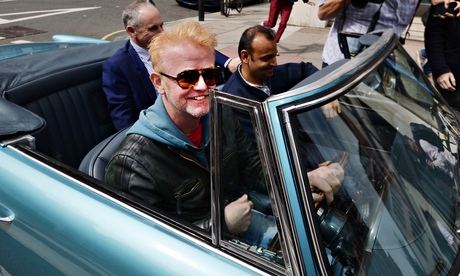
Evans’s name has been consistently linked with the show since the BBC refused to renew Jeremy Clarkson’s contract in March after the controversial presenter punched one of his producers. Such was the speculation that Evans went so far as to deny categorically that he wanted the job; he now says that he took that step because, as a fan, he wanted James May and Richard Hammond to take over. It was the announcement by the pair that they would not be doing so that opened the way for Evans to accept the role.
In many ways, he’s the perfect candidate: a famous face, at ease with the multiple presenting demands that Top Gear represents, and a recognised car nut and collector who once paid £12m for a 1963 Ferrari 250 GTO. Yet it’s also one of those massive career moves that could so easily go horribly wrong.
Although Top Gear has been around for almost 40 years, it was completely reinvented by Clarkson, recast in the distinct mould of his formidable personality. So thoroughly did he imbue the show with his personal outlook that it’s hard to think of a car review without hearing the familiar ironic cadence of Clarkson’s exaggerated delivery. And what’s more, although Clarkson is an almost comic hate figure to half of liberal Britain, he drew a devoted following who are still bitter about his exit. They will not be inclined to give the new man an easy ride.
But Evans has been this way before. Five years ago, he took over from a British broadcasting institution when he replaced Terry Wogan on the Radio 2 breakfast show. Initially, he was not seen as a popular choice to succeed the mild-mannered Irishman.
Brash, cocksure and with a library of tabloid headlines to his name, he seemed to represent everything that the knighted Wogan was not. It was as if he was selected to inform Wogan’s listeners that they were no longer required to tune in.
But after a brief period of adjustment, Evans actually increased the listening figures to close to 10 million. And he did it by reining himself in, dropping the toxic self-indulgence that marked his short-lived but highly eventful Radio 1 show of the mid-1990s.
That was the period in which Evans’s ego seemed to expand geometrically from week to week. It was the height of Britpop and lad culture, when boorish behaviour was both the prerequisite and reward for success. And Evans was very successful.
A broadcasting natural, he started out as a teenager on Manchester’s Piccadilly Radio, where he played a character called Nobby Nolevel on the Timmy Mallett show. He also presented a late-night show and worked as a producer.
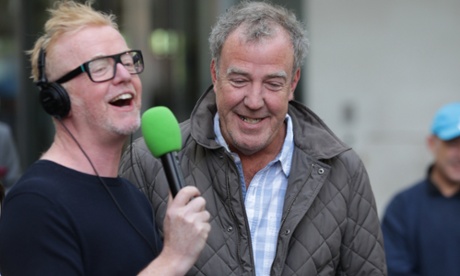
It was as a producer that he made the move to London, working first for Richard Branson and then for BBC’s GLR, producing the Emma Freud show. He soon transferred to presenting and built up a reputation for a madcap approach that was somewhat constrained by BBC management.
It was his move to TV, however, in 1992 that really made his name. As co-host with Gaby Roslin of The Big Breakfast, Evans established himself as a star. With his riot of ginger hair and Michael Caine glasses, he was unpredictable, irreverent and appeared to be having a great time.
He thrived in the pressure of live television, feeding off a seeming inexhaustible supply of nervous energy. Within a few years, he would become hugely wealthy and utterly burnt out. “Radio is non-stop,” he has said. “It picks you up and wears you out. If you’re the guy behind the microphone, you’re the maggot on the hook waiting to be eaten.”
In 1995, Radio 1 controller Matthew Bannister was set on overhauling the station’s profile, consigning a previous generation of DJs to the dinosaurs’ graveyard. At the core of his strategy was his most celebrated – and expensive – signing, Evans. And Evans knew it.
Increasingly coming to resemble the spoilt rock stars who appeared on TFI Friday, Evans’s enthusiasm declined as his demands grew. He failed to turn up for the breakfast show after a Christmas party, declaring: “We are but a mirror to what goes on elsewhere.”
He insisted on shorter hours, to which Bannister agreed, and then announced that he shouldn’t have to work on Fridays, which Bannister refused. In a fit of pique, he resigned on air. He later described this desire to test his and others’ limits as a kind of loss of moral bearings: “You don’t know whether you’re right or wrong and you’ve got nobody to tell you.”
As it was, no one cared that he was wrong because, more importantly, he was popular. So he just got bigger. He moved to Virgin to present a rival breakfast show that was a huge success; he liked it so much be bought the station. Within three years, he sold it in a deal that was said to have made him around £35m. He continued to host the show but began to lose his audience and after repeatedly failing to turn up for work was sacked. He then launched a doomed bid to sue the station he once owned.
It was a cartoon-like tale of hubris about an endearing character who became a painful caricature. His parents had managed a corner shop in Warrington and his father had died when Evans was just 13. In a remarkably short space of time, he made his way from obscurity to national fame and massive wealth.
Along the way, he fathered a child at 20 and immediately turned his back on her (they are now reunited), had a brief and unhappy marriage to the broadcaster Carol McGiffin and a series of frenetically unsatisfying relationships. In 2000, he met the then teen pop star Billie Piper and bought her a silver Ferrari decked out in crimson roses. She didn’t drive. The marriage ended four years later when he visited her on the set of Doctor Who and told her: “I think we’re about to start not being ‘us’.”
At that stage, although his worst excesses were behind him, there was an sense that Evans had got lost in the trappings of his own celebrity. He seemed compelled to make dramatic gestures, as if their sheer size would shock the world into providing some temporary meaning. After the failure of one TV project, he opened a store at London’s Camden Market. But each attention-seeking or attention-defying act, each new acquisition and sale, opened up new vistas of emptiness. Having achieved and accrued so much, Evans looked unsure where or how to carry on.
The answer, in 2005, was to go back to what he did best. Given another chance at the BBC, he began to work as a DJ again. First one-off shows, then a Saturday show, followed by a regular drive-time slot and finally the breakfast show. As the craftsman returned, the diva made an understated exit.
It’s no coincidence that Evans’s stable second life at the BBC has been accompanied by marriage – to Natasha Shishmanian, a part-time model and golf columnist – and two children. “No woman has ever controlled me like Natasha does,” he said. “Psychologically, she’s got me absolutely nailed.”
Instead of the relentless self-absorption of his Radio 1 days, Evans has discovered a welcome interest in his listeners on Radio 2. He was never a great funny man – his sense of humour lacked a sharp enough wit – but he can be effortlessly engaging and often amusing. There is also something quietly appealing about the idea of a once wayward celebrity falling back in love with what made him famous.
But television is another matter. His recent incursions on to the box have not been conspicuously triumphant. OFI Sunday and Famous and Fearless hardly troubled the nation’s memory banks, and although his Friday stint on The One Show has gone relatively well, it’s not ground-breaking territory.
If The One Show is a bland family saloon, Top Gear is a souped-up, look-at-me, monster juggernaut. Mad Max himself would struggle to stop its gears from slipping into reverse. If Evans manages to keep it going forward, he will prove himself not just a master of broadcasting, but king of the road.
Born 1 April 1966 in Warrington, the youngest of three siblings, to Martin Evans, a sometime bookmaker, and Minnie Beardsell, manager of a corner shop.
Best of times In terms of job satisfaction and personal happiness, now would probably be the answer. But in terms of career heat, the second-half of the 90s, when everything he touched turned to gold.
Worst of times The second half of the 90s, when aside from being successful, he was drunk, bullying and obnoxious. As he put it: “I stayed out all night, drinking myself half to death, running out of energy and running out of friends and I was so anaesthetised by alcohol I barely felt a thing.”
What he says “The BBC is mammoth but there’s two things you can’t do: you can’t hijack it and you can’t monetise it. You come here to do a job for a reason and you have to know the guidelines. That’s the deal.”
What others say “Evans’s arrival coincided with the end of the ‘Smashie and Nicey’ era of senior DJs, such as Dave Lee Travis, Simon Bates and Alan Freeman, many of whom jumped before they were pushed.
Matthew Bannister, ex Radio 1 controller.