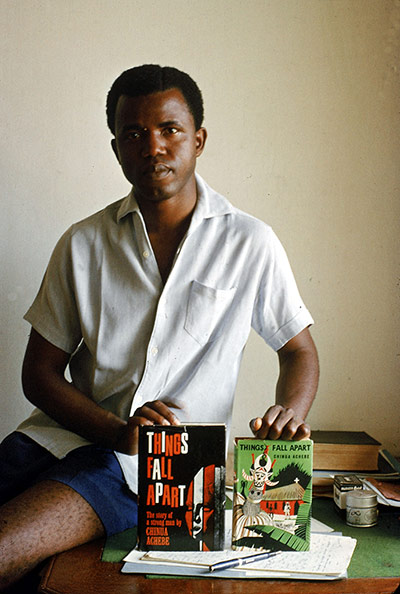
“The white man is very clever. He came quietly and peaceably with his religion. We were amused at his foolishness and allowed him to stay. Now he has won our brothers, and our clan can no longer act like one. He has put a knife on the things that held us together and we have fallen apart.”
From Things Fall Apart (1958)
Photograph: Eliot Elisofon/Time Life Pictures/Getty Images
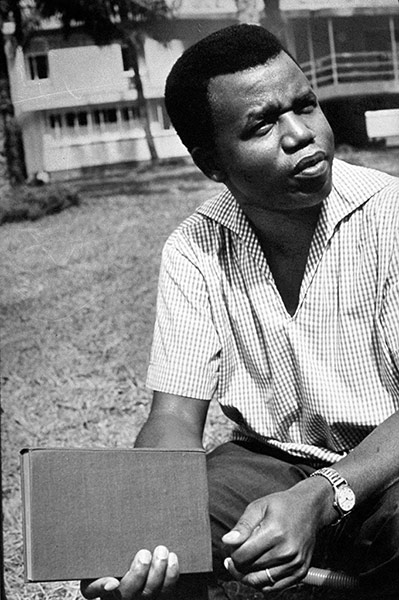
'We cannot trample upon the humanity of others without devaluing our own. The Igbo, always practical, put it concretely in their proverb Onye ji onye n'ani ji onwe ya: "He who will hold another down in the mud must stay in the mud to keep him down".'
From The Education of a British-Protected Child (2010)
Photograph: Carlo Bavagnoli/Time & Life Pictures/Getty Image
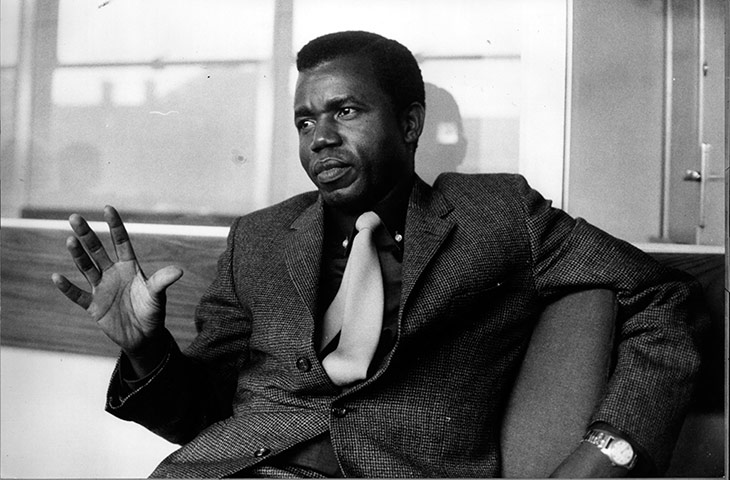
'The triumph of the written word is often attained when the writer achieves union and trust with the reader, who then becomes ready to be drawn into unfamiliar territory, walking in borrowed literary shoes so to speak, toward a deeper understanding of self or society, or of foreign peoples, cultures, and situations.' From There Was A Country (2012)
Photograph: Michael Neal
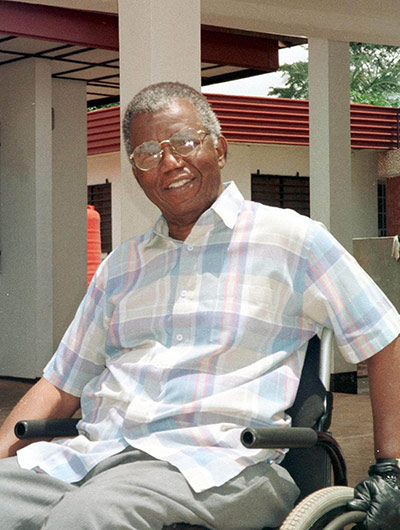
'As a rule I don't like suffering to no purpose. Suffering should be creative, should give birth to something good and lovely.'
From A Man of the People (1966)
Photograph: AFP/Getty Images/AFP/Getty Images
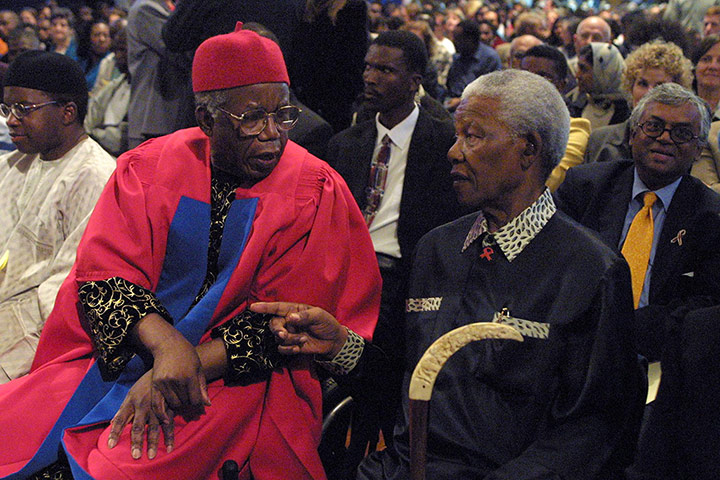
'Africa as setting and backdrop, which eliminates the African as human factor. Africa as a metaphysical battlefield devoid of all recognisable humanity, into which the wandering European enters at his peril. Can nobody see the preposterous and perverse arrogance in thus reducing Africa to the role of props for the break-up of one petty European mind?'
Speaking to Caryl Phillips in 2003 Photograph: Anna Zieminski/AFP/Getty Images
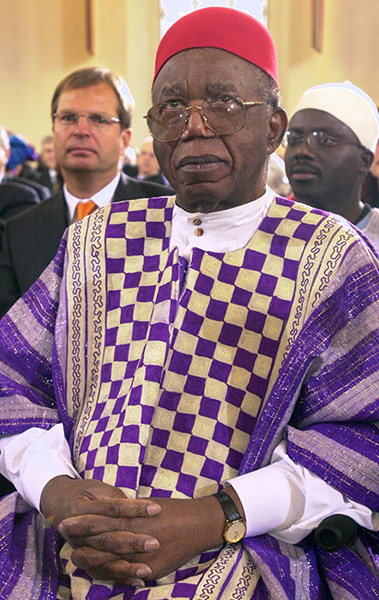
'Jonathan Iwegbu counted himself extraordinarily lucky. "Happy survival!" meant so much more to him than just a current fashion of greeting old friends in the first hazy days of peace. It went deep to his heart. He had come out of the war with five inestimable blessings – his head, his wife Maria's head, and the heads of three out of four of their children. As a bonus he also had his old bicycle – a miracle too but naturally not to be compared to the safety of five human heads.'
From the short story A Civil Peace (1971) Photograph: Axel Seidemann/AP
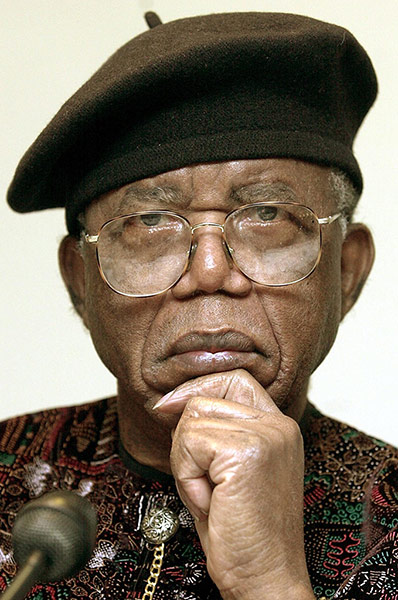
'You cannot plant greatness as you plant yams or maize. Who ever planted an iroko tree – the greatest tree in the forest? You may collect all the iroko seeds in the world, open the soil and put them there. It will be in vain. The great tree chooses where to grow and we find it there, so it is with the greatness in men.'
From No Longer at Ease (1960)
Photograph: Frank May/AFP/Getty Images
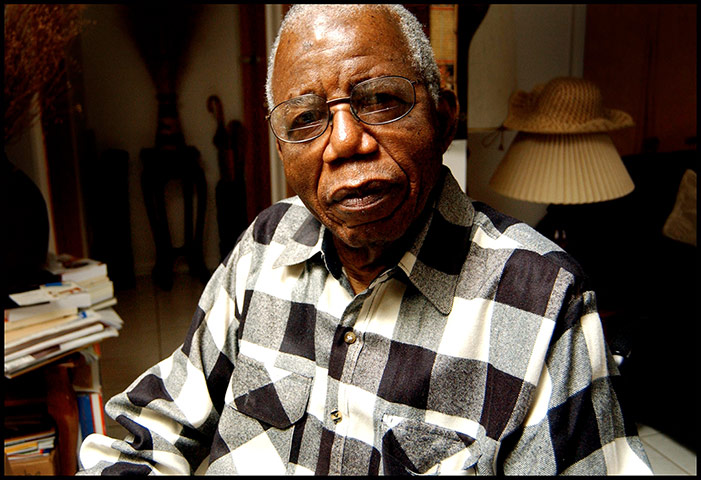
“It is only the story ... that saves our progeny from blundering like blind beggars into the spikes of the cactus fence. The story is our escort; without it, we are blind. Does the blind man own his escort? No, neither do we the story; rather, it is the story that owns us.”
From Anthills of the Savannah (1987)
Photograph: Lisa Carpenter for the Guardian
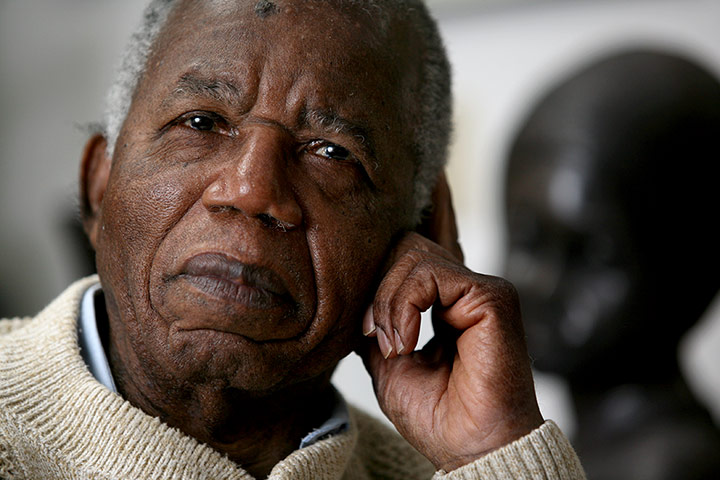
'Privilege, you see, is one of the great adversaries of the imagination; it spreads a thick layer of adipose tissue over our sensitivity.'
From Hopes and Impediments (1988) Photograph: Craig Ruttle/AP
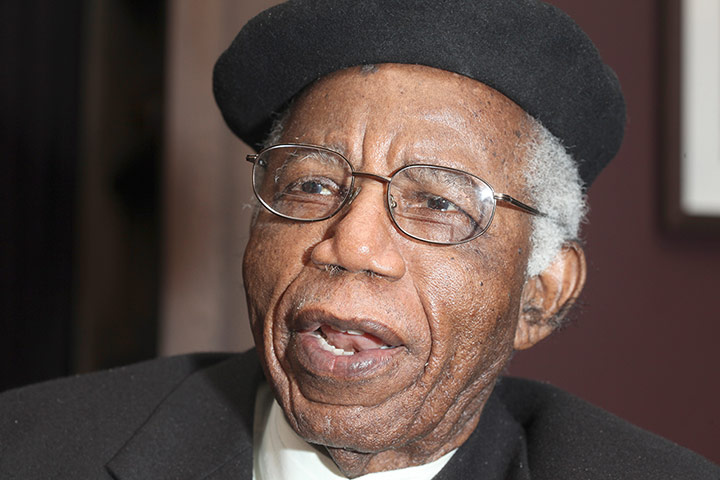
'The impatient idealist says: "Give me a place to stand and I shall move the earth." But such a place does not exist. We all have to stand on the earth itself and go with her at her pace.'
From No Longer at Ease (1960)
Photograph: Eamonn McCabe/for the Guardian