Chinese idiom of the day : Unexpected events often shape people's lives in ways they never anticipate. A promotion may lead to greater opportunities, while a setback may eventually open the door to something better. Across cultures, traditional stories and sayings have long reminded people that fortune and misfortune are not always what they first appear to be.
Chinese Idiom of the Day Today on Fortune and Perspective
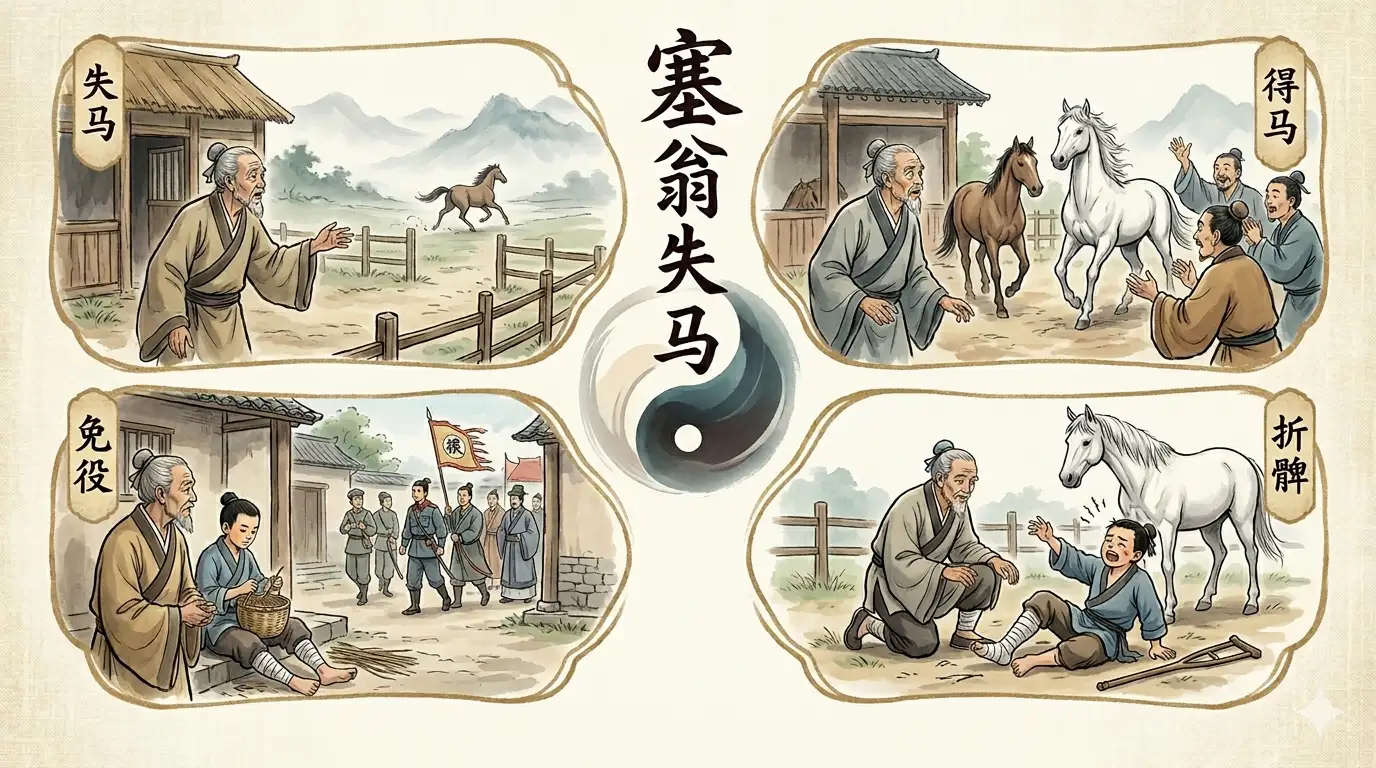
Today's Chinese idiom is " 塞翁失马 ," which translates to, " The Old Man Loses His Horse, " as per The Ant Hill.
The idiom originates from an ancient Chinese story recorded in the 'Huainanzi', a philosophical text dating back more than 2,000 years. It has become one of the most widely quoted expressions in Chinese culture.
The Story Behind the Chinese Idiom
According to the story, an elderly man living near the frontier lost one of his horses when it wandered away, as per The Ant Hill. His neighbors came to offer sympathy, believing that he had suffered a great misfortune.
However, the old man simply replied, "Who knows! The loss may bring us good fortune!" as quoted by The Ant Hill.
Some time later, the horse returned, bringing with it another fine horse. The neighbors congratulated the old man on his good fortune. Yet once again, he remained cautious, saying, "Who knows! This may bring us ill fortune!" as quoted by The Ant Hill.
Soon afterward, the old man's son fell while riding the new horse and broke his leg. The neighbors again expressed sympathy. The old man responded in the same manner.
Later, war broke out, and many young men from the region were conscripted into military service, where numerous soldiers lost their lives. Because of his injury, the old man's son was spared from joining the war and survived.
What "The Old Man Loses His Horse" Means
The idiom teaches that events cannot always be judged immediately as entirely good or bad.
Life is unpredictable, and situations that initially appear unfortunate may later produce positive outcomes. Likewise, apparent good fortune can sometimes lead to difficulties.
The saying encourages patience and perspective, reminding people not to react too quickly to changing circumstances.
Chinese Idiom of the Day June 22: Lessons on Resilience and Uncertainty
Traditional Chinese wisdom often emphasizes balance and acceptance of life's uncertainties. This idiom reflects those values by encouraging individuals to remain calm in both success and adversity.
Rather than becoming overly discouraged by setbacks or excessively confident during periods of success, the idiom suggests maintaining emotional balance and recognizing that circumstances can change unexpectedly.
Why This Ancient Chinese Wisdom Still Matters Today
Modern life remains filled with uncertainty. Career changes, personal challenges, and unexpected opportunities frequently reshape people's lives in unforeseen ways.
The idiom reminds individuals to approach life's ups and downs with flexibility and resilience. Difficult experiences may eventually create new possibilities, while apparent successes should be approached with humility and caution.
Life Lessons From the Chinese Idiom of the Day
- Do not judge events too quickly.
- Misfortune may eventually bring opportunity.
- Success and failure are often temporary.
- Patience and resilience help people navigate uncertainty.
- Maintaining perspective can reduce unnecessary worry.